
By Mike Simmons
Here is an interesting photo I just got from retired ECSO Investigator Jim Sanders. The same photo hangs on the wall in the admin section of the Pensacola Police Headquarters. Jim’s ancestor, John D. Carter, was a Pensacola Police Officer. In the photo, he is the man on the left, wearing a custodian helmet. On Sunday, April 4, 1909, Officer Carter (some accounts list him as R.J. Carter) made an arrest. In the neighborhood of Hawkshaw, Near 9th Avenue and Aragon Street in Pensacola, Luke’s Alley could be found. Officer Carter needed to have the man picked up by the wagon and taken to the jail. As they approached the patrol call box on the corner of Aragon and Luke’s Alley, a fight ensued. The suspect produced a knife and stabbed Officer Carter multiple times, the fatal one in the chest, leaving what was described as a gaping hole. Before he collapsed, Officer Carter managed to fire two shots at the suspect. Carter died on the spot.
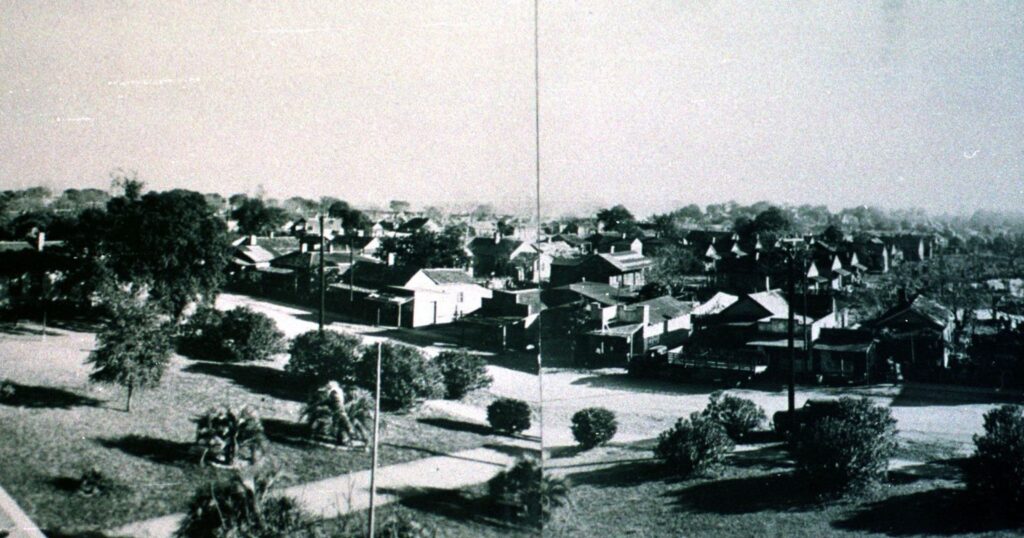
A short time later, a lady appeared at the desk sergeant’s office at the police station inquiring about the bond amount for her husband, David Alexander, who had just been arrested by a mounted police officer (incidentally, another David Alexander was named chief of the Pensacola Police in 2015). Mrs. Alexander had been made aware that her husband had been taken into custody a few minutes before. Immediately, all officers were notified and sent to Mr. Alexander’s home to contact him. When they first contacted him, Alexander’s clothes were disheveled, and his clothing and countenance were consistent with being in a struggle. He was arrested and taken to the city jail.
Captain Hall testified later that Mr. Alexander had confessed to the killing of Officer Carter to him and Turnkey Charles Simpson. At the early stages, it looked as if Alexander was the killer of Officer Carter, but the full story would never come out. Desk Sergeant Michael J. Murphy later testified that, at 4:00 am, 40-50 masked men stormed the city jail and accosted him and Turnkey Simpson, who were the only two men on duty at the station at that hour. They overpowered Sgt. Murphy, put him to the ground, and held him there. The later investigation proved that Sgt. Murphy’s clothes were torn, and he had bruises that proved he was assaulted by the mob. They then proceeded to Simpson and, holding a gun on him, made him open Alexander’s cell door. They tied up Alexander and drug him out of the jail and across the street into Ferdinand Plaza. They threw a rope over a pole, put the other end around Alexander’s neck, and lynched him. Then – as he was hanging, they fired numerous bullets at him, fifteen striking him. The coroner later ruled the gunshots as the cause of death.
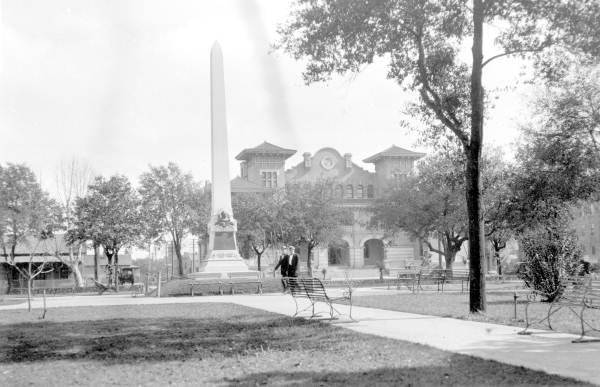
No matter how you view it, this incident was sad. One of Pensacola’s finest had just been brutally murdered while doing his job, and his co-workers had worked swiftly and diligently to apprehend the man responsible. However, instead of the town simply mourning Officer Carter’s death and proudly proclaiming and celebrating the efficiency of the work of the Department, a bunch of citizens allowed their emotions to get the best of them and put to death the man who had not yet been convicted of the crime.
Could part of this terrible occurrence be due to the death of one of Pensacola’s finest and citizens felt it necessary to act? We must remember that, in those days, lynchings were not uncommon for all races. It is clear that no one was surprised when Alexander was killed.
As horrendous as this incident was, it is a credit to a town who cared as deeply for their officers as those of Pensacola did. However, vigilante justice is never the proper action. Did David Alexander kill Officer Carter? The evidence supports it, but we will never know for sure.
Discover more from Sweet Tea Murders
Subscribe to get the latest posts sent to your email.