
The Mysterious Death of a British Governor in Pensacola
Before Pensacola became an American city, before Florida flew the Stars and Stripes, it was a remote British outpost filled with soldiers, merchants, ambitious officials, and men who had traveled thousands of miles hoping to make their fortunes.
And in the spring of 1769, something happened inside that little frontier town that still raises a fascinating question:
Did the governor of British West Florida take his own life, or was he murdered by the man who had the most to gain from his death?
At the center of the story was one of early Pensacola’s most important citizens, Elias Durnford.
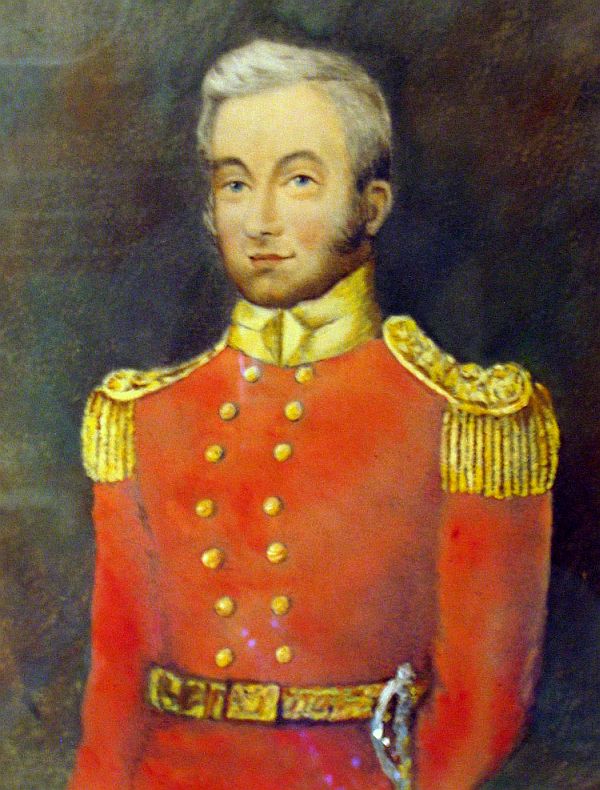
Durnford was born June 13, 1739, in Ringwood, England. An intelligent young man with a talent for engineering, he pursued a commission in the British Army and eventually became a military engineer. After spending several years in military service, much of it aboard ships, his abilities brought him an assignment to Britain’s newest frontier possession: West Florida.
He arrived in Pensacola in 1764.
What he found was hardly the bustling city we know today. Pensacola was still a rough military settlement on the edge of an empire. Durnford immediately began helping transform it into a proper British town, laying out streets in an orderly grid and assisting in the development of the young colony. But streets and buildings may have been the easy part of his assignment.
The personalities governing West Florida were another matter entirely.
Two Men Who Could Not Get Along
The governor was George Johnstone, a Scotsman born in Dumfriesshire in 1730. Johnstone had spent nearly two decades in the Royal Navy. He had demonstrated courage and leadership in battle, but diplomacy was another matter. He was outspoken, combative, and frequently at odds with his superiors. He had been involved in several duels and had even faced accusations of bribery.
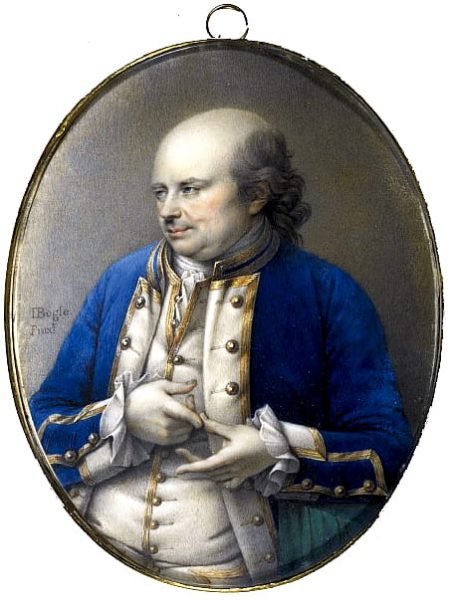
Governor George Johnstone
In 1764, he was appointed governor of British West Florida. Johnstone could command men and ships. Getting along with people was considerably more difficult. That became especially apparent in his dealings with his lieutenant governor, Montfort Browne.
Browne had served with the 35th Regiment of Foot during the Seven Years’ War. His military career had already suffered a blemish when a court of inquiry found against him in 1763. Soon afterward, however, he received a new opportunity when he was appointed lieutenant governor of West Florida.
Once in Pensacola, Browne began having problems with Johnstone almost immediately. The disagreement between the two men grew increasingly bitter. Browne complained about Johnstone to officials in Britain. Browne himself, meanwhile, came under scrutiny over alleged irregularities in his bookkeeping. Whatever else might be said about the two men, one thing seems certain:
George Johnstone and Montfort Browne did not like each other.
Eventually Browne’s complaints had an effect. In 1767, Johnstone returned to Britain to answer the accusations against him. That left Browne in Pensacola as acting governor.
For Browne, it must have seemed that the prize was finally within reach. If Johnstone were permanently removed, perhaps Browne would receive the appointment he wanted. For nearly two years, he occupied the governor’s office. Then another man appeared.
Enter John Eliot
John Eliot was born June 2, 1742, at Port Eliot in St. Germans, Cornwall, into a wealthy and influential family. His naval career began almost unbelievably early. He became a midshipman at about ten years old and was a third lieutenant by fifteen. And there was an interesting connection between Eliot and Pensacola’s former governor. As a young naval officer, Eliot had served aboard the Augusta under George Johnstone.
Eliot quickly established his own reputation. He commanded vessels during the Seven Years’ War and, during one episode, was captured with his crew by French privateers. His family eventually paid for his release, but Eliot was praised for his conduct during captivity and for the leadership he showed toward his men.
By his mid-twenties, he was already an experienced officer with valuable political connections. On March 16, 1767, he was recommended for the governorship of West Florida. The British government considered its options. Then the decision was made. John Eliot would become governor. Montfort Browne would not.
An Unexpected Arrival
On Sunday, April 2, 1769, Governor John Eliot arrived in Pensacola. Browne wasn’t there. He was in Mobile. With the assistance of Elias Durnford, Eliot settled into his new position and began organizing his administration.
Then Browne returned. Imagine that moment…for almost two years, Browne had served as acting governor. Perhaps he believed the position would eventually become his permanently. Instead, he returned to Pensacola and discovered a 26-year-old naval officer occupying the chair he wanted.
And there was something worse.
Eliot had apparently been instructed to investigate Browne. The young governor was not simply Browne’s replacement. He could become the man who ended Browne’s career.
May 1, 1769
On Monday, May 1, Governor Eliot summoned Browne. The two men met at Eliot’s quarters. No transcript survives to tell us exactly what was said between them, but the subject was serious. Eliot questioned Browne regarding his conduct and the allegations surrounding his administration.
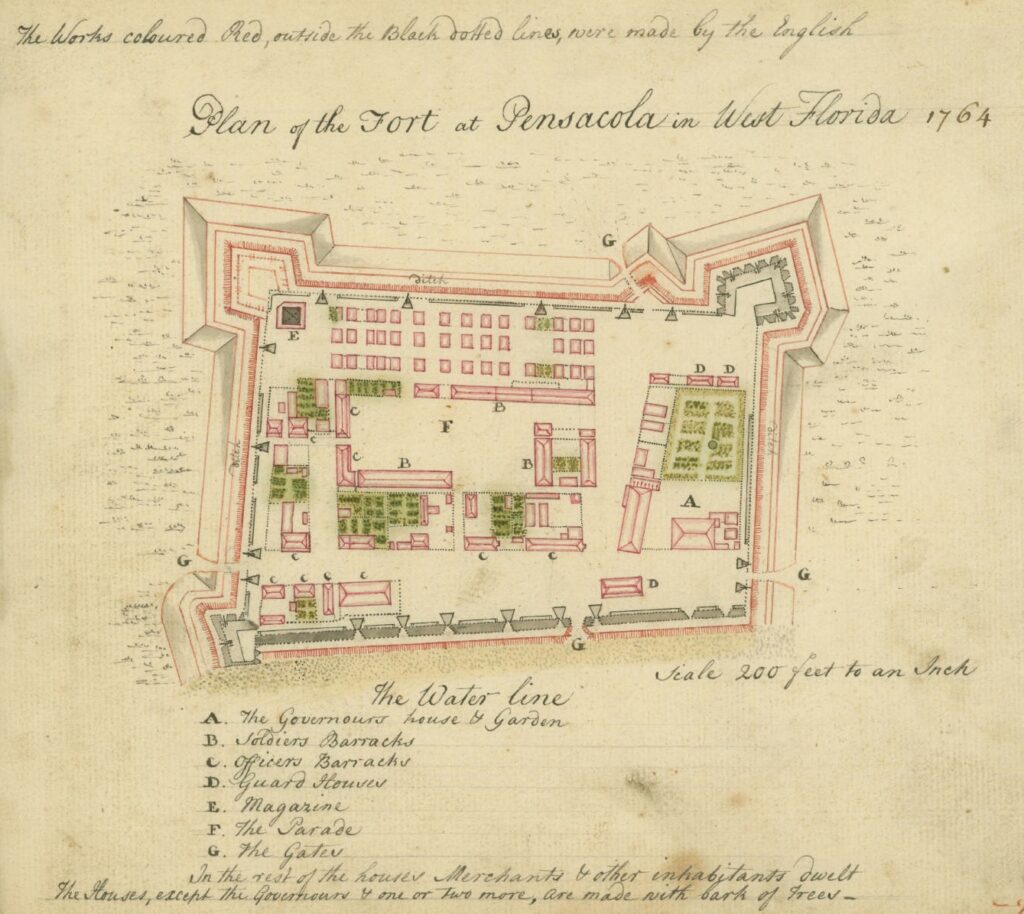
1764 map of the Fort at Pensacola. The Governor’s House and Garden are listed as #A on the map.
One can imagine the atmosphere inside that room. Across the table sat two men whose futures had suddenly become intertwined. For Eliot, the task was official. For Browne, it was personal. His reputation, position, and ambitions were all at stake.
The interrogation continued into the evening. Despite their differences, Browne and Eliot apparently dined together that night – according to Browne. Then the questioning resumed. It went late. And sometime during those dark hours in British Pensacola, something happened.
John Eliot was never seen alive again.
The Governor Is Dead
When Eliot could not be found the following morning, a search began. The young governor was discovered dead in his quarters. He was hanging. John Eliot was just twenty-six years old.
And Montfort Browne, the man Eliot had been investigating only hours earlier, suddenly found himself in an extraordinary position. The governor was dead. And Browne was once again the senior official in West Florida. Browne said he had spent the previous evening dining and talking with Eliot and professed surprise that the young governor would take his own life.
The death was declared a suicide…by Browne.
And Browne once again became acting governor. But consider the circumstances. Eliot had just arrived in Pensacola. He was young, successful, well-connected, and newly appointed to an important government position.
On the night he died, he had been questioning a subordinate whose future might depend upon the outcome of that investigation. That subordinate was apparently the last person known to have been with him. And with Eliot dead, that same subordinate benefited immediately. Was it suicide? Perhaps. But for generations, another possibility has hovered over the story.
What if somebody helped Governor John Eliot into that noose?
No criminal prosecution followed. Whatever happened inside the governor’s quarters that night disappeared with the men who witnessed it. The case was closed – declared a suicide…by the man who stood to gain the most from Eliot’s death.
Browne’s Victory Didn’t Last
If Montfort Browne believed Eliot’s death had finally secured his position, he was mistaken. Complaints about him continued to reach Britain. Eventually, Elias Durnford was sent to England in connection with the controversy surrounding the colonial government.
That journey changed Durnford’s life. While in England, he met a young woman named Rebecca Walker. Their courtship moved quickly, and the two were married on August 25, 1769. Rebecca returned with Elias to West Florida. But Durnford brought something else back to Pensacola.
Authority.
Browne’s hold on the government was coming to an end, and Durnford himself would temporarily occupy the governor’s office. The man who had helped lay out Pensacola’s streets had now become one of the colony’s most important leaders.
One Final Duel
Montfort Browne eventually left Pensacola, but not quietly. While preparing to depart, he became involved in a dispute with a local trader and challenged the man to a duel. Browne won. His opponent survived, although Browne was reportedly detained until authorities were certain the wounded man would recover. It was a fitting final chapter for a man whose years in Pensacola had been marked by arguments, accusations, rivalry, and controversy.
Browne later returned to military service. During the American Revolution he participated in the 1778 Siege of Rhode Island. Once again, controversy followed him, with accusations of cowardice and incompetence damaging his career. He died a few years later.
George Johnstone, meanwhile, eventually retired and lived a comparatively quiet life. He died of throat cancer on May 24, 1787.
Elias and Rebecca Durnford made their home in Pensacola and raised a large family. When Governor Peter Chester arrived in 1770, Durnford surrendered the governor’s authority to him but remained an important figure in West Florida government, serving on the council for years afterward. Durnford died June 11, 1794, in Trinidad.
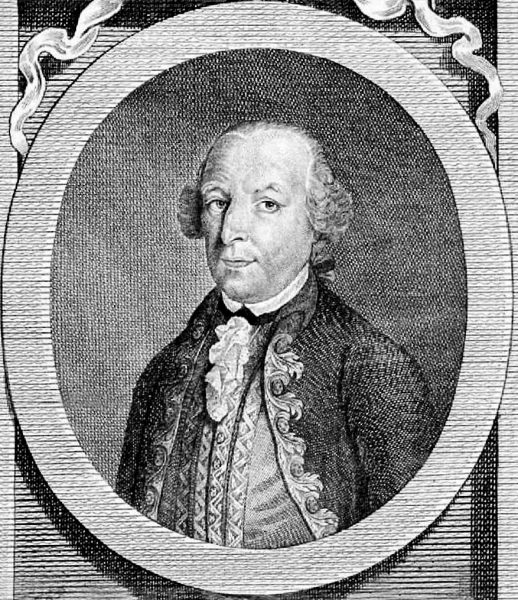
Governor Peter Chester
A Mystery Buried Beneath Modern Pensacola
Today, downtown Pensacola bears little resemblance to the British frontier town Elias Durnford knew. But underneath the modern streets is the same grid he helped establish more than two and a half centuries ago.
And somewhere within those streets lies the setting for one of Pensacola’s earliest political mysteries. A young governor arrived with authority from London. A disappointed rival discovered that his dreams of becoming governor had vanished. An investigation began. The two men spent an evening together. By morning, one of them was hanging dead. The survivor declared it suicide…and the survivor became governor again.
- There would be no fingerprints.
- No crime-scene photographs.
- No forensic pathologist.
- No DNA.
- No modern homicide investigation.
Only a dead governor, an ambitious lieutenant governor, and a question that has followed the story for more than 250 years:
Did Governor John Eliot kill himself?
Or did somebody in British Pensacola decide that the easiest way to stop an investigation was to stop the investigator?
Michael Earl Simmons
Sweet Tea Murders

Discover more from Sweet Tea Murders
Subscribe to get the latest posts sent to your email.
EXCELLENT STORY! So thought provoking! Probably would not have escaped scrutiny today!