
In case you missed the meeting of the Pensacola Police Historic Society, I presented the heartbreaking story of the night that Officer Tommie Hatcher was killed in the line of duty. Here it is in written form:
In the darkness of a Pensacola neighborhood, a burglar moved from house to house looking for a way in. A door might do. A window would be better. That was how he and his gang had worked before, slipping into homes, stealing money, even taking a .38 revolver as fear spread across the city. [Hatcher 08172026 | Word]
By then, the burglaries had become more than crimes against residents. They had become an embarrassment to the Pensacola Police Department. Officers gathered near a house on West Gonzalez Street, made a plan, and spread out through the North Hill area. One of them was Motorcycle Officer Herbert “Tommie” Hatcher. [Hatcher 08172026 | Word]
As Tommie Hatcher patrolled his section, he saw the burglar shining a light into a window. He stopped his motorcycle and moved in. The burglar had a gun, but Tommie Hatcher was faster. With his blackjack, he disabled the man and took him into custody. Later, the burglar admitted something chilling: he had been hiding in the bushes while the officers were making their plan, and if the others had not been nearby, he said he would have killed Tommie Hatcher. [Hatcher 08172026 | Word]
It would not be the last time death came close to him.
The Officer Everyone Knew
His name was not really Tommie. It was Herbert. But in Pensacola, everyone called him Tommie. [Hatcher 08172026 | Word]
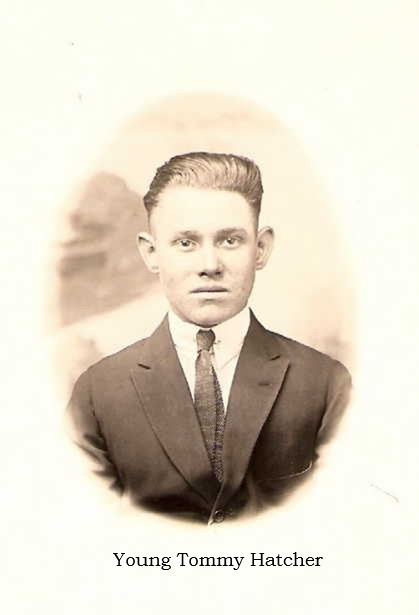
He had been born and raised in Knoxville, Tennessee, and at seventeen joined the United States Navy. The Navy brought him to Pensacola, but a young woman named Eunice Fernandez gave him a reason to stay. They married on April 19, 1924, settled into a small house on West Intendencia Street, and began building a family. [Hatcher 08172026 | Word]
Their life included joy, but also grief. In October 1926, their 21-month-old son, Herbert, died. When people later said Tommie Hatcher understood loss, it was not a figure of speech. He had buried a child of his own. [Hatcher 08172026 | Word]
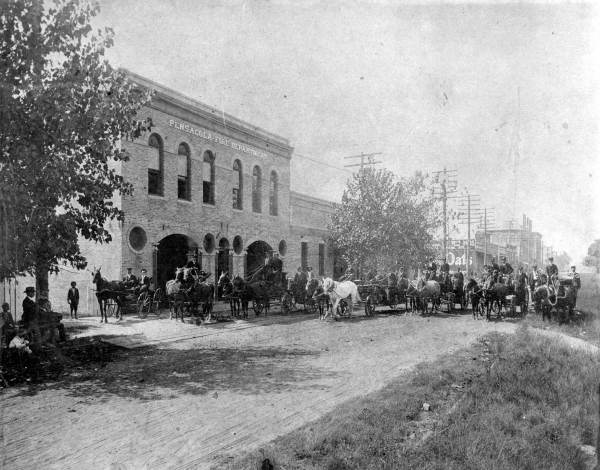
Before joining the police department, he worked at a bakery and later became a Pensacola fireman. Then, in 1932, tragedy created a vacancy in the Pensacola Police Department when Motorcycle Officer Frank Bazzell was killed in the line of duty. Tommie Hatcher was chosen to fill that place. [Hatcher 08172026 | Word]
He proved himself quickly. During three months of his first year, he led the department in activity, and he recorded more convictions than any other officer. He was not simply well liked. He worked hard. He was active, visible, and unafraid. [Hatcher 08172026 | Word]
More Than a Badge
In the 1930s, police work depended less on technology and more on trust. Officers relied on one another. They knew each other’s families. Their lives overlapped in ways that made the department feel like an extended household. [Hatcher 08172026 | Word]
Tommie Hatcher and his family became especially close to Officer Arthur Bobe Sr. and his family. They worked together, served the same city, lived near each other, and their children played together. When tragedy struck the Bobe family and their little boy died, Tommie Hatcher understood that grief. He served as a pallbearer and helped carry the child to his grave. [Hatcher 08172026 | Word]
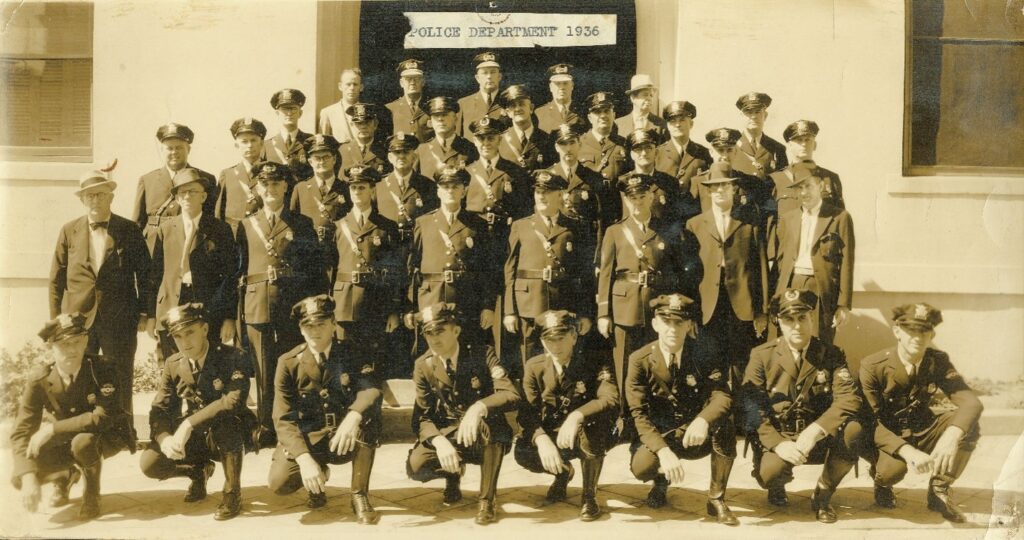
Tommie Hatcher became one of the city’s most recognizable officers. He caught burglars, helped break up a burglary ring, captured an escaped Alabama convict, chased escaping prisoners, worked traffic, served as a detective, became certified on the department’s new radio equipment, and even participated in charity boxing matches. [Hatcher 08172026 | Word]
He also seemed to have a habit of getting hurt and coming back anyway. He crashed motorcycles, was hit by a hit-and-run driver, injured his shoulder, hurt his leg, and once had his wrist fractured when a prisoner slammed a car door on his hand. [Hatcher 08172026 | Word]
But perhaps the best measure of him was not found in arrests or newspaper mentions. It was found in the boys of Pensacola. Twice, he directed the city’s School Safety Patrol program, influencing hundreds of schoolboys. Tradition also connects him with the “Knothole Gang,” a program that helped underprivileged boys get into baseball games at Legion Field instead of watching through holes in the fence. [Hatcher 08172026 | Word]
He was a police officer, yes. But he was also a mentor, neighbor, husband, father, and friend.
Then came Saturday night, January 14, 1939.
A Young Man With a Gun
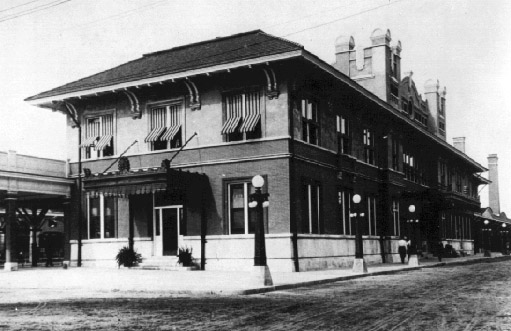
The L&N Railroad depot was a grand building. Situated at the corner of Alcaniz and Wright Streets, it was a main busy artery in town. People came and went constantly, all hours of the day and night.
A block and a half away stood the People’s Cafe. Like most all-night cafes, it had glass front, a counter, a few chairs, and a kitchen – oh, and a juke box.
Somewhere in Pensacola that evening, an eighteen-year-old young man was out on the town. Something was wrong. At the Palafox Inn, near Palafox and Scott streets, he caused a disturbance and threatened the clerk, saying he would get a gun and come back to kill him. [Hatcher 08172026 | Word]
He then crossed to a service station and asked the attendant whether there was money in the cash register. When told there was, he said he would be back. [Hatcher 08172026 | Word]
A short time later, just after midnight, he walked into the Peoples Café at 223 East Wright Street. About fifteen people were inside. He pulled a revolver and announced a holdup. When people did not move fast enough, he fired two shots into the floor. [Hatcher 08172026 | Word]
Then, in a strange and terrifying turn, he robbed the cash box of approximately fifteen dollars, ordered someone to put money in the juk box, and told the frightened customers to start dancing. [Hatcher 08172026 | Word]
Outside, Willie Neal looked through the window and realized something was wrong. A block away, he saw a Pensacola police car carrying Captain Riley Simmons and Herbert “Tommie” Hatcher. He flagged them down. [Hatcher 08172026 | Word]
The police car turned toward the café.
The Doorway
When they arrived, Tommie Hatcher did not hesitate. He jumped from the car and ran toward the entrance. At nearly the same moment, the gunman was coming out. They met just inside the doorway. [Hatcher 08172026 | Word]
There was almost no time to react.
The gunman raised his revolver and fired twice. Both bullets struck Tommie Hatcher in the abdomen. The officer fell. Then the gunman bent over him and took Tommie Hatcher’s revolver from his hand. [Hatcher 08172026 | Word]
Now the young man had two guns.
Captain Riley Simmons opened fire. His first shot missed. The gunman turned both revolvers toward him and began shooting. Riley Simmons aimed through the café’s plate-glass window and fired twice. One bullet struck the gunman in the head. The other struck him in the chest. The young man collapsed and died before he hit the floor. [Hatcher 08172026 | Word]
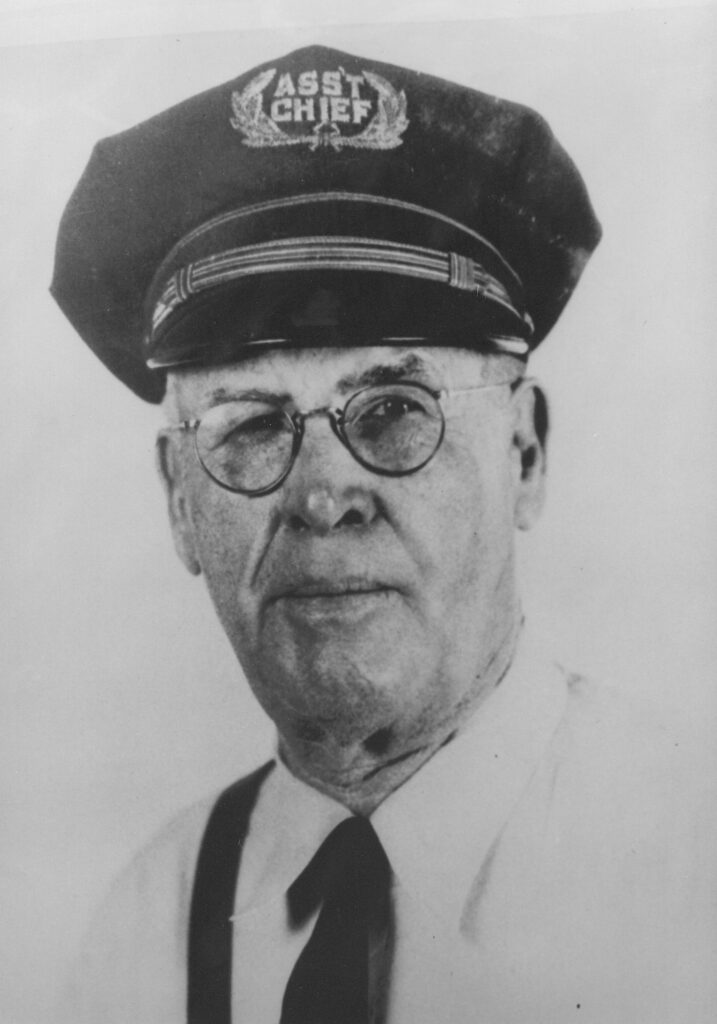
An ambulance took Tommie Hatcher to the hospital. Doctors tried to save him, but at 4:45 on the morning of Sunday, January 15, 1939, Pensacola Police Officer Herbert “Tommie” Hatcher died. [Hatcher 08172026 | Word]
The Second Blow
Back at the café, two revolvers lay near the dead gunman. One was easy to identify. It belonged to Tommie Hatcher. But the other looked familiar to Captain Riley Simmons. It did not look like an ordinary civilian weapon. It looked like a police revolver. [Hatcher 08172026 | Word]
The gun was taken to the department, where Police Chief William O’Connell examined it. He recognized it. The revolver belonged to another Pensacola police officer: Arthur T. Bobe Jr. [Hatcher 08172026 | Word]
Officers went to the Bobe home in the middle of the night. They woke Officer Arthur T. Bobe Jr. and asked him to check for his service revolver. It was gone. Then they told him what had happened. There had been a robbery. Tommie Hatcher had been shot. The gunman was dead. And the gunman had been carrying Arthur T. Bobe Jr.’s police revolver. [Hatcher 08172026 | Word]
Officer Arthur T. Bobe Jr. went with them to the mortuary. There, he looked at the body and identified the gunman. It was his son, Arthur T. Bobe III, known as Junior. He was eighteen years old. [Hatcher 08172026 | Word]
The son of a Pensacola police officer had stolen his father’s service revolver, used it in a robbery, and killed his father’s friend and fellow officer. [Hatcher 08172026 | Word]
No Clean Way to Mourn
This was not simply a police shooting. It was a tragedy that tore through two families and one department. [Hatcher 08172026 | Word]
The Hatchers had lost a husband and father. The Bobes had lost a son. And in the cruelest twist, one family’s son had killed the other family’s father. [Hatcher 08172026 | Word]
Years earlier, Tommie Hatcher had stood beside the Bobe family in their grief. He had helped carry their child to his grave. Now the Bobe family was connected to the death of the man who had once helped them mourn. [Hatcher 08172026 | Word]
At 926 East Lloyd Street, people gathered at the Hatcher home. Friends, relatives, police officers, city officials, and citizens came to pay their respects. Cars lined the surrounding streets. Inside were Eunice Hatcher and her children, facing the fact that their husband and father would not return. [Hatcher 08172026 | Word]
From the home, Tommie Hatcher’s body was taken to Sacred Heart Church, where Reverend Campodonica conducted the funeral. Then came the procession to St. John’s Cemetery. Among those who came to honor him were more than one hundred School Safety Patrol boys, children whose lives he had touched. [Hatcher 08172026 | Word]
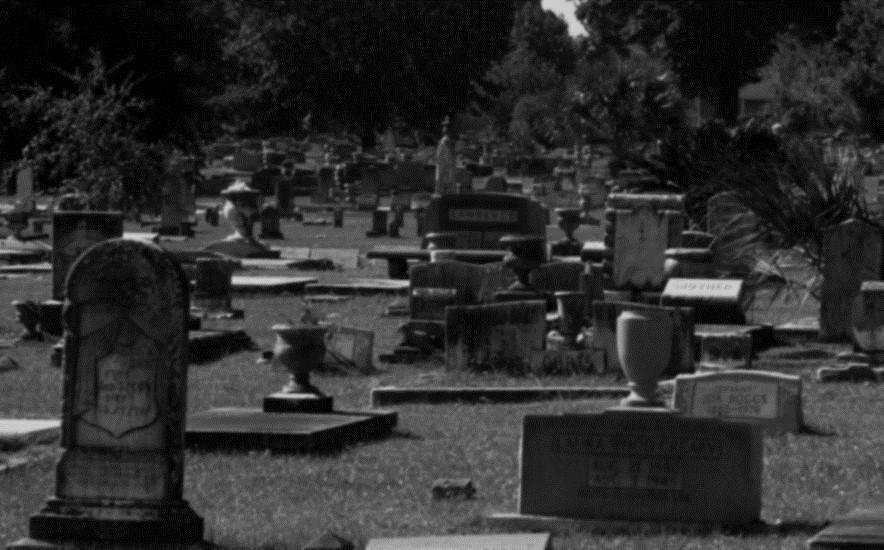
Across town, another family buried an eighteen-year-old son. Chief William O’Connell attended the Bobe funeral and served as a pallbearer for Arthur T. Bobe III, the young man who had killed one of his officers. [Hatcher 08172026 | Word]
There may be no clearer picture of how deeply the tragedy cut.
Remembering Tommie
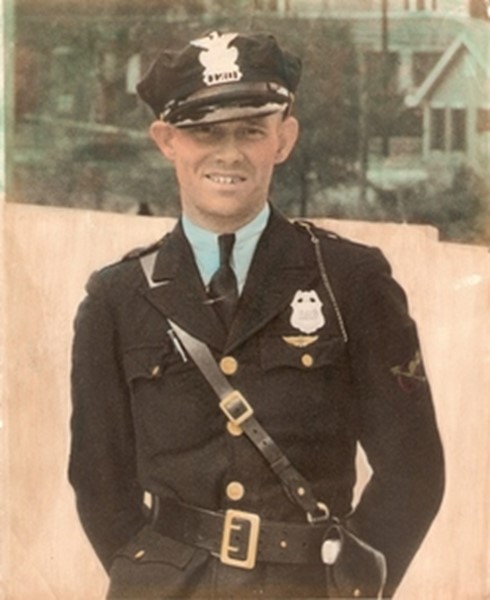
Officer Arthur T. Bobe Jr. continued serving as a Pensacola police officer and died of a heart attack in 1944. Herbert “Tommie” Hatcher became part of the history of the Pensacola Police Department, with his End of Watch recorded as January 15, 1939. [Hatcher 08172026 | Word]
But the best way to remember Tommie Hatcher is not only by the way he died.
Remember the motorcycle officer who chased burglars. Remember the detective who kept coming back after injuries. Remember the officer who helped children cross streets safely, who cared about boys who could not afford a baseball ticket, and whose name appeared again and again in the newspaper because he was always working, always involved, always part of the life of his city. [Hatcher 08172026 | Word]
And remember the deeper wound in this story.
Years before, Tommie Hatcher helped carry another family’s child to the grave. Years later, that same police family would be bound forever to his own death. [Hatcher 08172026 | Word]
That is why this story still matters. It is not only about a robbery, a shooting, or a line-of-duty death. It is about the fragile ties between families, the cost of public service, and the strange cruelty of a night when grief crossed the street, entered a café doorway, and changed Pensacola forever.

Discover more from Sweet Tea Murders
Subscribe to get the latest posts sent to your email.
Great story but sad