
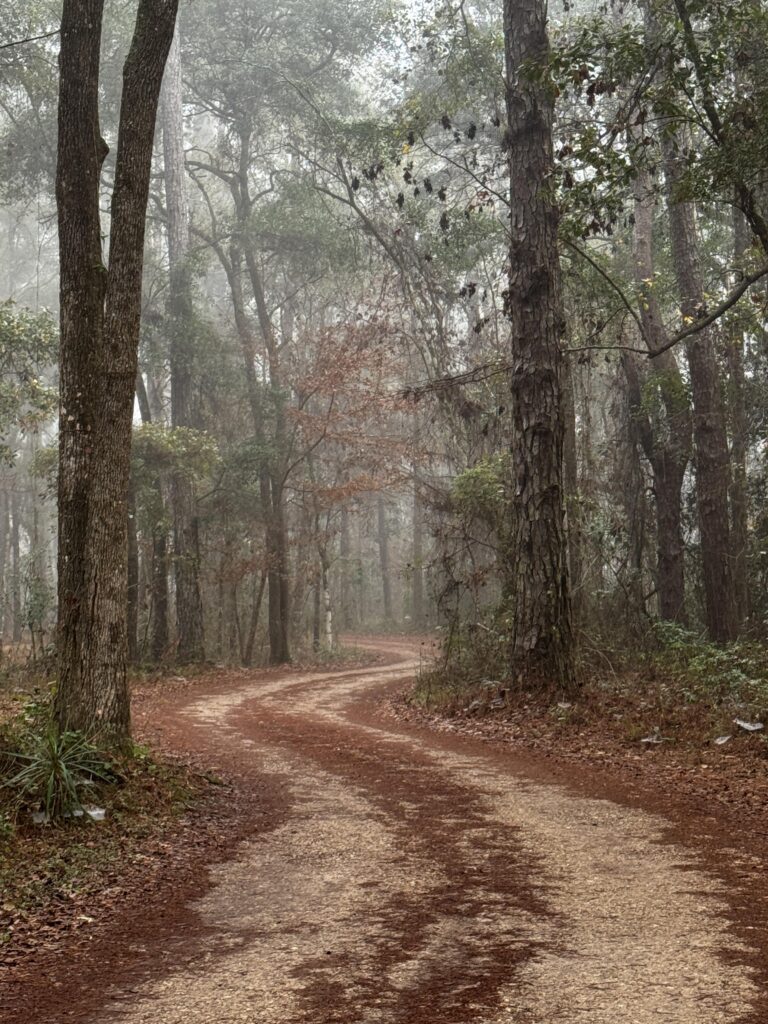
There are roads in the Florida Panhandle that remember things.
They remember wagon wheels cutting through white sand. They remember mule hooves and the slow rattle of early automobiles. Travel along the trail through the tall pine forests and the humid summer atmosphere made for a long trip. The fragrance of pine mixed with the salt air that drifts up from the Gulf makes the trip unforgettable. Long before it became a paved highway known as U.S. 90, that old east–west road across the Panhandle carried travelers, drifters, and sometimes men with darker intentions.
And sometimes, those roads remember the last ride a man ever took.
On July 4, 1921, while fireworks cracked across the country and small-town bands played patriotic marches, a young automobile salesman named John M. Tuggle was making a simple trip west across North Florida.
It would be the last journey he ever made.
A Ride for Strangers
Tuggle was known around Holmes County and the town of Chipley as a friendly, obliging young man. In the early 1920s automobiles were still new enough that a man who drove one for a living was something of a curiosity. Salesmen like Tuggle spent long days on the road, demonstrating vehicles and traveling from town to town across the Panhandle.
On that hot July day he was headed toward Pensacola, following the familiar road that passed through Caryville, Crestview, and beyond.
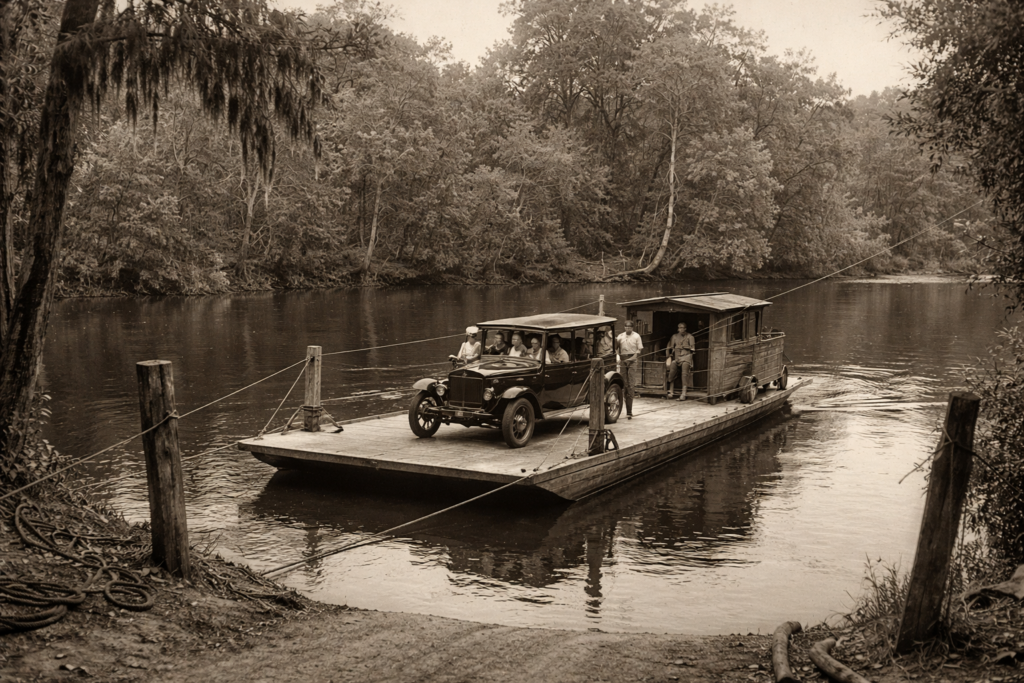
When he reached the Choctawhatchee River ferry at Caryville, he pulled up to wait for the ferry to take him across.
That was where he met the two men.
They looked like drifters—dusty, travel-worn, the sort of men who moved from place to place looking for work, or sometimes avoiding it. They asked Tuggle for a simple favor.
A ride west.
Their names, as authorities would later discover, shifted depending on who was asking. One called himself Jake Martin, sometimes Joseph Martin. The other answered to Putnam E. Ponsell, though he also used the names Jim Lingo and Hugh Bond.
Tuggle didn’t know any of that.
He just knew two men needed a ride.
And he agreed.
A Promise That Sealed His Fate
The three men rode together as the road wound west through the pine forests of the Florida Panhandle.
When they reached Milton, Tuggle dropped the pair off. Before they parted, he offered a courtesy that would ultimately cost him his life.
“If you need a ride back east tomorrow,” he told them, “I’ll pick you up.”
It was the sort of promise decent people made in those days.
And the next morning, Tuggle kept it.
He met the two men again and began the drive back toward Chipley.
The return trip east was quiet. The road stretched ahead in long sandy ribbons between towering pines. The summer heat shimmered above the ground. Few travelers passed along those lonely stretches of highway.
Somewhere near Deerland in the Mossy Head area, just past Crestview, the ride came to a sudden and violent end.
Inside that automobile, the two men turned on Tuggle.
He was beaten and murdered along that desolate stretch of Okaloosa County road.
The motive was as plain as sin.
Money.
A Crime They Thought Was Forgotten
After killing Tuggle, the two men abandoned his body and walked into the small community of Mossy Head, where they caught a train heading east.
Their movements afterward would later read like a strange travel log of fugitives who believed they had gotten away with murder.
They stepped off the train in Cottondale, lingering there until Wednesday night before catching another train north to Dothan, Alabama. From there they walked on foot to Bainbridge, Georgia, where they found work aboard riverboats.
The distance, they believed, had buried their crime.
It hadn’t.
The Arrest That Changed Everything
Jake Martin’s capture came through a twist of fate that seemed almost too strange to be true.
In Bainbridge, he was arrested by a local bailiff—not for murder, but for stealing a shirt.
When the bailiff brought him to the sheriff’s office, the sheriff happened to be reading a description sent from Florida authorities searching for the men responsible for Tuggle’s murder.
The sheriff studied the man standing in front of him.
Then he asked a simple question.
“Why did you murder that young fellow over in Florida?”
Martin answered without hesitation.
“For his money.”
There was no lawyer present. No careful statement. Just a blunt confession spoken plainly.
Both men eventually admitted their roles in the killing.
Justice in Escambia County
News of the murder had stirred deep anger across Northwest Florida. Fearing that mob justice might intervene, Governor Cary A. Hardee ordered the prisoners transferred temporarily to Duval County (Jacksonville) for safekeeping.
Eventually, the men were returned to Escambia County to stand trial.
On September 11, 1921, they appeared in the Escambia County Courthouse in Pensacola. The case was heard before Judge A. G. Campbell, with State Attorney Harry Thompson prosecuting.
The evidence left little room for doubt.
The confessions stood.
The jury returned a verdict of guilty of first-degree murder.
One Final Request
Before sentencing was carried out, the two condemned men made a final request.
They asked to be hanged together.
The court granted it.
On September 23, 1921, Sheriff Steele carried out the execution.
There was no spectacle. No speeches.
Just the quiet work of justice as it was understood in those days.
The Road That Remembers
John M. Tuggle’s story is one of the simplest—and saddest—murder cases in Panhandle history.
A decent young man offered a ride to two strangers on a dusty Florida road.
He trusted them.
They killed him for his money.
If you travel across the Panhandle today along U.S. Highway 90, you pass through places like Caryville, Crestview, and Mossy Head without much thought. The road is paved now, the cars faster, the world louder.
But the land remembers.
And if you drive through those pine forests when the sun is low and the wind is still, you might feel it—the quiet weight of a long ride west that never reached its destination.
Some roads never forget.
About the Author
Michael Earl Simmons is a retired Pensacola Police Sergeant, former homicide detective, and police historian. Through Sweet Tea Murders, he tells the forgotten true crime stories of the Gulf Coast—cases that unfolded on quiet streets, lonely back roads, and historic corners of the American South.
Discover more from Sweet Tea Murders
Subscribe to get the latest posts sent to your email.