
The 1894 Trainor Murders: A Divorce, a Rushed Marriage, a Colt Revolver, and the Starving Man Who Defied the Gallows
By Michael Earl Simmons
Please take a moment to settle in with a glass of something cool. This account reaches back to April 30, 1894—now more than 130 years ago—when the Pensacola newspapers published the headline: “AN IMPRESSIVE SCENE. Judge Barnes in the Circuit Court Pronounces Sentence of Death Upon Thomas Trainor.” The words promised high drama, and indeed they drew a large audience, though events unfolded in a manner few anticipated.
Such tragedies often begin with a marriage that has quietly unraveled. Ada Trainor had endured enough. Her husband, Thomas, captain of the steamer Hercules, was known in Pensacola for a temper that many observed but few openly condemned; in 1893, a husband’s harshness toward his wife was seldom regarded as scandalous. Ada, however, possessed uncommon resolve. She petitioned for divorce and appeared before Judge W. D. Barnes in the Escambia County Circuit Court on December 6, 1893. The decree was granted: she emerged as Ada Gallagher once more, with her property restored to her. For Thomas, the loss of control—and of property—cut deeply.
The story grows more tangled, as old accounts often do. Ada permitted Thomas to store some of his belongings at her home on the corner of 10th Avenue and Chase Street. He visited regularly, and on the surface their exchanges remained civil. Next door resided Mrs. Minnie Briggs, an elderly widow who kept boarders. Among them was C. F. Huff, a marine engineer recently arrived from Brooklyn, New York. He treated Ada with courtesy and consideration—qualities she had long been denied. A friendship developed swiftly into affection, and in due course Mr. Huff proposed marriage. Ada accepted.
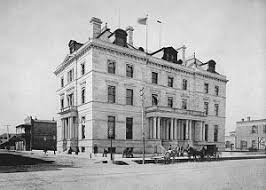
One hundred eleven days after the divorce, on March 27, 1894, at four o’clock in the afternoon, the couple stood before County Judge T. R. McCullagh in the courthouse to be wed. The ceremony had scarcely begun when the door burst open and Thomas Trainor entered. “Judge,” he announced, “I forbid this marriage.” Calmly, the judge informed him that Ada was no longer his wife under the law. He escorted the bride and groom into his private chambers, closed the door, and completed the rite. Moments later, Trainor requested a word with Ada. The judge replied that any conversation must now be permitted by her husband. Mr. Huff consented, provided no offense was given.
Trainor reached into his pocket; those present tensed, expecting a weapon. Instead, he withdrew an empty hand and demanded his clothing. Ada agreed he might have it, but not immediately—she had errands in town and suggested he return that evening or the following morning. The judge deemed the arrangement reasonable. Trainor, however, grew abusive. The judge ordered him to leave. Observers speculated whether drink had influenced him, yet all agreed he appeared sober—merely implacable.
The newly married couple proceeded up Palafox Street. Witnesses, including Bennie Greenwood, saw Trainor overtake them, seize Ada’s arm, and attempt to draw her in one direction while Huff guided her in another. They continued eastward toward home. Trainor soon vanished into Sherry’s Gun Shop. The proprietor later testified that Trainor retrieved a repaired but unreliable pistol, judged it inadequate, and purchased a Colt .32-caliber revolver in its place. He obtained ammunition from the neighboring hardware store, had the weapon loaded, pocketed the remaining cartridges, and departed as evening fell.
Near seven o’clock he returned to the house and demanded his belongings. Huff admitted him. Shouting soon followed, then sounds of struggle and breaking dishes. In an era without radio or moving pictures, the neighborhood gathered as though at a public spectacle. Then came gunshots—four to eight, witnesses estimated—flashes visible in the darkness. Huff emerged, staggered to a nearby tree, and collapsed. “I’ve been shot,” he murmured twice before dying in Mrs. Briggs’s arms.
Officers discovered Huff’s body in the yard and Ada’s inside the house. He had been struck three times, one bullet piercing his heart. She had been shot twice—once in the chest, once through the mouth and brain, causing instant death. Trainor was quickly taken into custody. He admitted the shootings but claimed self-defense: Huff, he said, had attacked him with a knife, and Ada had been struck accidentally as she intervened. The physical evidence and neighbor accounts pointed to a different sequence.
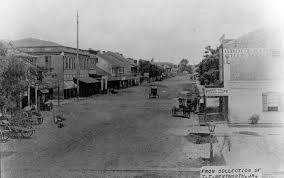
The trial captivated all of West Florida. It opened on April 19, 1894, and continued until the 24th. The jury returned a verdict of guilty of first-degree murder without lengthy deliberation. On April 28, in a crowded courtroom, Judge Barnes pronounced sentence in language both solemn and poignant. He expressed the gravity of his duty, reminded the prisoner of the demands of law and divine justice, and exhorted him to seek mercy from a higher power: “…that you be taken hence…and there hanged by the neck until you are dead. And may the Lord have mercy on your soul.” The room fell silent; no cheers, only the weight of judgment.
Appeals followed. The defense alleged juror bias—some had reportedly declared Trainor’s guilt before testimony began—and raised questions of self-defense. Speculation lingered about whether Ada and Huff had formed an attachment while she remained married, though the record offered little support for any conspiracy. The town prepared for the execution as though for a public festival: picnics planned, vendors anticipated, gospel hymns expected, visitors arriving from afar.
Yet the gallows remained empty. In October 1894, Trainor ceased eating. At first it appeared illness; soon it became evident he intended to end his life on his own terms. He refused liquids as well. Delirium overtook him. Physicians and the Sisters of Mercy offered care and comfort, but he seemed beyond reach. On November 19, 1894, at 5:05 in the afternoon, Thomas Trainor died in his cell. The place of his burial is unknown.
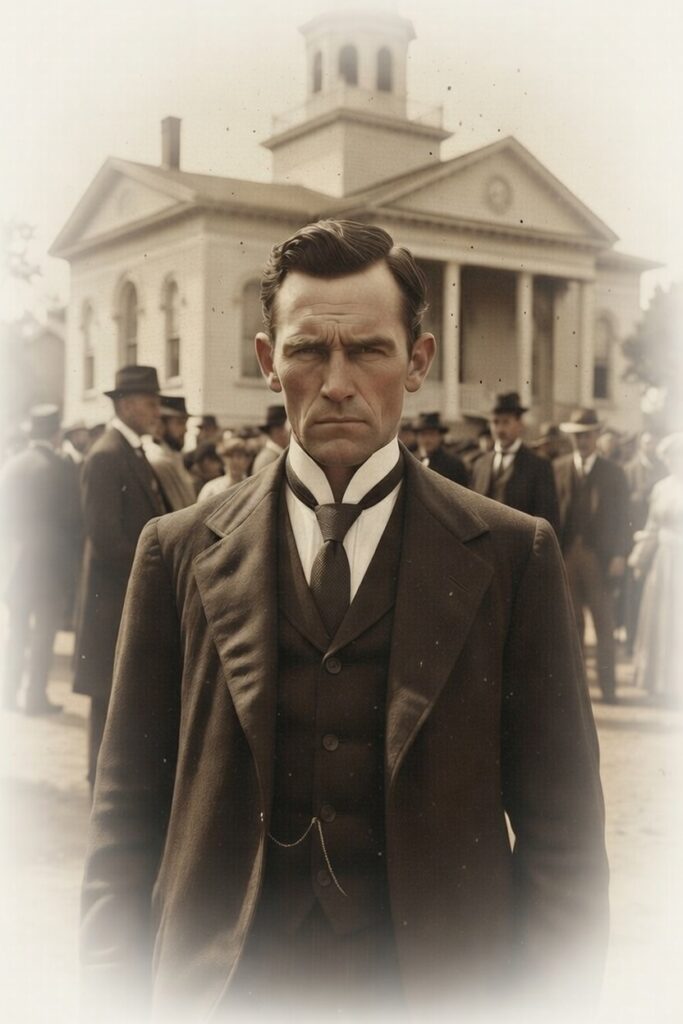
It is a peculiar conclusion. A man who inflicted sudden, violent death upon two others chose for himself a slow and deliberate one. The appeals process might have yielded a different outcome; we shall never know. By refusing food and water, he removed the decision from the courts and the crowd. In a community braced for spectacle, he left only quiet anticlimax.
Such is the story—rooted in jealousy, a revolver, an interrupted wedding, and a sentence that never reached the scaffold. It invites reflection on pride, forgiveness, and the narrow boundary between human justice and divine mercy. One may ask: did Thomas Trainor evade the hangman, or did he merely fashion his own?
Discover more from Sweet Tea Murders
Subscribe to get the latest posts sent to your email.