
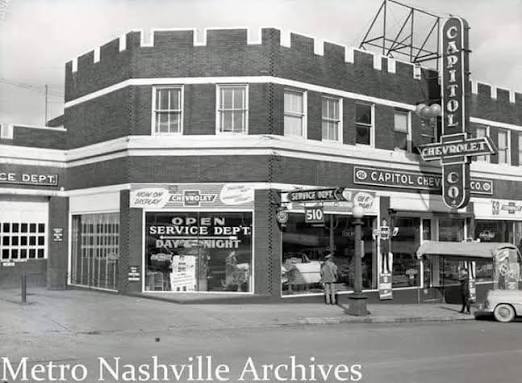
On the morning of May 24, 1968, two prominent Nashville businessmen left Capitol Chevrolet in a new black Chevrolet. They were expected back in fifteen minutes. Only one returned alive.
William Haynie Gourley was seventy-two years old, a self-made millionaire and the founder of Capitol Chevrolet. He had built the dealership during the Great Depression and watched it become one of Nashville’s leading automobile businesses.
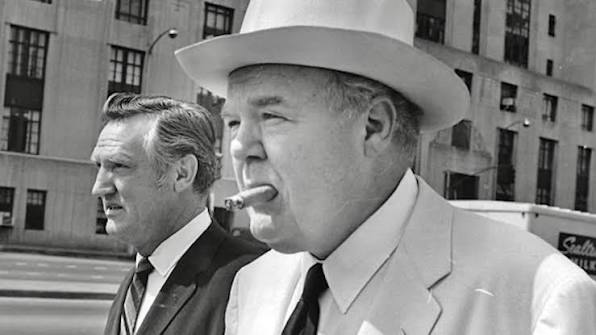
Now, Gourley was thinking about the future. He wanted his only son, Billy, to inherit the company. But another man already held an important place in that future.
William “Big Bill” Powell was Capitol’s vice president and general manager. A former Vanderbilt football player, Powell owned twenty-five percent of the dealership and managed its daily operations. Gourley owned the remaining seventy-five percent.
By May 1968, Gourley wanted to buy Powell’s share and place the business in his son’s hands. Two nights before the murder, the men apparently reached a tentative understanding: Powell would leave once they agreed upon a price.
Then, on Friday morning, Powell borrowed the keys to a new Chevrolet and invited Gourley to take a short drive. Before leaving, Gourley found his son. “I’ll let you know what he says when I get back,” he reportedly told him.
Gourley never returned.
The Man in the Back Seat
Powell said he drove onto Elm Hill Pike and stopped near Spence Lane. While the Chevrolet was stopped, a tall, thin Black man wearing dark glasses and some type of disguise entered the back seat.
According to Powell, the stranger demanded money. When Gourley moved, the gunman warned him not to reach for a pistol. Then he opened fire. Gourley was shot three times in the head and neck. Powell suffered a gunshot wound to his left leg. Another bullet shattered one of the car’s windows.
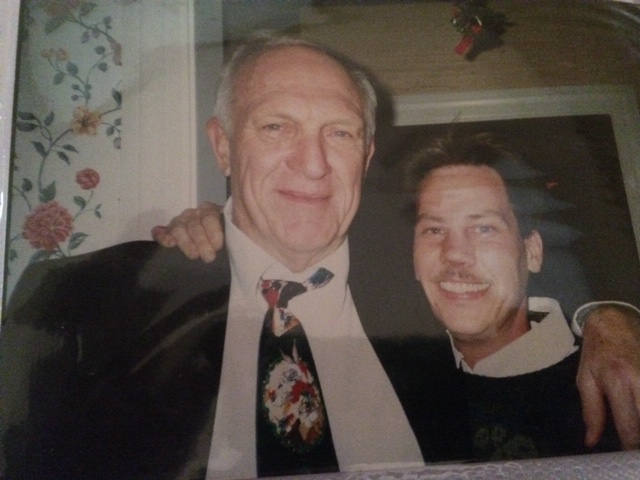
Powell managed to drive back to Capitol Chevrolet, where an ambulance was called. He had survived the attack and supplied police with their only eyewitness account.
But investigators quickly encountered troubling questions. Gourley’s wallet remained inside the car with approximately two hundred dollars in it. Nothing appeared to have been stolen. Powell had not brought his wallet on the drive. Police searched the intersection, nearby grass, creek beds and construction areas, but found no convincing evidence that a gunman had fled from the Chevrolet.
Investigators also questioned the bullet paths, the position of Gourley’s body and the damage inside the car. Was the shooting really a failed robbery, or had something else happened during those fifteen minutes?
A City on Edge
The accusation that a Black gunman had murdered a prominent white businessman carried enormous consequences in Nashville in 1968. Dr. Martin Luther King Jr. had been assassinated in Memphis only seven weeks earlier. Nashville had experienced racial unrest, and officials feared additional violence.
The Nashville Banner issued an extra edition—the newspaper’s first since President Kennedy’s assassination. Police searched for the mysterious passenger, while detectives quietly began considering another possibility…perhaps there had never been a man in the back seat.
The investigation eventually turned toward Powell. Gourley’s death left him in control of the local Chevrolet franchise. He subsequently assembled investors and purchased the Gourley family’s interest in the dealership for a reported sum between one and two million dollars. Prosecutors saw a possible motive. The defense saw nothing more than the necessary reorganization of a business after its owner’s death.
The Trial That Captivated Nashville
In March 1969, a Davidson County grand jury indicted Powell for first-degree murder. The prosecution contended that Powell had lured Gourley into the automobile, killed him, wounded himself to support his story and invented the unidentified gunman.
But the State’s case was almost entirely circumstantial. There was no conclusive scientific evidence proving Powell had fired a weapon. No eyewitness had seen him shoot Gourley. The murder weapon had not been definitively identified.
During the trial, however, investigators learned about a rusted .38-caliber Smith & Wesson found in the mud along Elm Hill Pike. Its barrel was too deteriorated for a conclusive ballistics comparison, but the fatal bullets could have been fired from that type of pistol.
A former Capitol Chevrolet employee testified that he had previously given the weapon to Powell for protection. Powell firmly denied ever receiving or possessing it. The trial lasted twenty-two days. While Apollo 11 carried men to the moon, Nashville waited for a jury to decide what had happened inside that black Chevrolet.
Powell took the witness stand and repeated the account he had maintained from the beginning: a stranger had entered the back seat, murdered Gourley and shot him in the leg. When asked whether he had killed the man he described as a second father, Powell answered no. The jury deliberated for less than five hours. Its verdict was not guilty.
The Question That Remains
The verdict established that the prosecution had failed to prove Powell’s guilt beyond a reasonable doubt. It did not establish who killed Haynie Gourley. No other person was ever prosecuted. Perhaps an unidentified gunman entered the Chevrolet that morning and disappeared into Nashville forever. Perhaps the truth never left the car.
What is known is that Haynie Gourley drove away from his dealership expecting to discuss the future of his business. Fifteen minutes later, he had been shot three times, his partner was wounded, and that future had been decided by gunfire. The courtroom answered the legal question placed before it. History continues to ask another:
Who killed Haynie Gourley—and what really happened inside that black Chevrolet?
Michael Earl Simmons is an international author and a police and crime historian.

Discover more from Sweet Tea Murders
Subscribe to get the latest posts sent to your email.