
By Mike Simmons
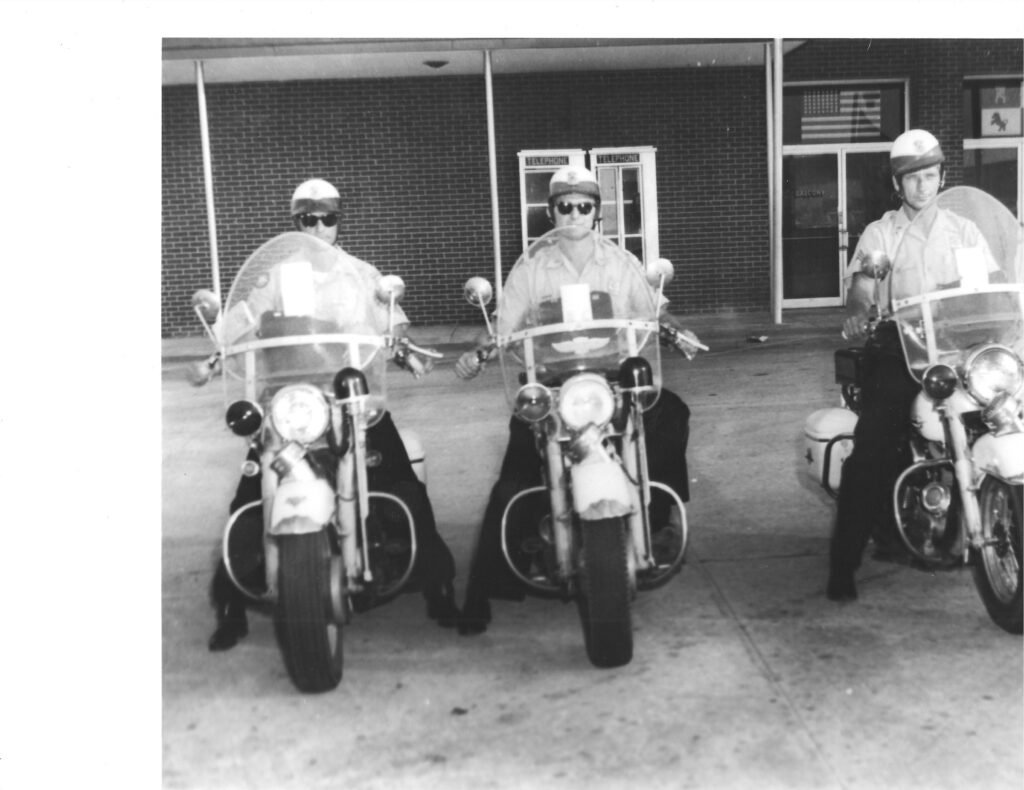
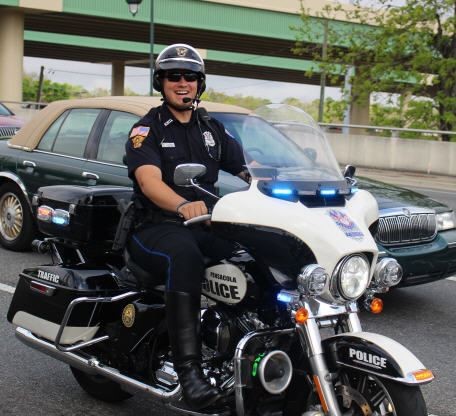
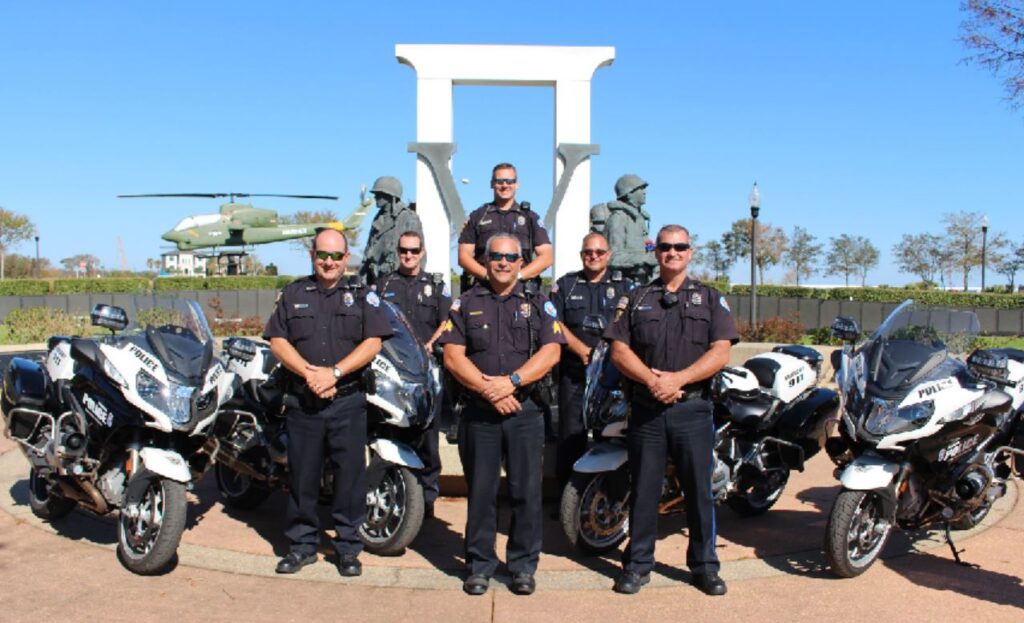
Dressed in motorcycle half-helmets with a badge on the front, sunglasses, gloves, Jodhpur pants, high leather boots, and leather jackets, they are probably as intimidating as a person can get. To the public, they are the epitome of a tough guy. They are the department’s showmen. They are motorcycle officers.
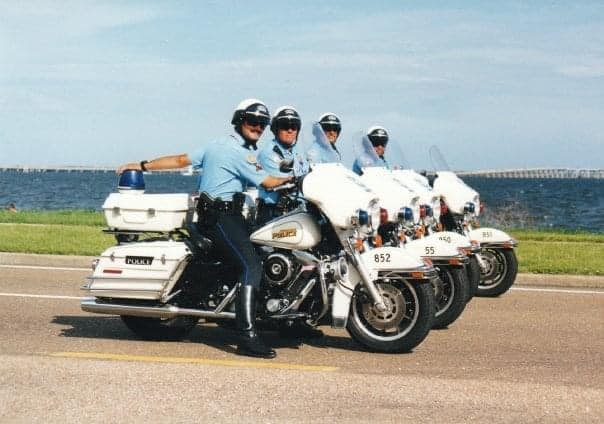
Every make of motorcycle has a police model. Hondas, Kawasakis, and BMWs all have models built for police work. Of course, the most popular police motorcycle is a Harley-Davidson. The first police Harley was delivered to the Detroit Police Department in 1908. The tactical advantage of motorcycles was soon realized. Motors are fast, maneuverable, and economical…and they look cool!
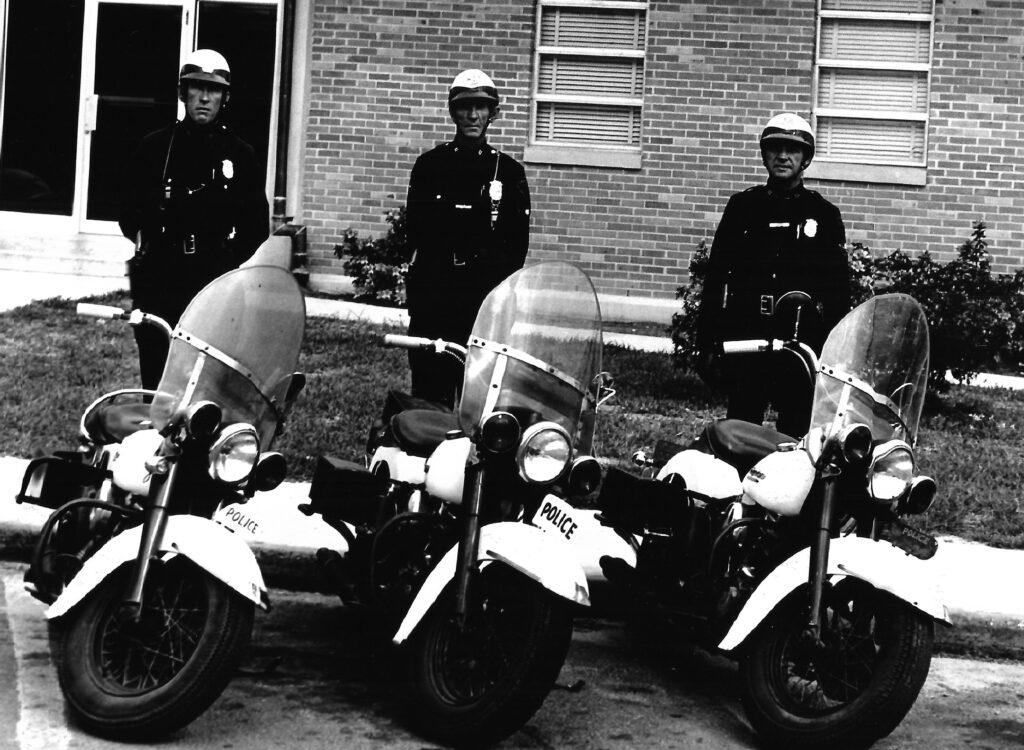
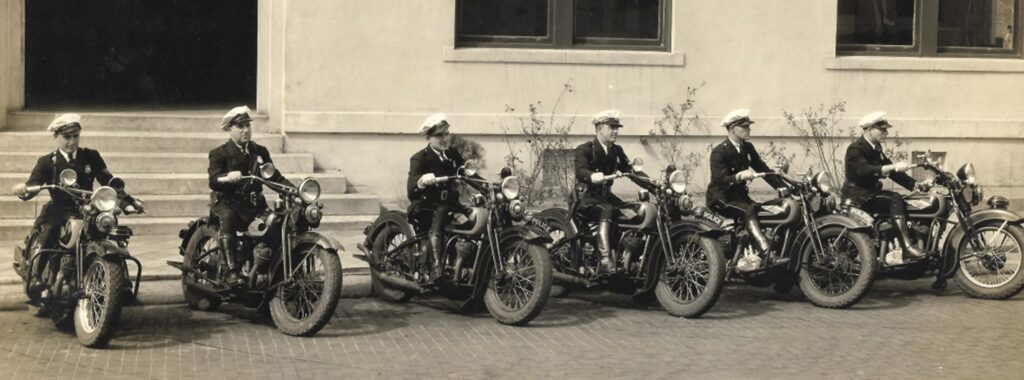
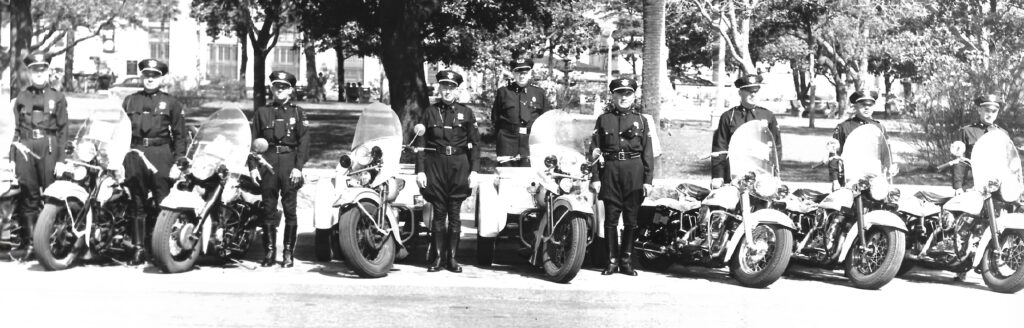
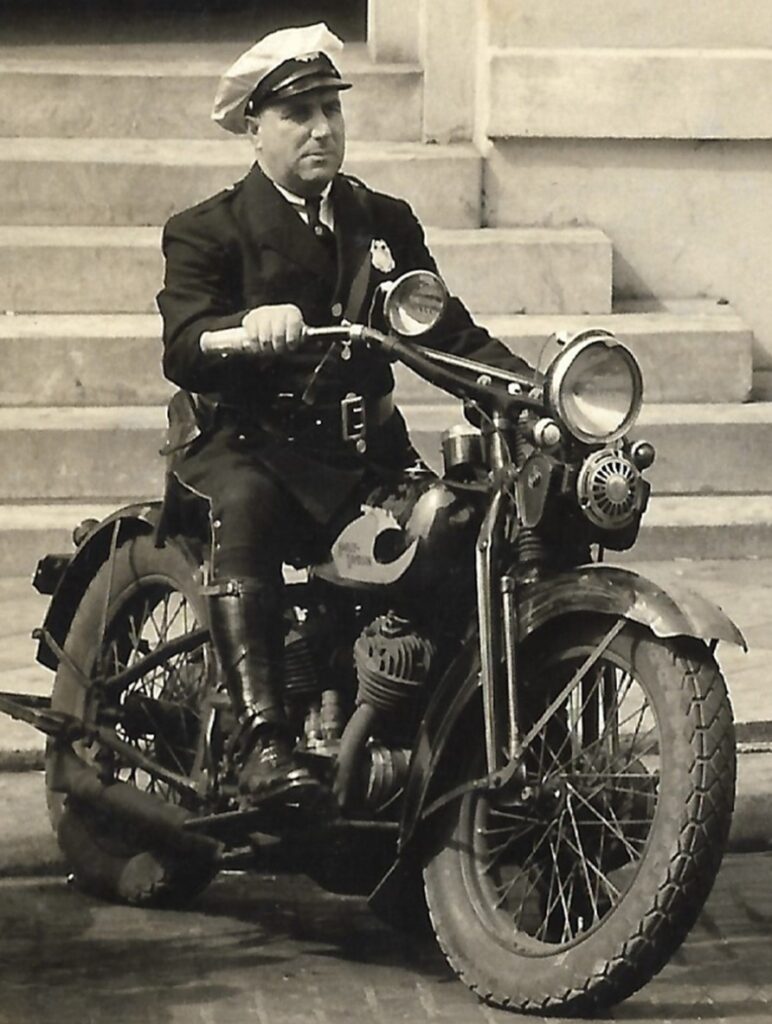
The Harley 9E was the first police model, and the first one delivered to the Pensacola Police Department. Other popular models were the 10F, JDCA, Model G Servi-Car, VLD, panheads, flatheads, shovelheads, roadkings, and a whole lot more.
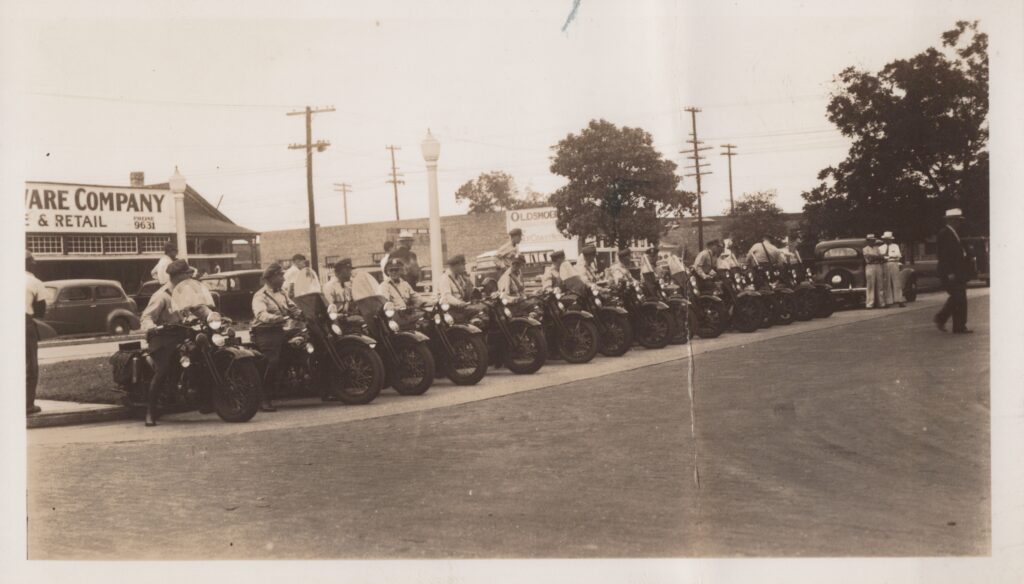
When motor officers spend all day on their bikes, they also need special equipment. At first, they were bareheaded. But then they began wearing eight-point hats, which were sometimes white to keep the head cool. Later, helmets were proven to be safer. Gloves and leather jackets are worn to keep the driver from getting road rash in case of a crash. High boots keep the hot engine from burning the driver’s legs. The sunglasses, of course, protect the wearer from glare.
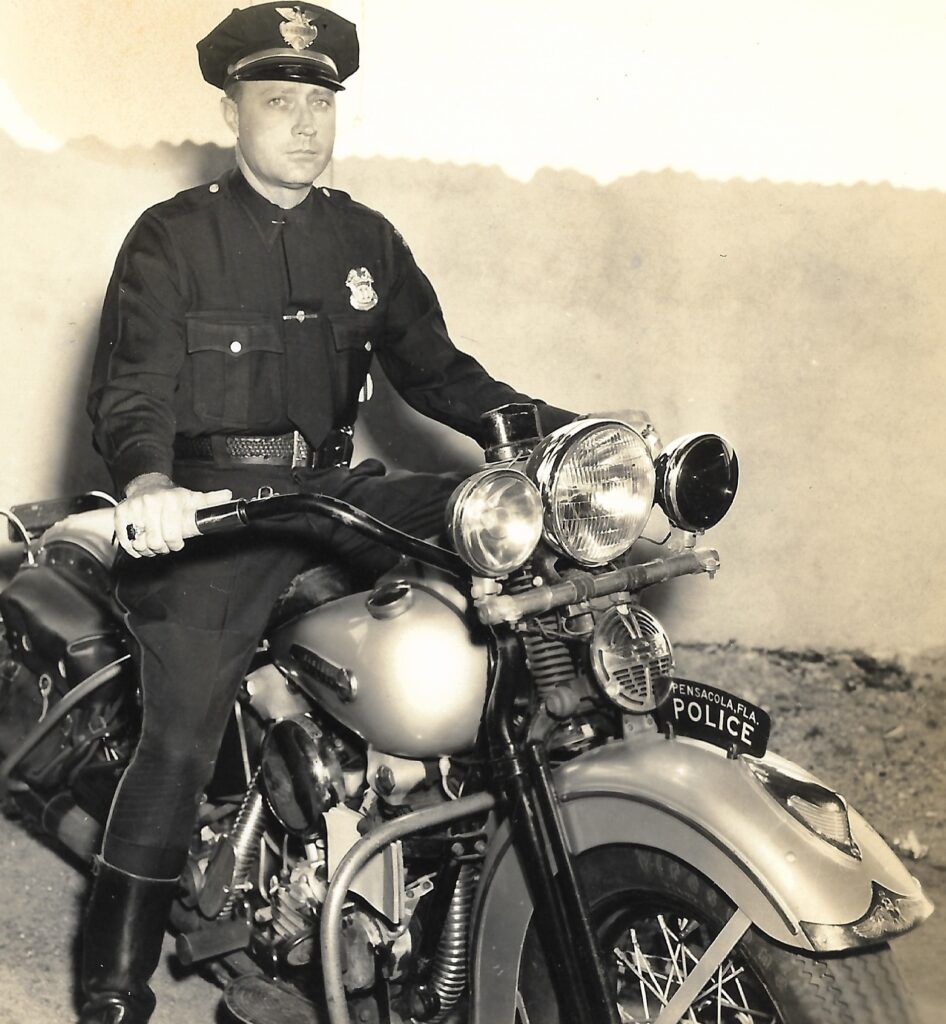
In many departments, motorcycle officers are assigned to the traffic section. They might include such assignments as traffic crash investigations, traffic homicide, hit and run investigations, and funeral & other escorts.
If you can stay on one longer than six months without hitting a pickup truck, the assignment to the traffic section is considered elite.
Discover more from Sweet Tea Murders
Subscribe to get the latest posts sent to your email.