
There are names in local history that survive because of what was proven. And then there are names that survive because of what people believed. In late nineteenth-century Santa Rosa County, few names carried more fear than Burrell Martin.
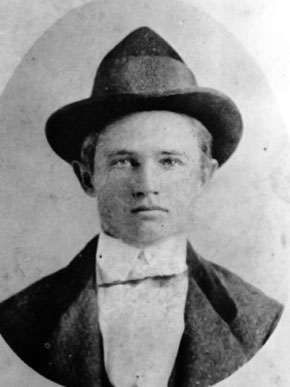
By the time newspapers began following his movements across Florida, Alabama, and Texas, Martin was being described not simply as a criminal, but as a desperado – a man whose reputation seemed to travel ahead of him. One account claimed he had already killed seven men. Whether that number was fact, exaggeration, or the natural growth of frontier legend is difficult to determine today.
But one thing is certain: When Burrell Martin’s name appeared in the paper, people read.
Christmas Morning Bloodshed
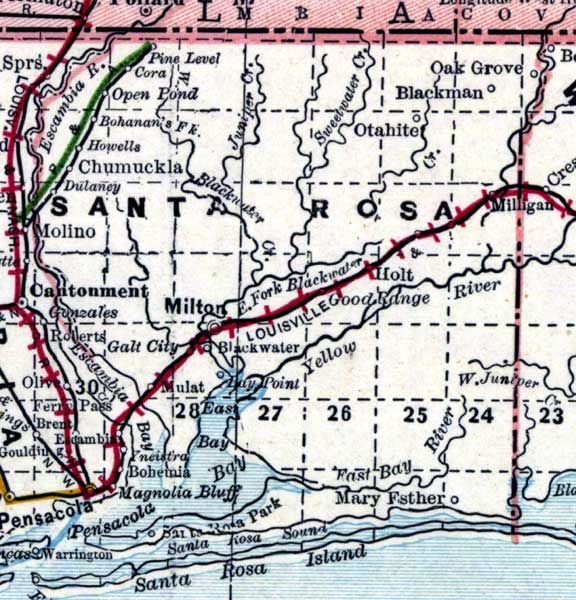
The event that made Martin famous – or infamous – happened on Christmas Day, 1889, in Santa Rosa County. According to newspaper reports of the day, Martin shot and killed his own son-in-law, Dave Harvell.
When Martin was arrested, he never denied the killing. Instead, he claimed it was self-defense. He portrayed the shooting as a desperate act during a confrontation, consistent with the hardscrabble logging and rural life in the area.
That distinction would become the center of a legal battle that stretched for months and produced headlines across West Florida.
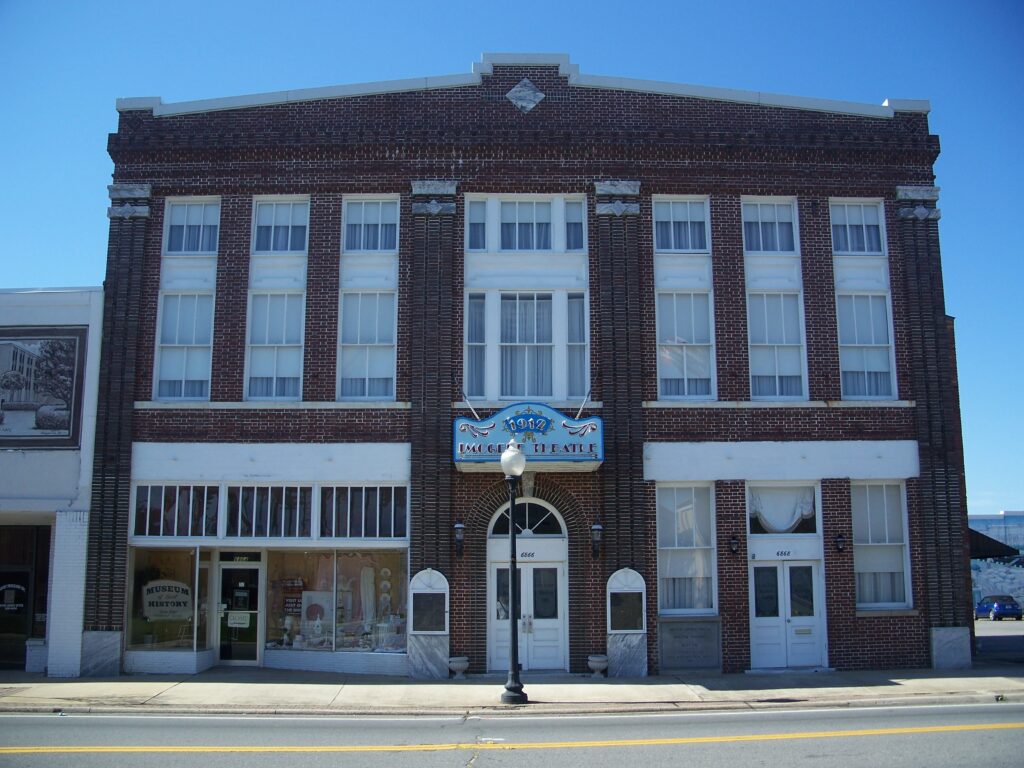
The killing itself struck people because of the setting. Christmas morning represented family, gathering, and peace. Yet somewhere along East Bay, holiday celebration gave way to violence—and the victim was family.
The newspapers treated it as more than another homicide. They often framed it as cold-blooded murder given Martin’s prior reputation as a “desperado” and “all-around bad man.” They treated it as proof that Burrell Martin was exactly the man people feared him to be.
The Shadow of Rube Burrows
Then the story became stranger. Martin’s name began appearing alongside one of the South’s most famous outlaws, Rube Burrows – the legendary train robber.
When a train robbery occurred near Flomaton, speculation quickly circulated that Burrows had committed the crime. Reports suggested Burrows may have escaped into the wild country around the Escambia River and crossed toward Santa Rosa County.
And there, newspapers began connecting him to Burrell Martin. Rube Burrows was one of the South’s most infamous outlaws of the late 1800s, becoming famous for robbing trains across Alabama, Mississippi, Louisiana, and neighboring states. Unlike the classic image of a Wild West gunman, Burrows operated through Southern pine woods, swamps, and railroad lines, earning a reputation for slipping past lawmen and disappearing into familiar territory. By the time of Burrell Martin’s troubles, simply being rumored to know or assist Rube Burrows was enough to make a man feared throughout the Gulf Coast.
Some reports described Martin as Burrows’ associate. Others suggested he might shelter him. One article joked that if Burrows came back through Pensacola and up the bay, Martin would no doubt offer him a cordial welcome.
Martin later denied any close relationship. In fact, during a jail interview, he claimed he had once considered helping capture Burrows for reward money. But once public imagination attaches one outlaw’s name to another, facts often struggle to catch up.
Flight, Capture, and Return
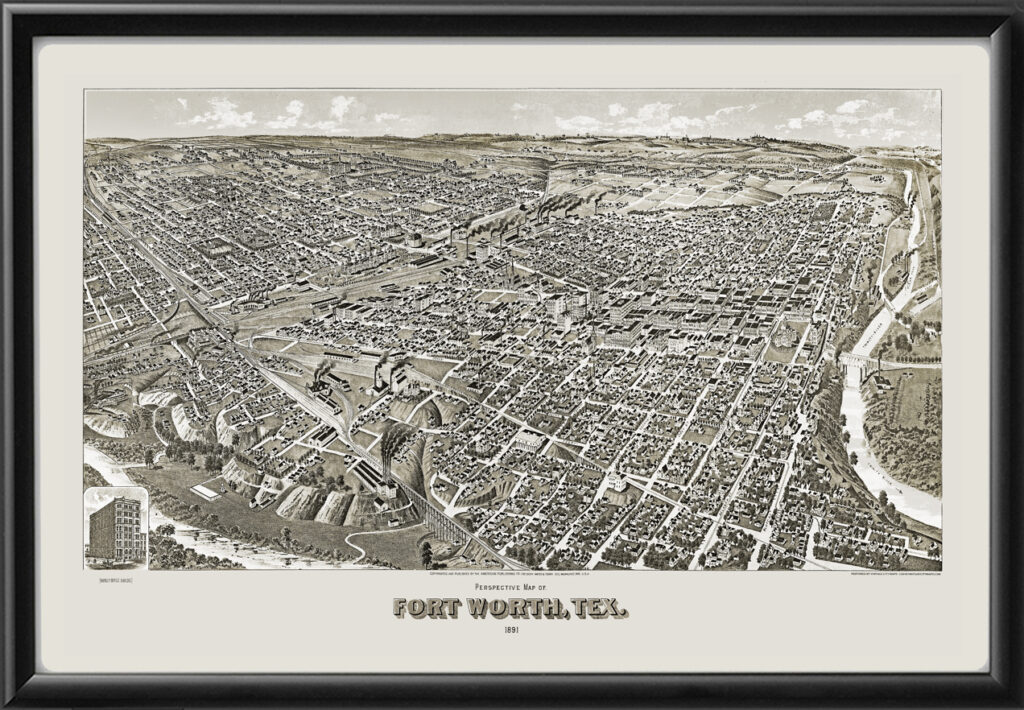
After the Harvell killing, Martin disappeared. Authorities eventually traced him into Texas. His capture reads almost like something from a dime novel.
According to reports, a letter mentioning a mysterious “chum” in Texas raised suspicions. Investigators quietly followed the lead until they located Martin living under an assumed identity and working at a sawmill. He was arrested without resistance.
But afterward, according to newspaper accounts, Martin reportedly told his captors that if he had known who they were, things would have become “hot.” That line probably did as much to strengthen his legend as anything else.
He was returned to Florida in irons and brought to Pensacola for safekeeping before being transferred to Milton.
A Trial Full of Twists
Once back in Santa Rosa County, the legal process became complicated. One jury returned a verdict of murder in the second degree and recommended mercy.
Defense attorneys successfully argued for a new trial.
Another proceeding resulted in a manslaughter conviction. Again, the outcome changed. The court required Martin to post a $10,000 bond – over $365,000 in 2026 – an enormous amount for bond. Unable to pay, he remained in custody.
The newspapers covered every movement. They described his appearance in detail: He was nearly fifty years old, smaller than expected, quiet, cooperative in his conversation, and some gray beginning to show in his hair.
One reporter seemed surprised that a man portrayed as a violent killer appeared so ordinary. That observation feels familiar even today. Many investigators learn early that dangerous people do not always look dangerous.
The Man Behind the Reputation
In interviews, Martin offered a version of himself that stood in sharp contrast to the newspapers. He spoke about his service during the Civil War, his logging work, his years in Santa Rosa County, and his family. He even admitted killing Harvell, but he insisted it had been necessary.
Whether readers believed him likely depended on whether they already thought Burrell Martin was guilty. Because by then, Martin wasn’t just a defendant…he had become a character.
The Verdict Nobody Expected
After more than a year of confinement and repeated legal battles – Burrell Martin was acquitted. No dramatic ending…he simply walked free. There was no final confession or clear resolution. Just a man stepping out of custody while neighbors and newspaper readers were left to decide for themselves what had really happened.
And perhaps that is why the story survives. Not because we know exactly who Burrell Martin was…but because we still don’t. I don’t guess we ever will.
Final Thoughts
Cases like Burrell Martin remind us that old Southern crime stories were rarely simple. The court dealt in evidence, the newspapers dealt in stories…the public lived somewhere in between.
And somewhere between Milton, Pensacola, and the pine woods of Santa Rosa County, a man became larger than life. Whether Burrell Martin was a cold-blooded killer, an unlucky man with a bad reputation, or something in between – history never completely decided.

Michael Earl Simmons is a retired Pensacola Police Sergeant, former homicide detective, criminal justice educator, and author who has spent decades preserving the forgotten stories of the Gulf Coast. Through “Sweet Tea Murders,” Simmons brings Southern crime history back to life…not to sensationalize it, but to explore the people, places, investigations, and legends that shaped our communities. At “Sweet Tea Murders LIVE” events, audiences gather to step into another time through immersive storytelling, historic research, original newspaper accounts, and the perspective of a former lawman who has spent a lifetime studying crime, history, and the stories that still whisper beneath the moss-covered oaks of the South. Check the website for upcoming LIVE events.
Discover more from Sweet Tea Murders
Subscribe to get the latest posts sent to your email.