
By Michael Earl Simmons
Shawn Hankins had found his niche.
He worked as a corrections officer in the local jail, and—surprisingly to some—he loved it. Not every minute of every shift, of course. There were long hours, tense moments, and plenty of paperwork. But at the core of it all, Shawn liked knowing that he could make a difference. He liked helping people when they needed it most, even when those people didn’t always appreciate it at the time.
And the truth was, Shawn was good at his job. Really good. He paid attention, stayed calm under pressure, and understood that corrections work was as much about people as it was about procedures. One day, he hoped, all of that would lead to a promotion.
On this particular day, the radio crackled to life without warning.
An argument between two inmates was escalating fast—voices rising, tension thick in the air. Shawn didn’t hesitate. He turned and moved quickly down the corridor, his pace urgent but controlled.
Another officer nearby, hearing the same call, glanced at him and asked, “Why are you rushing? It’s only an argument.”
Shawn didn’t slow down.
He understood something that every seasoned corrections officer learns sooner or later: jail isn’t the outside world. On the street, an argument can burn itself out. People can walk away, cool off, and think better of it later. Inside a jail, there is no walking away. Space is limited, tempers are short, and pride is everything.
That’s why arguments behind bars so often turn into full-blown fights—and why those fights can quickly pull in other inmates. What starts as “just words” can become a major incident in seconds.
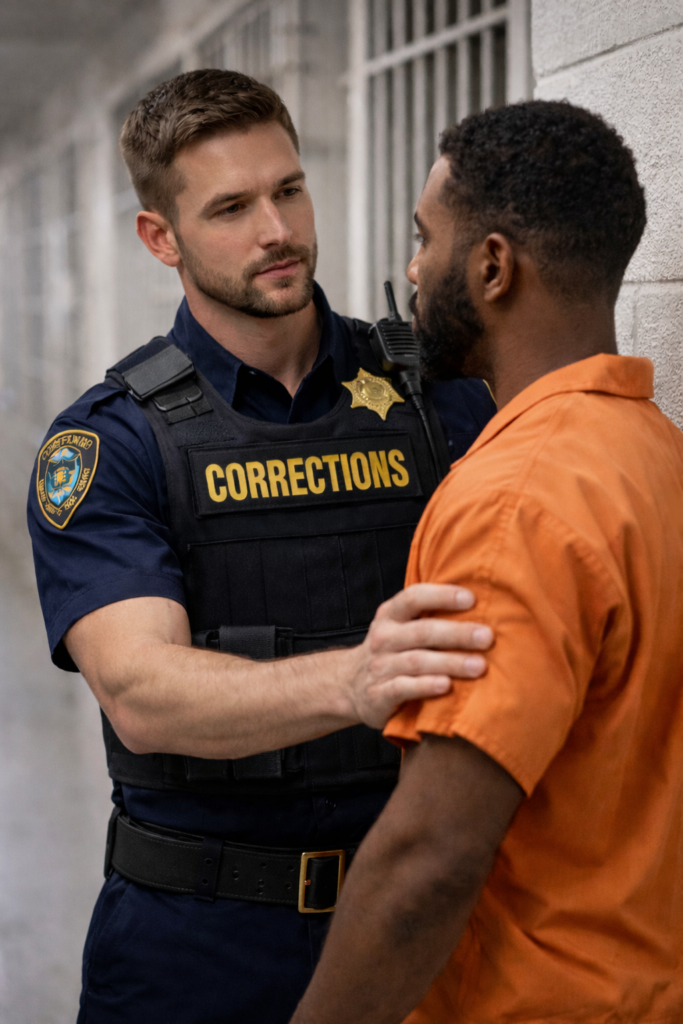
Statistics back this up. If an officer can arrive within the first 90 seconds of a conflict, the chances of stopping it before it turns physical increase dramatically. A calm presence, a few well-chosen words, or simply separating the individuals involved can prevent injuries, reduce disciplinary action, and save hours of reports and investigations—not to mention keeping both staff and inmates safer.
Shawn reached the scene quickly. He intervened early, listened, de-escalated, and the moment passed without violence.
Just another day on the job.
But it’s moments like these—quiet victories that never make headlines—that define a great corrections officer. Shawn Hankins understands the job, respects its challenges, and acts before problems explode.
That’s why everyone who works with him knows the truth:
Shawn is a smart guy.
And someday, he’ll be a captain.
Discover more from Sweet Tea Murders
Subscribe to get the latest posts sent to your email.