
By Michael Earl Simmons
When places of worship decide they need security training, they often look first to the military or law enforcement communities. This instinct is understandable. Soldiers and police officers are trained to operate under stress, recognize threats, and respond decisively to danger.
Frequently, churches seek instructors with “special forces” or federal law enforcement backgrounds, believing elite credentials automatically translate into superior church security expertise.
What is often overlooked is this reality: church security is a fundamentally different discipline, made more complex by the church’s dual responsibility to remain both safe and welcoming—and by the fact that violent attacks represent only a small fraction of what church security teams actually handle.
Different Professions, Different Missions
The Military Mission
The military exists to defeat enemies of the state. Training focuses on combat operations, hostile environments, and clearly defined adversaries. Rules of engagement are designed for warfare and assume the presence of hostile forces.
Military training emphasizes domination, control, and mission completion—often in environments where lethal force is anticipated.
That mindset does not align with a worship service filled with families, children, visitors, and vulnerable populations seeking peace, not protection through force.
The Law Enforcement Mission
Law enforcement officers are responsible for enforcing laws, responding to crimes, and apprehending offenders. Their work is reactive and investigative by design. Officers arrive after or during incidents, secure scenes, and pursue accountability through the justice system.
Police operate with arrest powers, detention authority, and use-of-force permissions governed by constitutional law and department policy.
While law enforcement officers are trained in de-escalation and community interaction, their mission remains intervention-based—not centered on maintaining a calm, welcoming atmosphere over long periods of time.
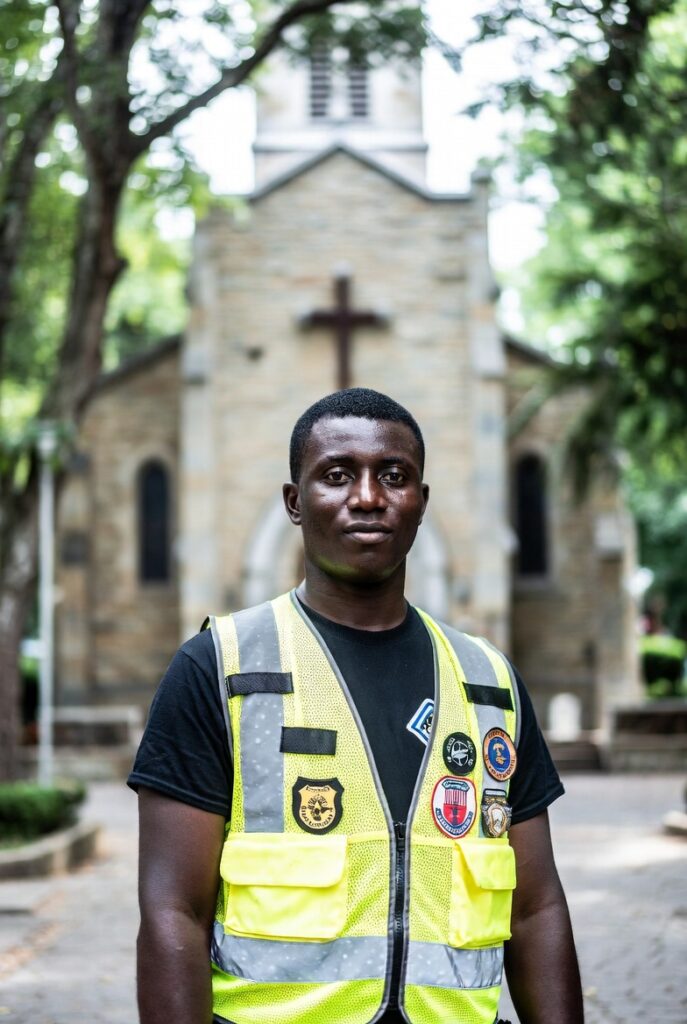
The Church Security Mission
Church security operates under an entirely different framework.
Its purpose is prevention, deterrence, and protection—while simultaneously preserving hospitality.
This dual responsibility makes church security uniquely difficult.
Church security teams must:
- Prevent violence
- Detect threats early
- Protect worshippers
- Maintain a welcoming, non-intimidating environment
- Support the church’s spiritual mission
Success is measured by two outcomes that often pull in opposite directions:
- Nothing bad happens
- Everyone feels welcome
What Church Security Actually Does Most of the Time
Media coverage often focuses almost exclusively on church shootings and extreme acts of violence. While these events are tragic and demand serious preparation, they represent a very small percentage of what church security teams deal with on a weekly basis.
In reality, most church security activity involves:
- Medical emergencies
- Lost or separated children
- Disruptive or emotionally distressed individuals
- Domestic issues that follow people into church
- Custody disputes
- Unauthorized access to children’s areas
- Mental health crises
- Parking lot conflicts
- Weather-related hazards
- Suspicious—but not criminal—behavior
The overwhelming majority of these situations are resolved without force, without law enforcement involvement, and often without the congregation ever realizing an issue existed.
This reality further separates church security from military and police roles, where force readiness and enforcement authority play a larger daily role.
Security and Hospitality: A Delicate Balance
Unlike military bases or police facilities, churches are intentionally open. They invite the public in. Doors are unlocked. Strangers are expected. Smiles matter.
Church security personnel are often the first human contact a visitor has with the church. Their demeanor, posture, and communication directly affect whether someone feels safe—or judged, watched, or unwelcome.
This means church security must think beyond threat mitigation and consider:
- Body language and tone
- Plain-clothes presence
- How access control is managed without intimidation
- How suspicious behavior is addressed without embarrassment
- How to intervene discreetly while protecting dignity
This balance does not exist in military or law enforcement operations.
Rules of Engagement vs. Rules of Permission
Military rules of engagement and law enforcement use-of-force policies are built around authority, compliance, and enforcement.
Church security operates under rules of permission:
- Limited legal authority
- No mandate to detain or arrest
- Defensive force only
- Immediate necessity required
- High legal and civil liability
- Moral and spiritual accountability
In a church, force is not a tool—it is a failure of prevention.
Church Security Is a Protective Ministry
Church security is not simply a safety function—it is a protective ministry.
Security teams protect people who are:
- Praying with eyes closed
- Focused on worship
- Trusting the church as a place of refuge
- Expecting warmth, not suspicion
Effective church security is quiet, professional, observant, and relational. It blends:
- Sound security principles
- Clear policies and training
- Legal awareness
- Medical readiness
- And respect for the church’s mission
The Bottom Line
Military service and law enforcement experience are honorable and valuable. But church security is not a subset of either profession.
It is its own discipline—made more challenging by the responsibility to protect life without damaging hospitality, and by the reality that most security work is preventive, pastoral, and low-profile, not tactical.
Police pursue criminals. Soldiers defeat enemies. Church security teams guard people, purpose, and peace—often invisibly, often thanklessly, and almost always successfully.
The safest churches are not those that look the most fortified, but those where protection and welcome coexist seamlessly—and where most people never realize how much work goes into making that possible.
Discover more from Sweet Tea Murders
Subscribe to get the latest posts sent to your email.
Well said, Sir
Well said, Sir
Very interesting! Explained well and thoughtfully written.
Thank you, Karen!
Very interesting! Explained well and thoughtfully written.
Thank you, Karen!