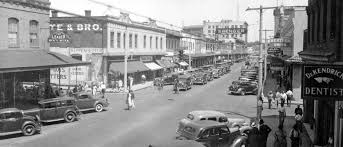
On Saturday night, September 15, 1934, downtown Pensacola was alive.
Palafox Street was still the center of the city, crowded with shoppers, automobiles, restaurants, bars, and people enjoying an evening downtown. Just west of Palafox, along Intendencia Street, 33-year-old automobile salesman Garvin Hoots was walking through the business district. Somewhere nearby, another man was looking for him. His name, or at least the name Pensacola knew him by, was Eddie Johnson. And Johnson had a gun.
Trouble at the Blue Goose
The trouble had begun earlier at a drinking establishment on South Tarragona Street known as the Blue Goose. Hoots had once operated the place, but control of the business had recently passed to another man, who apparently placed Johnson in charge. Whatever arrangement existed between the men, it was not a peaceful one.
That Saturday evening, Hoots showed up at the Blue Goose. An argument followed. According to accounts later given to police, Hoots tore licenses or certificates from the wall and threatened to have the place, along with other similar establishments, closed. Johnson apparently believed Hoots was informing on people involved in the local liquor trade. Later, he would explain his feelings in remarkably simple terms: “I don’t like rats.”
But Johnson did not shoot Hoots during the argument. That is what makes what happened next so chilling. Johnson left and went home. He obtained a .32-caliber automatic pistol. Then he climbed into a taxi and returned downtown looking for Garvin Hoots.
This was no argument that suddenly spiraled out of control. Johnson had time to leave the scene, travel home, retrieve a weapon and reconsider what he was doing. Instead, he came back.
“There Is the Dirty Rat”
Sometime around 10 o’clock that night, Johnson finally spotted Hoots near Intendencia and Palafox. One witness later recalled Johnson saying something similar to: “There is the dirty rat.” Another remembered hearing a reference to a “dirty stool pigeon.” Then came the gunfire.
Five shots rang out in the heart of downtown Pensacola. Four bullets struck Hoots around the chest, one passing near his heart. Another struck him in the leg. Hoots fell along West Intendencia Street as Saturday-night shoppers looked on. Someone yelled: “Catch that man! He’s killed somebody!” Johnson ran.
The Chase Through Downtown Pensacola
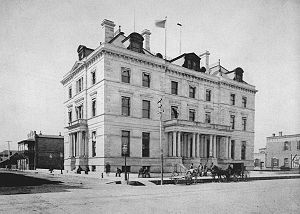
From Intendencia, Johnson headed toward Palafox and turned south. Witnesses followed. He crossed the grounds near the downtown post office and made his way behind the building. At some point during his escape, Johnson’s automatic pistol fell from his pocket near the Postal Telegraph office. Bystanders recovered the gun and turned it over to police.
Johnson kept going. One witness followed his route around the post office property toward Baylen and Government streets. There, only a short distance from the murder scene, Johnson ducked into a café. After shooting a man five times, fleeing through downtown and losing his pistol along the way, Johnson apparently tried one of the oldest tricks imaginable. He sat down.
Within minutes, Pensacola officers entered the café. Eddie Johnson was under arrest less than fifteen minutes after Garvin Hoots had been shot. The murder seemed solved, but the story was only beginning.
Eddie Johnson Wasn’t Eddie Johnson
As police began looking into the background of the man sitting in their jail, they discovered something strange…Eddie Johnson was not necessarily Eddie Johnson at all. He had used several names.
Newspapers identified him variously as Eddie Johnson, Eddie Moore, David Moore and D. A. Moore. Then investigators began uncovering his past. Johnson claimed that he had once been a state police officer in Texas, but his history also included arrests or convictions for assault in California, Texas and Oregon. And then authorities discovered something even more startling.
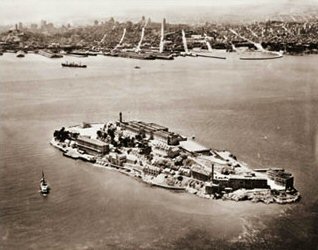
Johnson had served time at Alcatraz. This was before Alcatraz became permanently etched into American folklore as the federal prison that housed men such as Al Capone. Johnson had been imprisoned there during its military-prison era after being convicted of desertion. The man who claimed to have once worn a badge had also been an inmate on one of America’s most notorious prison islands. And there was more.
Was Garvin Hoots His First Victim?
While Pensacola authorities investigated Johnson’s background, he reportedly made another disturbing admission. He claimed that he had previously killed a man in Texas and suggested that he might still be wanted there for murder. Pensacola officials took the claim seriously enough that the coroner’s inquest into Hoots’ death was temporarily delayed while authorities contacted Texas.
The newspaper accounts I have located do not establish that the supposed Texas murder was ever confirmed. But suddenly the question facing investigators had changed. They knew who had killed Garvin Hoots. What they did not know was exactly who Eddie Johnson really was or what he had done before arriving in Pensacola.
A Murder Trial
Johnson eventually confessed to killing Hoots. The case went before a jury in November 1934. The prosecution had an imposing case. There were numerous witnesses. Johnson had been seen fleeing the scene. His pistol had fallen from his pocket during his escape. He had been captured minutes later, and then he had confessed.
Most damaging of all was the sequence of events before the shooting. Johnson had not simply drawn a gun during his argument with Hoots. He had left, gone home, armed himself, and returned downtown. Then he searched for Garvin Hoots until he found him.
The state sought a conviction for first-degree murder and asked for the death penalty. Johnson’s wife was in the courtroom. So were his mother and stepfather, who had traveled from Ohio. Late that night, the jury returned – Guilty of first-degree murder.
But the jurors added a recommendation for mercy. That recommendation saved Johnson from Florida’s electric chair. The judge sentenced him to spend the remainder of his natural life at hard labor in a Florida prison. For Garvin Hoots, there had been no such mercy.
The Corner Was Not Finished
Today, thousands of people walk through the intersection of Palafox and Intendencia without knowing that five gunshots once shattered a busy Saturday night there.
But there is another strange chapter connected to this little patch of downtown Pensacola. Almost exactly thirty years after Garvin Hoots fell mortally wounded on Intendencia Street, another man would die at virtually the same location. His name was Hank Killam.
Unlike the Hoots murder, Killam’s death would not produce a suspect arrested within minutes, a discarded murder weapon, a confession and a guilty verdict. Instead, his death would become surrounded by questions. Questions involving his strange behavior. Questions involving Lee Harvey Oswald…and questions that remain more than sixty years later.
But that is another Sweet Tea Murder.
Discover more from Sweet Tea Murders
Subscribe to get the latest posts sent to your email.