
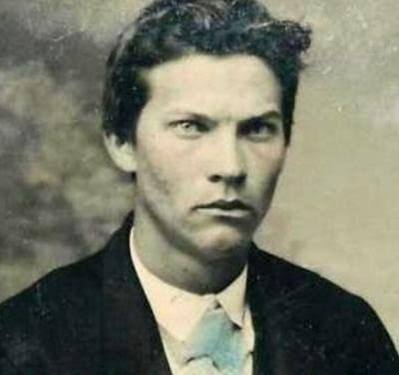
History remembers John Wesley Hardin as a gunfighter. It remembers the pistol strapped to his side, the men he killed, the aliases he used, and the Texas Rangers who finally captured him aboard a train in Pensacola.
But history has paid far less attention to the woman who packed the bags.
Her name was Jane Bowen Hardin. Whenever her husband appeared at the door with word that the sheriff, a posse, or another band of armed men was closing in, Jane faced the consequences of choices she had not made. There could be no carefully considered family discussion. There was no time to arrange a proper journey or say a comfortable goodbye. John Wesley Hardin had created another crisis, and his family had to run. Again.
A Marriage Ruled by His Gun
Jane Bowen married Hardin in February 1872. She was still a teenager. Like most young brides, she may have imagined building a home, raising children, and creating a life with the man she had chosen. Instead, the direction of her marriage was repeatedly determined by Hardin’s temper, his pride, and the pistol he carried.
Hardin later insisted that many of his killings were acts of self-defense. He portrayed himself as a man constantly surrounded by enemies and forced to fight his way out of danger. Whatever one believes about his individual claims, the larger pattern is difficult to ignore: Hardin repeatedly chose violence, and other people repeatedly paid the price.
Some of those people were strangers. Some were lawmen. Some were members of his own family.
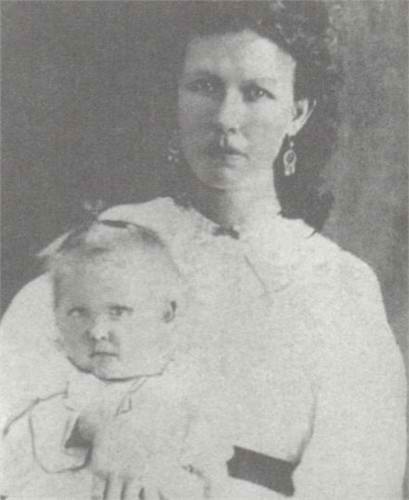
Hardin moved from one relative to another, expecting—or at least relying upon—family members to shelter him, protect his identity, and help him avoid capture. Every person who opened a door to him accepted a dangerous burden. They risked arrest, retaliation, public disgrace, or being caught in the gunfire when the law finally arrived.
Hardin brought danger with him, yet loyalty, kinship, and fear made it difficult for relatives to turn him away. No one carried that burden longer than Jane.
“We Have to Leave”
Imagine what “home” must have meant to Jane. Home should have been the one place where her children could sleep without being hurried awake. It should have been where familiar faces surrounded them, where meals came at regular times, and where a mother could believe that tomorrow would resemble today.
With Hardin, home was temporary. A knock at the door might mean that someone had recognized him. A stranger asking questions might be a detective. A letter from Texas might reveal the family’s location. A careless word from a relative might bring armed men riding down the road.
At any moment, Hardin could announce that they had to leave. His wife was expected to gather the children and whatever possessions they could carry. She had to abandon the small measure of security she had managed to create and begin again somewhere else.
Hardin may have regarded flight as adventure, strategy, or survival. For Jane, it meant uprooting children who were too young to understand why they could not remain in one place. It meant depending on relatives, accepting their charity, and asking them to share the dangers produced by her husband’s decisions.
Hardin fired the shots. Jane packed the children.
The Killing That Drove Them from Texas
The greatest upheaval followed Hardin’s killing of Deputy Sheriff Charles Webb in Comanche, Texas, in May 1874. Hardin knew that this time the pursuit would be relentless. Texas authorities offered a substantial reward, and the Texas Rangers wanted him brought back to face justice.
His response was to flee. But he did not flee alone. Jane and the child – they had only one at that time – were pulled away from Texas and taken east. Their journey carried them through New Orleans and into Florida, with stops or periods of residence around Cedar Key, Gainesville, Micanopy, and Jacksonville. Eventually, they reached the Alabama–Florida border country near Pollard, where members of Jane’s extended family lived.
Each move offered Hardin another opportunity to disappear. For Jane, each move meant another home that was not truly hers. She had to approach relatives and ask for help. Those relatives were not simply being asked to feed and house a young mother and her child. They were being asked to shelter the family of one of the most wanted men in Texas…and often the man himself.
Hardin’s assumed name—John or James Swain—may have concealed his identity from strangers, but it did not remove the danger. Jane had to participate in a life built around secrecy. She could not freely explain who they were, why they had come, or when they might leave.
Even family correspondence became dangerous. A letter intercepted by an investigator eventually helped the Rangers narrow their search to the Alabama–Florida border.
The family’s very connections—once their source of refuge—became the trail that led the law to Hardin.
The Children Had No Choice
Hardin and Jane had three children during their marriage: two daughters and a son.
They were too young to understand the forces shaping their lives. They could not comprehend Texas politics, family feuds, murder indictments, rewards, aliases, or the reach of the Rangers.
They knew only what children know. Their father was sometimes there and sometimes gone. Their mother worried. Adults spoke quietly. The family moved. Names changed. Strangers could not always be trusted.
Children measure security through repetition: the same bed, the same room, the same neighbors, and the comforting belief that their parents are in control. Hardin’s choices made that kind of childhood almost impossible.
His children inherited the consequences of his reputation before they were old enough to understand what that reputation meant. They carried his assumed name while he was hiding and his notorious real name after he was captured.
The legend belonged to their father. The instability belonged to them.
Jane’s Fierce Loyalty
Jane remained loyal to Hardin even when that loyalty placed her in a frightening and humiliating position. After Hardin’s arrest in Pensacola in August 1877, Jane confronted Texas Ranger John B. Armstrong in Alabama. Contemporary accounts described her holding her six-week-old baby while angrily defending her husband. During the encounter, she reportedly grabbed or pulled Armstrong’s goatee.
It is an arresting image: a young mother with an infant in her arms confronting the armed Ranger who had taken her outlaw husband. Her action should not be romanticized, but neither should it be dismissed. Jane’s anger may have contained years of fear, exhaustion, dependence, and desperation. Armstrong represented the law, but at that moment he also represented the removal of the man around whom Jane’s entire life had been organized.
But…Hardin had placed her in that position, not Armstrong. He had made loyalty to her husband a contest against the law. He had left her trying to defend a family that his conduct had repeatedly endangered.
Her courage was real. So was the tragedy of where that courage had been spent.
The Final Separation
Hardin was returned to Texas and convicted of killing Charles Webb. In 1878, he received a twenty-five-year prison sentence. Hardin lost his freedom because of his own actions. Jane lost her husband because of them.
She was left to care for their children while Hardin lived behind prison walls. Letters helped maintain the connection, but letters could not provide a father’s daily presence, put food on the table, comfort a frightened child, or relieve Jane of the responsibilities she carried alone.
Hardin eventually studied law and religion in prison. He wrote about controlling one’s passions and the ruin caused by violence. Whatever personal change occurred came far too late to restore the years his family had lost. Jane died in November 1892 while Hardin was still incarcerated. He was released the following year.
After all the running, waiting, defending, and hoping, Jane did not live to experience a free life with him again.
The People Standing Behind the Outlaw
Stories about famous outlaws often concentrate on the chase. We count the killings, examine the weapons, and describe the final confrontation. The outlaw becomes the center of the story, while the people harmed by his behavior fade into the background.
Jane Hardin and her children deserve better.
They remind us that violence spreads far beyond the person struck by a bullet. It enters homes. It uproots children. It burdens parents, siblings, wives, and cousins. It turns relatives into accomplices, caretakers, protectors, and targets.
John Wesley Hardin may have loved his family. But love is measured by more than affection. It is also measured by the safety, honesty, and stability we are willing to provide.
Again and again, Hardin placed his pride, his freedom, and his violent way of life ahead of his family’s security. He chose the gun. Jane and the children lived with the consequences.
History made John Wesley Hardin a legend.
His family paid the bill.
Learn more about Hardin’s years as a fugitive—and the dramatic Pensacola arrest that finally ended his last escape—at Sweet Tea Murders LIVE: John Wesley Hardin—The Gunslinger’s Last Escape, Thursday, August 27, at 6:00 p.m. at Voices of Pensacola. For tickets, go to https://sweetteamurders.com/events/.
Michael Earl Simmons

Discover more from Sweet Tea Murders
Subscribe to get the latest posts sent to your email.