
Who Killed Isom Simmons?
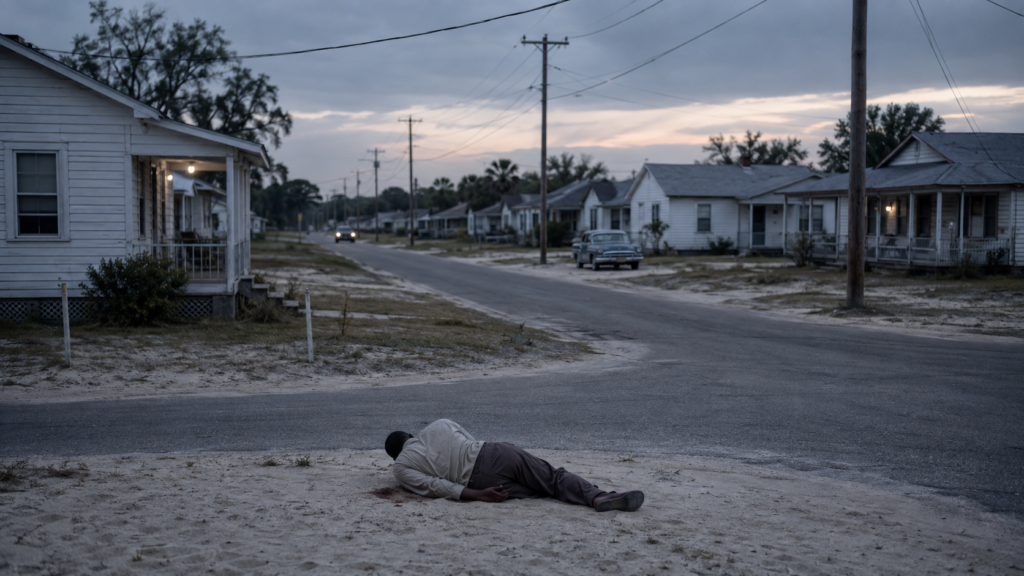
In the darkness of an early September morning in 1955, a badly wounded man made his way along a lonely stretch of road outside Pensacola. How far he walked—or staggered—may never be known with certainty. But the blood he left behind told part of the story. The trail reportedly stretched for approximately four blocks.
It ended near 106 Gulf Beach Highway, where 45-year-old Isom Clinton Simmons Sr. collapsed from a fatal knife wound. Investigators followed the blood in the opposite direction, back toward the Half-Way House at 712 Barrancas Avenue.
Somewhere behind that roadside establishment, they believed, Simmons had encountered his killer. But what happened there? And how did a bleeding man manage to travel several blocks before finally falling?
More Than a Name in the Newspaper
The newspaper reports identified Simmons in 1955. His death was reduced to a few stark facts: a Black man, a knife wound and a trail of blood.
But Isom Simmons was more than a victim in an old crime column. He was Isom Clinton Simmons Sr., a Pensacola-area resident with six children—four daughters and two sons. One of his sons was serving in the United States Army at the time of his father’s death. Simmons also left behind siblings, other relatives and a family determined to learn who had taken his life.
His relatives did more than mourn. They retained an attorney to assist in the prosecution of the man authorities eventually accused of the killing. That man was James Edward Taylor.
A Strange Conversation in a Taxicab
The case against Taylor rested heavily upon the account of a Pensacola taxi driver named Creighton L. Tridle. According to Tridle’s later testimony, he encountered Taylor on the morning Simmons was killed. Taylor had an injured finger, and Tridle said Taylor spoke about an altercation with a Black man behind the Half-Way House.
Taylor reportedly claimed that he had been forced to defend himself. The two men then returned to the area. There, according to Tridle, they discovered blood. They followed the trail. But they did not find the wounded man. By then, Simmons had apparently made his way toward Gulf Beach Highway, where his journey—and his life—would end.
If Tridle’s account was true, it placed Taylor close to the suspected scene and connected him to a confrontation occurring at approximately the same time Simmons received his fatal wound. It sounded like the beginning of a strong case. But there was a problem.
Taylor denied it.
Two Explanations for the Blood
Taylor said he had never known Isom Simmons. He also offered an innocent explanation for his injured finger. He claimed that he had cut it on a steel band while working at the paper mill. His wife supported his account.
The defense then turned its attention to the prosecution’s most important witness. If the jurors could not trust Creighton Tridle, they could not safely rely upon his story about the Half-Way House, the alleged admission or the bloody trail.
Testimony was introduced suggesting that Tridle had been drinking heavily. That changed the entire character of the case. Was Tridle a sober witness recounting a chilling conversation with a man who had just committed a deadly act? Or was he an unreliable storyteller whose memory had been affected by alcohol? The jurors would have to decide.
The Trial
James Edward Taylor, 32, was charged with second-degree murder. Nearly four months after the killing, he went on trial for the death of Isom Simmons. The prosecution presented its evidence. The defense challenged the credibility of the state’s principal witness and offered another explanation for Taylor’s injured hand.
The jurors were left with two competing stories. In one, Taylor had fought with Simmons behind the Half-Way House, inflicted the fatal wound and later returned to follow the blood left by the dying man. In the other, Taylor had never known Simmons, had injured his finger at work and had been accused largely because of the questionable claims of a man who had been drinking.
On January 20, 1956, the case went to a six-man jury. Taylor waited inside the Escambia County courtroom as the jurors considered the evidence. Was the bloody trail enough? Did Tridle’s testimony reveal what happened behind the Half-Way House? Or had the prosecution failed to prove that Taylor was the man who held the knife?
After deliberating, the jury returned. The foreman announced the verdict:
Not guilty.
An Acquittal—but No Answer
The verdict ended the prosecution of James Edward Taylor. It did not solve the murder of Isom Simmons. A finding of not guilty does not necessarily establish that an accused person is innocent. It means the prosecution did not prove guilt beyond a reasonable doubt. Based upon the surviving newspaper accounts, the jurors may have concluded that Tridle’s disputed credibility created too much uncertainty to convict Taylor of murder.
Perhaps they believed Taylor. Perhaps they distrusted Tridle. Perhaps the physical evidence could not establish who inflicted the fatal wound.
Who Killed Isom Simmons?
The old reports leave behind a haunting sequence. Something violent happened behind the Half-Way House. Isom Simmons was stabbed. Mortally wounded, he traveled several blocks through the darkness, leaving a trail that investigators could follow—but not a final explanation.
A suspect was arrested. A witness told a disturbing story. A jury listened. And then came those two decisive words:
Not guilty.
Unless another suspect was later identified, the acquittal left the Simmons family without the justice they had sought. Taylor walked out of the courtroom legally cleared of the charge, while the most important question remained unanswered. Who killed Isom Clinton Simmons Sr.?
Nearly three-quarters of a century later, the blood trail still leads us back toward the Half-Way House.
And then, just as it did in 1955, the trail disappears.
sweetteamurders.com

Discover more from Sweet Tea Murders
Subscribe to get the latest posts sent to your email.