
The Times and Crimes of Herbert Goddard
There is a particular kind of danger that does not kick in the door.
It smiles.
It speaks well. It knows theater words, newspaper words, radio words, and promises young people the thing they most want to hear. In 1939, that promise was Hollywood.
Herbert William Goddard Jr. understood that.
Or maybe he was Thomas Cochran.
Or Tom Ashwell.
Or Charles Jefferson.
Or T. J. Whitney.
The newspapers called him “the man of many names,” and for once the headline writers were not exaggerating. Goddard wore names the way a traveling actor wore costumes. When one became inconvenient, he stepped into another. Behind them all was the same man: smooth-talking, restless, criminal, and dangerous.
Long before Florida knew him as the fake movie talent scout who lured two Miami girls away from home, Goddard had already left a trail.
In 1926, federal records listed him as an Army deserter in San Francisco. That same year, he escaped from the Presidio military prison. In 1927, he was sentenced in Pennsylvania for a serious assault. In 1930, he turned up again in Wichita, Kansas. In 1933, Montana authorities had him on a fraud charge involving impersonation of a federal officer.
He was not drifting so much as rehearsing.
He claimed theater experience. He claimed newspaper work. He claimed radio work. He claimed connections. Sometimes those claims even had just enough truth in them to make the lie stronger. He had been associated with theatrical projects. He had worked around productions. He knew the vocabulary of the stage. And that made him more dangerous, because he could sound believable to young people dreaming of a larger life.
Back in 1930, a girl named Carolyn Whipple, sixteen years old and from Pelham, New York, appeared at police headquarters in Tallahassee. She told officers she had been taken from the Northeast by Goddard after he invited her to a supposed Rutgers University dance. Rutgers officials quickly denied the story that Goddard was a student there or that such a dance had occurred. Carolyn said Goddard took her first to a hotel, then south toward Florida, warning her that if she tried to escape, others would come after her.
That was 1930.
Nine years later, Florida would see the same pattern again, only worse.
In August of 1939, Goddard was using the name Charles Jefferson. He presented himself as a Hollywood talent scout, the kind of man who could open doors. To two Miami girls, Frances Ruth Dunn and Jean Bolton, that must have sounded like a dream leaning over the fence and calling their names.
Frances was seventeen. Jean’s age was reported differently in the papers, though school records later suggested she was younger than she had claimed. Both were connected to the youthful entertainment world of Miami. Jean sang. Frances had dramatic ambitions. In a city filled with music, clubs, show business talk, and newspaper dreams of motion pictures, Goddard knew exactly what bait to use.
He told them they would go north to have photographs made. He said it was the first step toward movie careers.
It was not.
The trip ended near Boca Raton, in a lonely place off the road, in the palmettos and heat and silence of old South Florida. Frances Dunn was killed there. Jean Bolton was held prisoner for days before she was released and managed to reach help.
That one act of survival broke the case open.
Jean contacted relatives and authorities. Police found the car near Boca Raton. Goddard was captured walking along the highway. By then, the false talent scout story had collapsed, and the man behind the names was exposed.
The newspapers moved fast. So did the public outrage.
The case struck several nerves at once. It was not only the murder of Frances Dunn. It was the manipulation of two young girls. It was the fake promise of Hollywood. It was the fear that charming strangers could reach into respectable homes and lead children away. It was also the revelation that Goddard had a prior record and had been released before.
The Palm Beach County grand jury indicted him for kidnapping, sexual assault, and murder. The same grand jury sharply criticized the parole system, blaming lax practices for helping put Goddard back into society. J. Edgar Hoover and Palm Beach County Sheriff W. H. Lawrence were quoted criticizing the release of a man with his history.
By September 1939, Goddard went to trial in West Palm Beach under the name Charles Jefferson, though the newspapers made sure readers knew the other names: Herbert Goddard, Thomas Cochran, Thomas Ashwell.
The State said he lured Frances Dunn and Jean Bolton with promises of theatrical careers and killed Frances from a premeditated design. The prosecution sought the death penalty.
His defense did not deny the killing. Instead, it tried to argue there had been no premeditation, that Frances died during an argument. But the facts were too heavy for that argument to carry. Jean Bolton’s survival, the confession, the physical evidence, and the terrible sequence of events pointed the jury in one direction.
Goddard was convicted of first-degree murder and sentenced to die.
Yet even after conviction, the story did not end quietly.
In November 1939, Frances Dunn’s body was exhumed at the request of her parents. A second autopsy was performed. Officials wanted to clarify whether a wound first thought to be from a bullet was actually caused by another injury. X-rays found no bullet, and the new inquiry was dropped. Authorities said no evidence had been uncovered that had not already appeared at trial.
The appeals moved through the courts. His conviction was affirmed. Governor Fred P. Cone signed the death warrant.
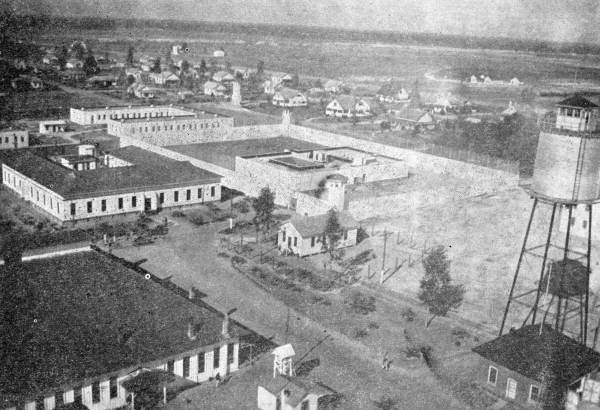
By July 1940, Goddard was at Raiford.
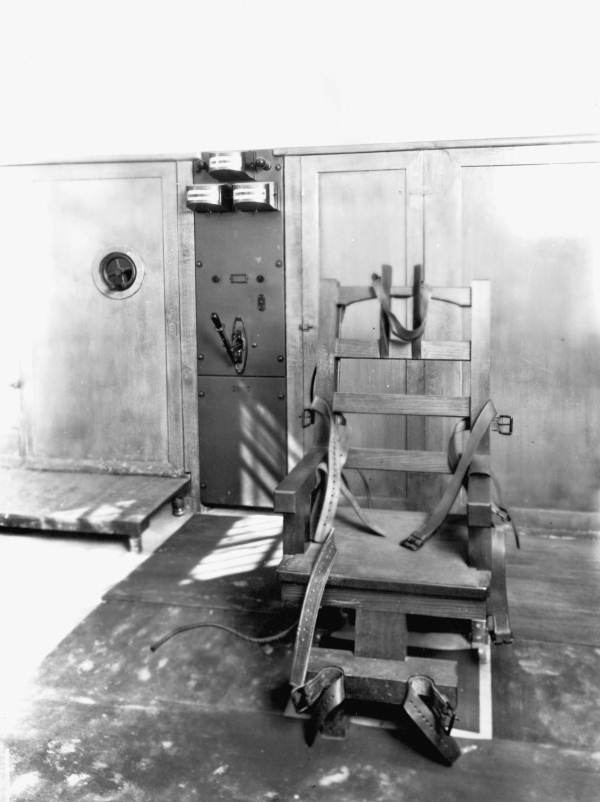
The newspapers described him as resigned. One article said he had told others, “I want the electric chair.” Whether that was remorse, performance, or one last attempt to control the story is hard to know. With Goddard, every statement seems to have walked onstage wearing a costume.
On the morning of July 29, 1940, Herbert Goddard entered Florida’s execution chamber.
He was twenty-nine years old.
There were witnesses, officials, a chaplain, and reporters. His last words were reported as “Goodbye Jean,” though some present thought he may have said “Goodbye, Jim.” The current was applied, and the man who had been Herbert Goddard, Charles Jefferson, Thomas Cochran, Tom Ashwell, and T. J. Whitney was pronounced dead.
No relatives came to claim the body.
He was buried in the prison cemetery.
But the name that should stay with us is not his.
It is Frances Ruth Dunn.
She was seventeen years old. She wanted a future. She had talent, hope, and the kind of ambition that should have led to applause, not a lonely road near Boca Raton.
And we should remember Jean Bolton, too. Not as a footnote. Not merely as “the other girl.” She survived him. She reached help. She testified. She helped bring the man of many names to the only ending the law could give him.
Herbert Goddard’s life was a collection of aliases, performances, escapes, and false promises.
Frances Dunn’s life was real.
That is the difference.
And that is why, all these years later, the story still matters.
Discover more from Sweet Tea Murders
Subscribe to get the latest posts sent to your email.
He was also married to a girl, in California, who was 15. They had two children and were married at the time of the murders.