
By Mike Simmons
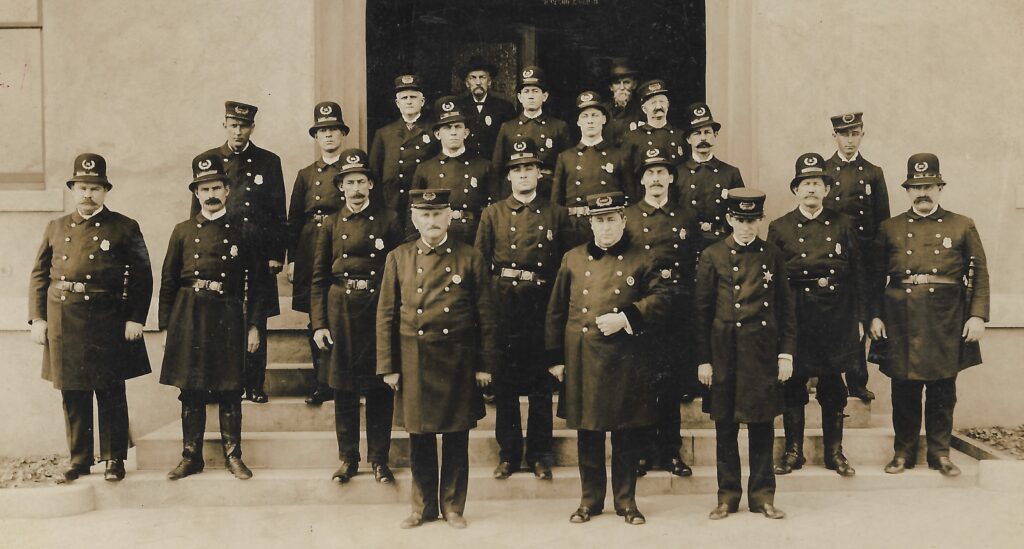
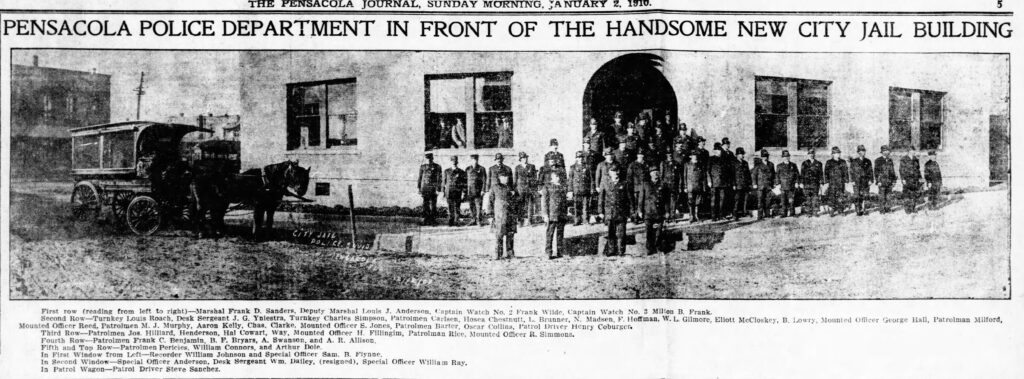
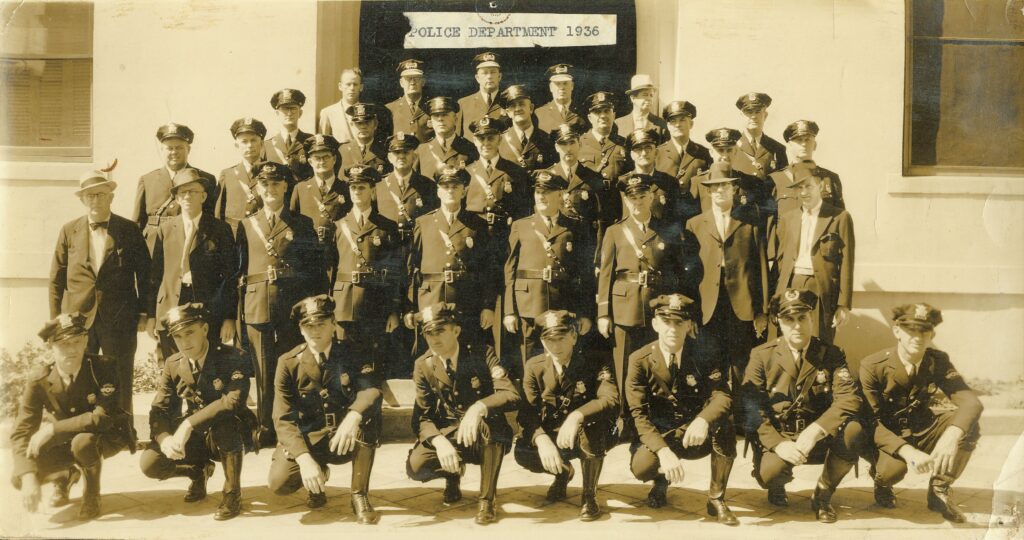
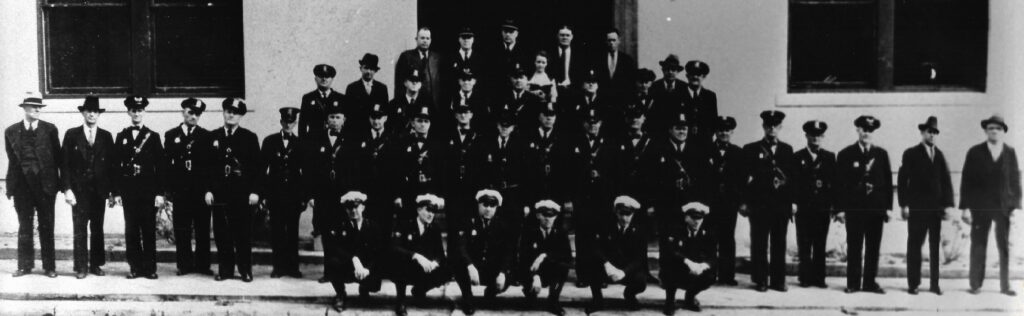
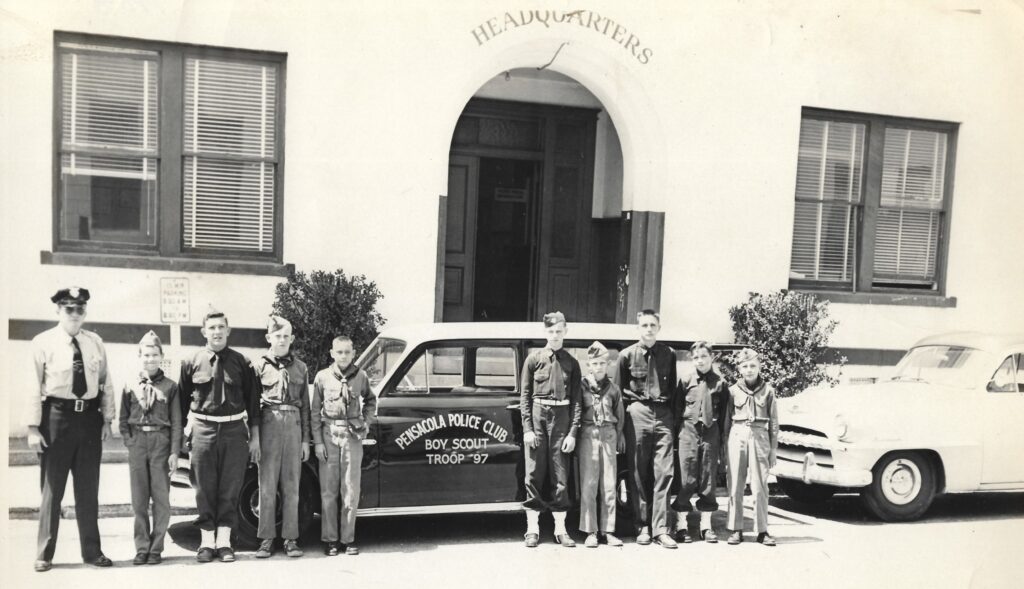
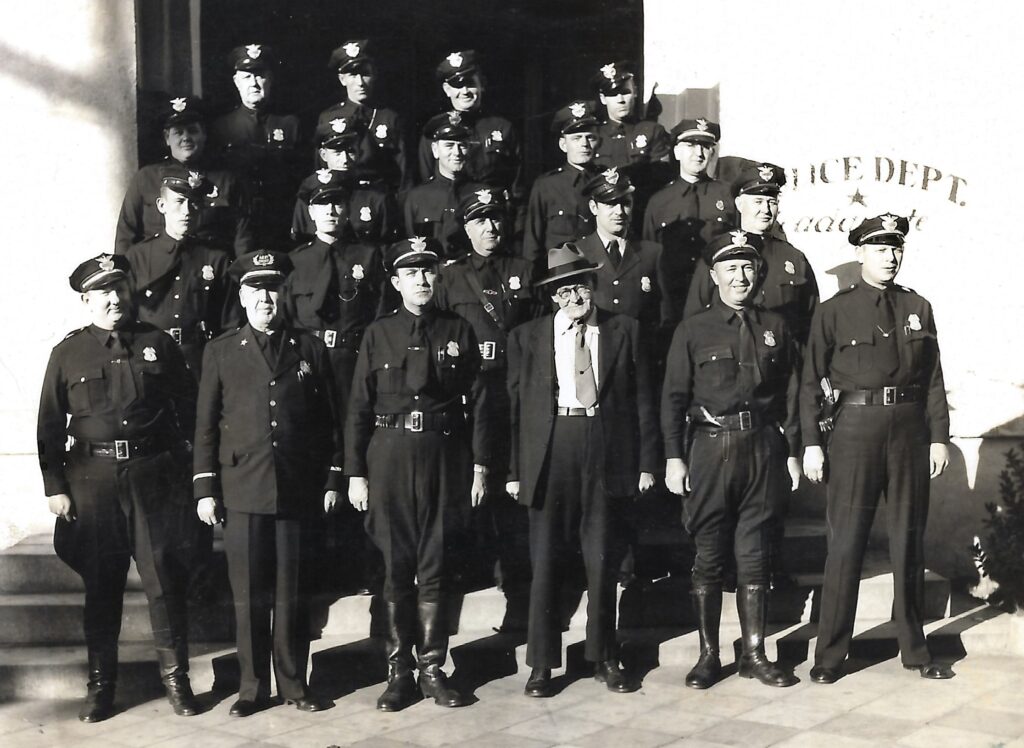
It even looked like a police station. The Pensacola Police Department had finally moved into their proper police station. It was the first building erected for the Pensacola Police Department. For many years, the police department moved from one building to the next. Sometimes it was a storefront, sometimes a warehouse, sometimes a building built for a residence. Sure, the old calaboose that was built in the 1700s at Alcaniz and Intendencia used to belong to them, but it was simply a jail and the residence of the jailer’s family.
But this was different. This was built for policing…and jailing. This headquarters was located at 407 S. Jefferson Street. It was exciting!
It had a lobby, administrative offices, a courtroom, a lockup area, and a kitchen. To answer the demands of the citizens – especially mothers – a wall was built between the prisoners’ windows and Main Street. The officers moved into the new building in 1909 and called it home until they relocated to 40 S. Alcaniz Street in 1956.
It was to be their home for almost 50 years.
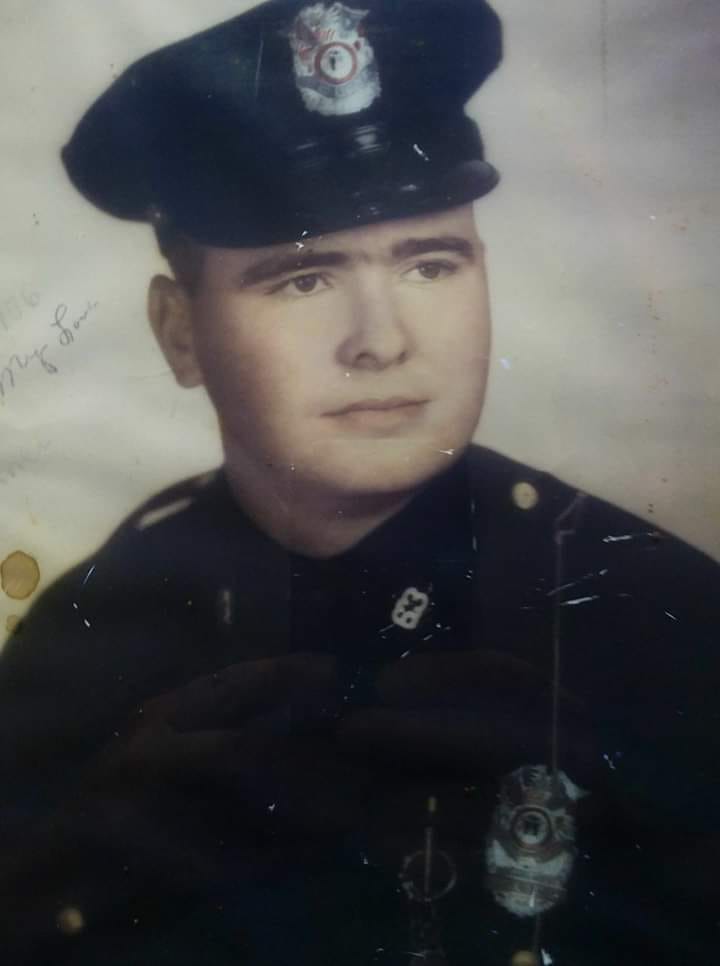
There is one officer still alive who was hired when the police department was located on Jefferson Street – Elmer Powell. He was young, but he was there!
The headquarters at 407 S. Jefferson Street saw more officers die in the line of duty than any other location. During the Police Department’s stay at that building they lived through:
Charles Bazzell was killed in a motorcycle crash in 1932.
William Shackleford died from injuries sustained while fighting a suspect in 1933.
Clinton Green was killed in a motorcycle crash in 1938.
Archie Bowman was shot and killed by a suspect while making an arrest in 1938.
Herbert Hatcher was shot and killed by the suspect during an armed robbery in 1939.
Andrew Schmitz died of a heart attack after fighting a suspect in 1940.
Edward Pursell died after fighting an arrestee in 1944.
Bobo Connors died while responding to an emergency call in 1944.
Louis Champa died in a motorcycle crash in 1951.
* Riley Simmons retired from the Pensacola Police Department in 1947 after serving for 42 years. After his retirement, he joined the Escambia County Sheriff’s Office. In 1953, while on patrol, Simmons had a heart attack and died.
Some were excited, others were nostalgic. The old custodian of Pensacola had been home for 47 years. Now they were abandoning her. In 1956, members of the department moved their belongings to the new, modern building at 40 S. Alcaniz Street. It would be their home for the next 30 years.
Today, the beautiful old building at 407 S. Jefferson Street still stands. Inside, it holds, instead of prisoners, beautiful works of art. The Pensacola Museum of Art is located in the old building, which has been restored and still features some of the old cells.
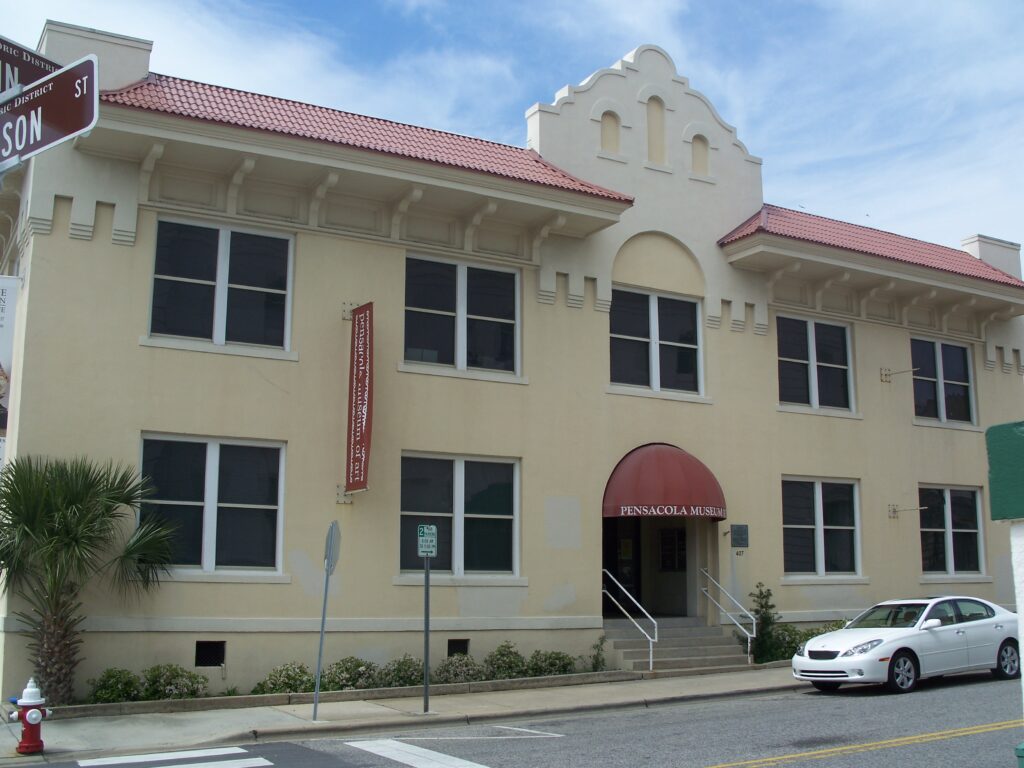
Below are some photos of the old headquarters…

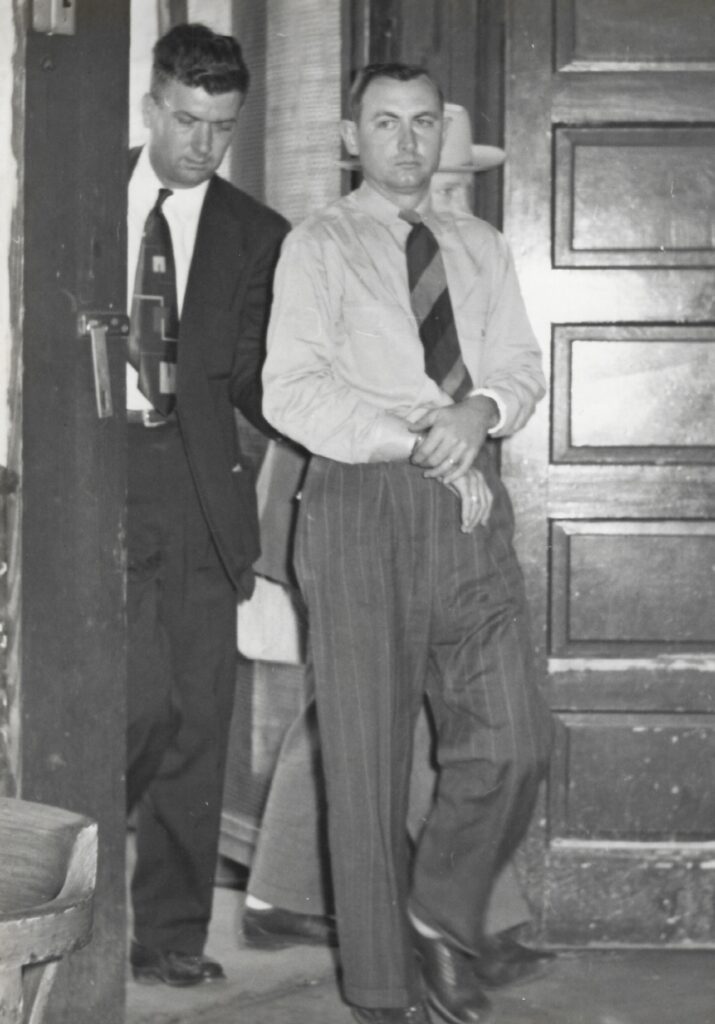
Detectives escorting a prisoner to the lockup area at police headquarters at 407 S. Jefferson Street in the early 1950s. L-R: Detective Ed Lawhorn, unknown prisoner, Detective Raymond Harper (wearing a hat). Notice that the prisoner has been cuffed in the front of his body. In the 1960s, due to numerous assaults by prisoners on officers, the procedure was changed to cuffing behind their backs.
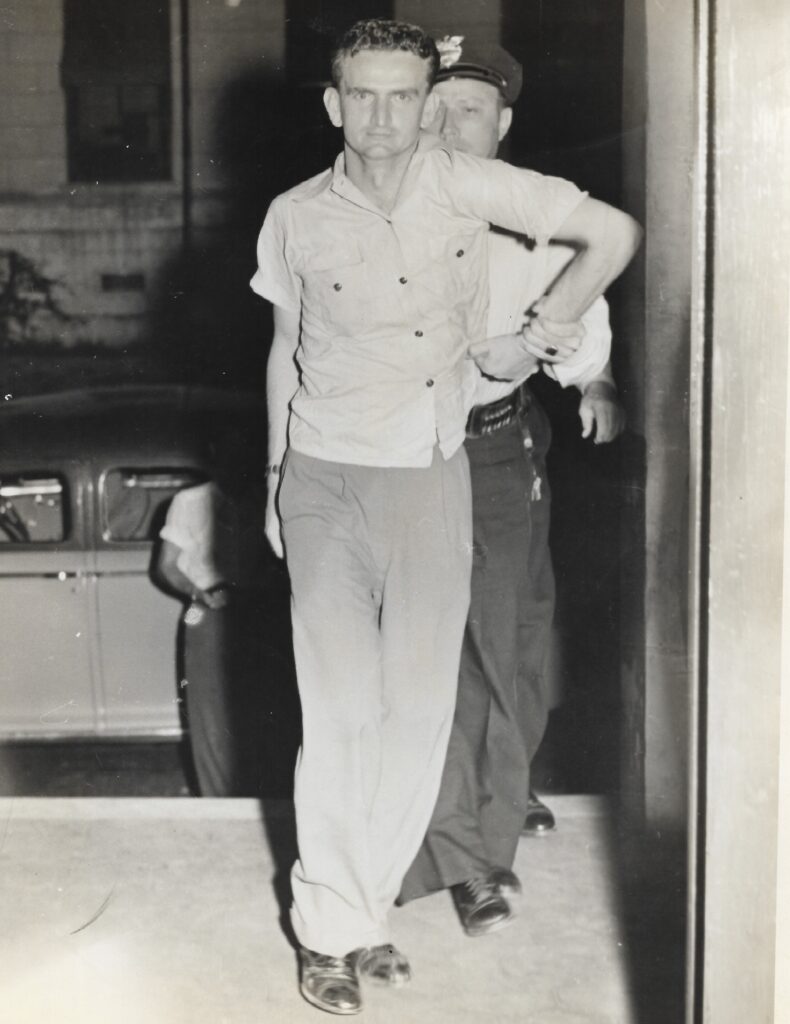
In this photo, Officer Peake was escorting a prisoner into the 407 S. Jefferson Street station. Notice that Officer Peake had not handcuffed the suspect yet, but he was applying an arm-bar to keep control.
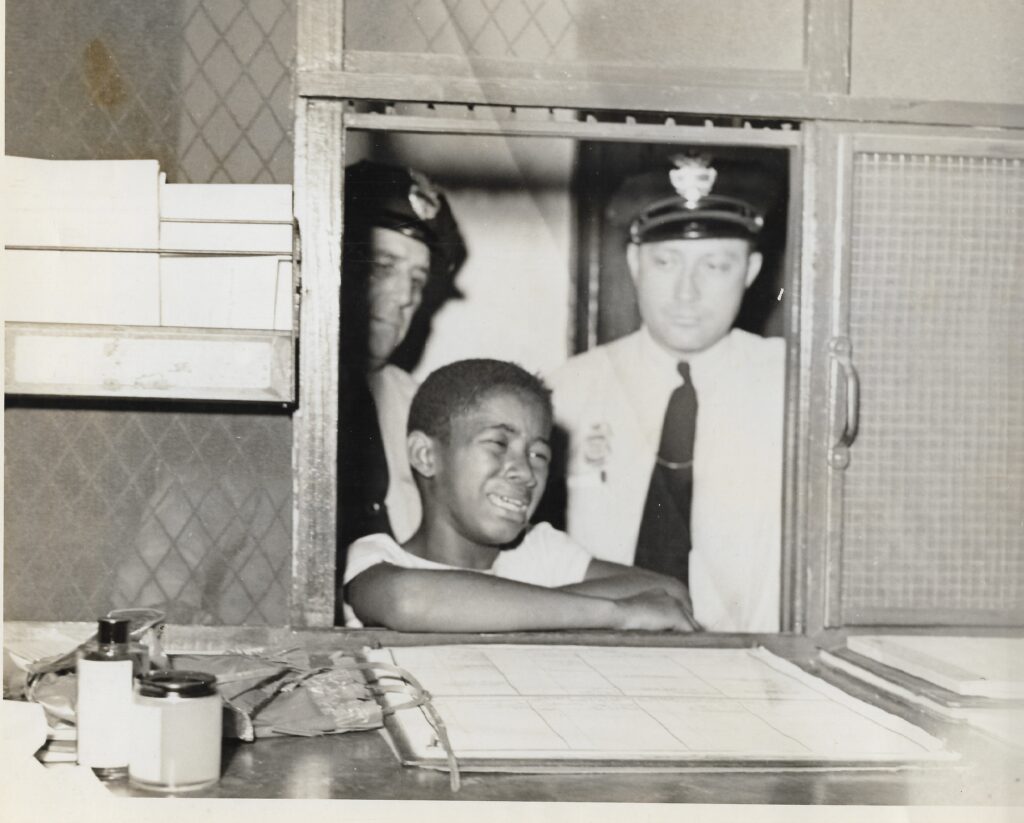
Top left: Officers Victor Ciulla and Buddy Peake arrest an unknown juvenile suspect and bring him to the Desk Sergeant’s Office at police headquarters, 407 S. Jefferson Street.
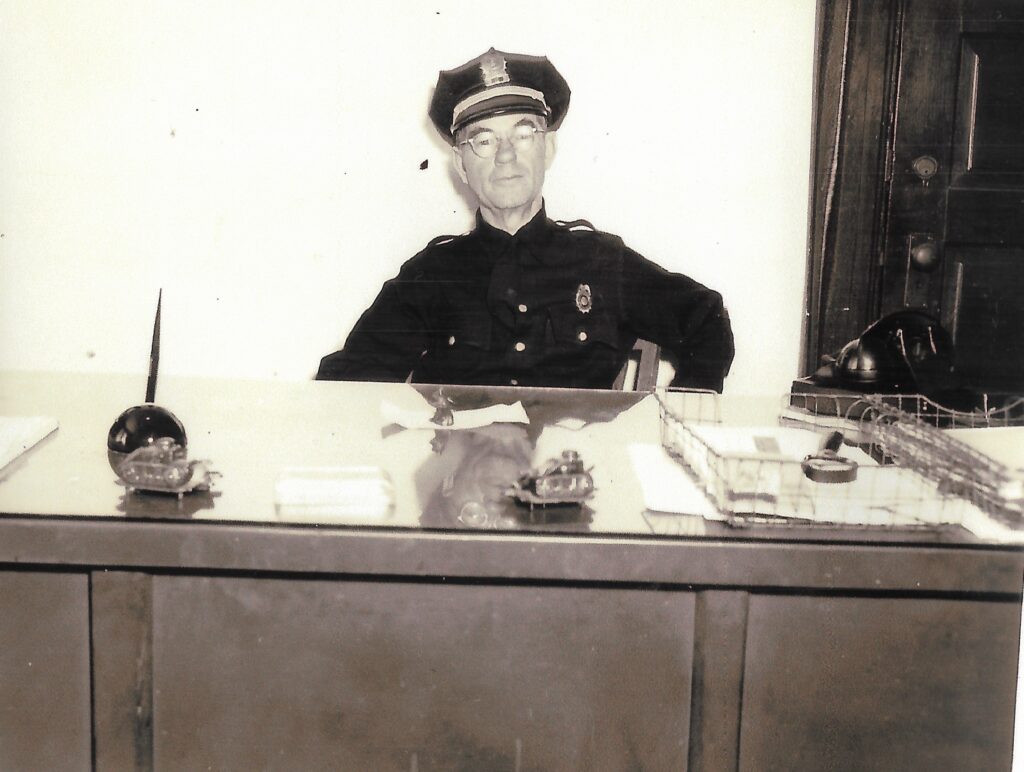
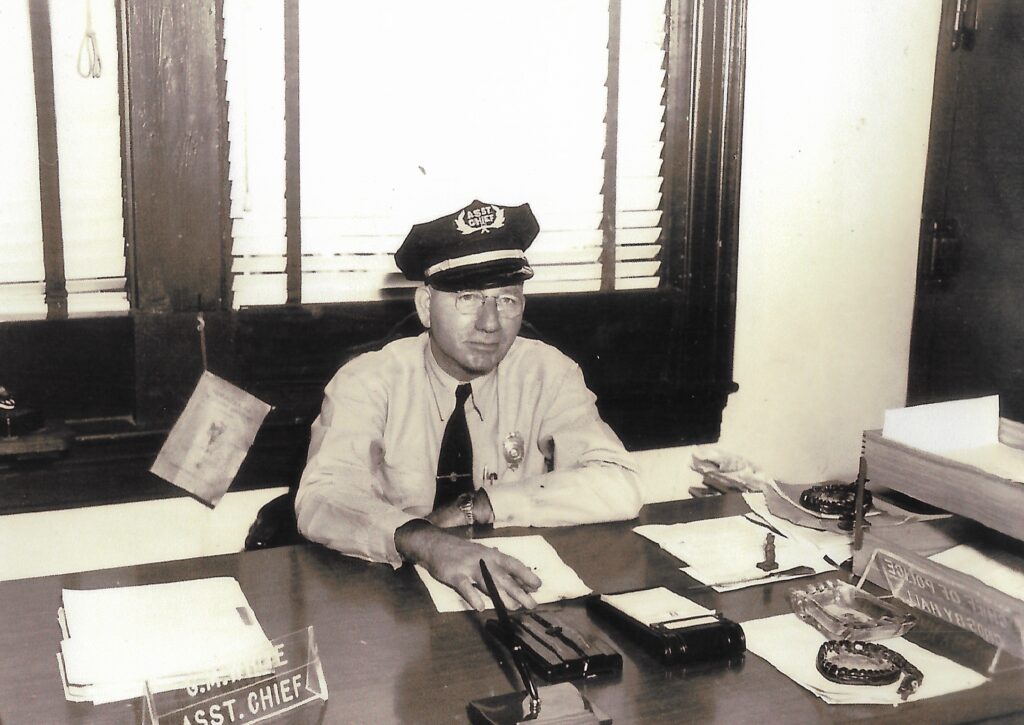
George White was born in Bay Minette, Alabama in 1901. When he was thirty years old, he joined the Pensacola Police Department, where he served for 29 years. In 1947, Chief Crosby Hall named White as the Assistant Chief, a position that he held for 13 years. Assistant Chief White became the compass for many police officers during a rocky period in the department’s history. He retired in 1960 and passed away on October 23, 1971.
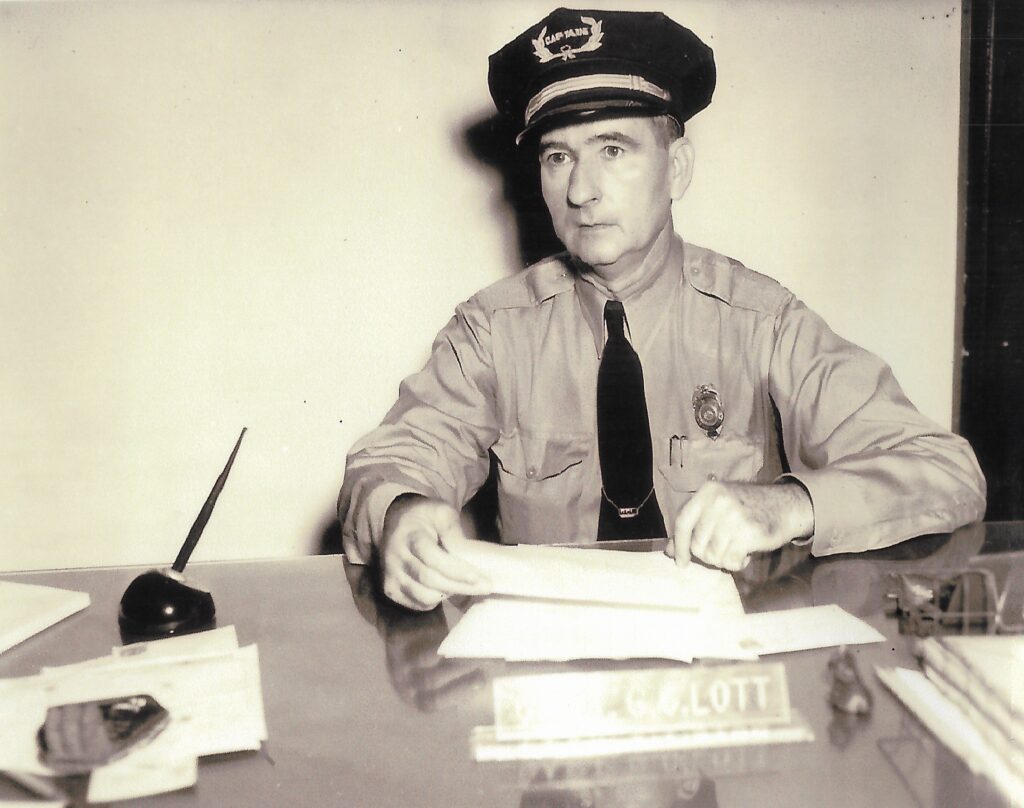
“Crow” Maxwell served in the Pensacola Police Department from 1938-1948. He was one of sixteen members of the department that graduated from the FBI-run police school on April 29, 1939. Among the subjects taught in the course were: typewriter identification, confessions and duress, and raids.
After Maxwell’s move in 1947 up to captain, he retired in 1948. He then served for many years as a bail bondsman.
Discover more from Sweet Tea Murders
Subscribe to get the latest posts sent to your email.