
An excerpt from the book, “Some Gave All,” available on Amazon
By Mike Simmons
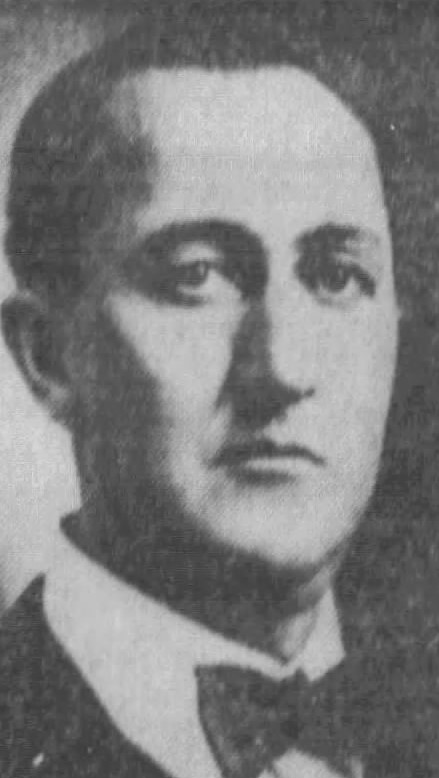
Andrew Cary Ellis was born on August 9, 1873, in Monroe County, Alabama. One of the latest industries to take off during the latter part of the 19th century was railroading. As if awakened from a deep sleep, the nation suddenly realized that there was now within her reach a tool to connect the East and the West, the North, and the South…railroads. Suddenly, men with money began to take notice of the potential, workers found jobs, and teenage boys got stars in their eyes about being railroad men!
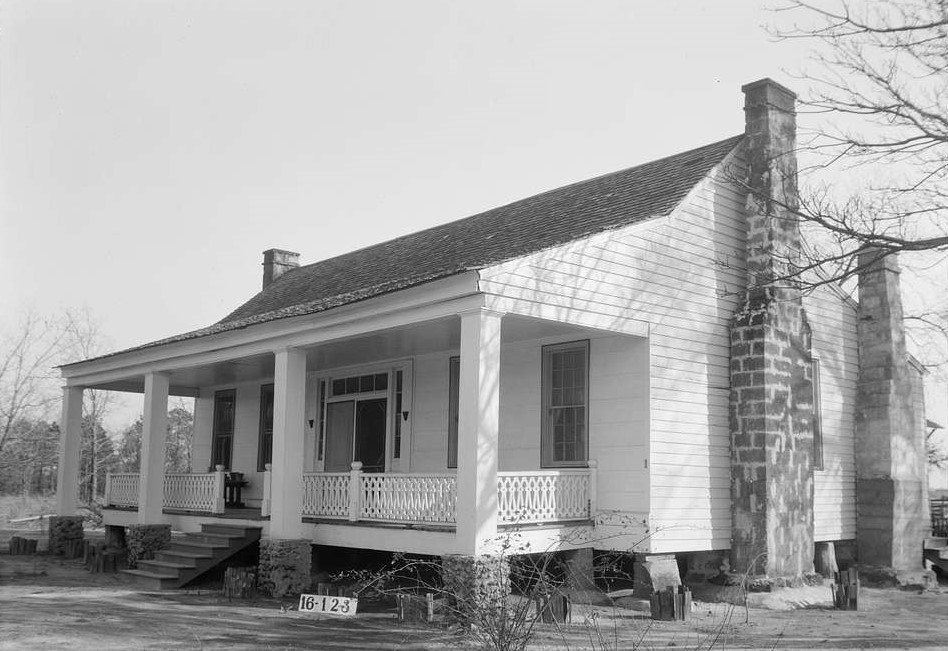
Old Frame House, Monroe County, AL
Cary Ellis was no different. A working farm boy, he was no stranger to hard work. Soon he found that he was good at the new line of work. He soon found himself living in the Florida panhandle town of Pensacola and sitting in the driver’s seat of a train engine. He loved it – and it paid well.
The April 28, 1908, edition of the Pensacola News Journal ran an ad that announced Ellis’ candidacy for sheriff[i]. However, Sheriff Van Pelt was reelected. He served another four years.
Over the next four years, Cary Ellis continued as a railroad engineer, and he continued to gain popularity among the citizens in Pensacola. Ellis, his wife, and three daughters – Louise, Cary, and Denise – lived in the middle of town, 815 N. Davis Street.
When reelection time came for sheriff in 1912, Ellis was ready. On February 4th, he ran an ad again announcing his candidacy for sheriff[1]. The results reported on May 29, 1912, were close. Ellis got 1750 votes and Frank Sanders garnered 1652, a 98-vote difference. But it was enough. Escambia County had a new sheriff. Ellis took office on January 7, 1913.
In the political criminal justice world, fighting crime is only part of the equation. It is interesting…when a person is elected to the office of sheriff for the first four-year term, the “honeymoon” period usually lasts about six months. New programs are introduced, new people occupy positions of trust, and everyone gets along – at least on the surface. Then the hard “let’s get to work” period follows. The new sheriff faces pushback from opponents, outsiders, and those in his ranks. But he can make crime-fighting progress, for a while. About two years into his term, the names of others considering challenging him for the next term begin to surface. By the fourth year, his priority is re-election, and the competition has thrown their hats into the ring. The fight is on!
As soon as the 1915 Christmas season was complete, many office-seekers began looking toward the new year to campaign for their desired offices. In Pensacola, four sought the circuit judge position, three – maybe four – for state attorney, one for court of record judge, three for county solicitor, and seven for sheriff. One must wonder what the daily priority of the current officeholder is when seeking a second term.
After a long and tough year of making speeches, kissing babies, smiling for photos, shaking hands, and making promises, Sheriff Ellis did not win re-election. He didn’t even come in second. James Van Pelt won, and Chief of Pensacola Police Frank Sanders came in a close second with a margin of less than fifty votes. In 1918, the City of Pensacola appointed Ellis as Police Chief. He leaned heavily on his two captains, William O’Connell and Ernest Harper.
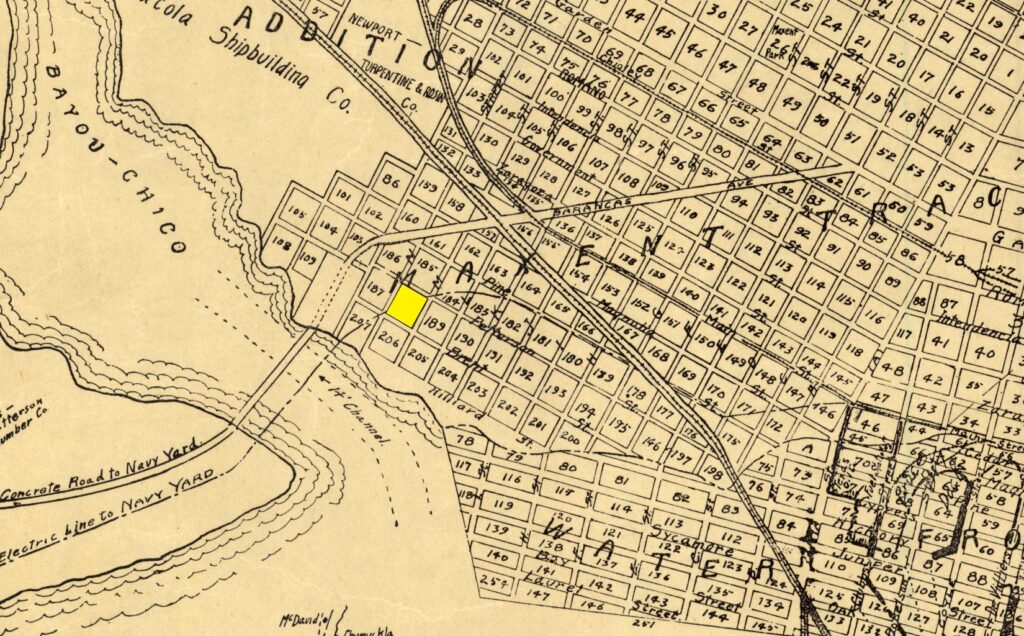
2009 Petterson Street, Pensacola, Florida – 1921
It had been four years[2]. Had there been changes from 1916-1921? Yes, but much of the job was the same. It took some getting used to, but he couldn’t help but feel like he was “back in the saddle.” After all, he hadn’t gone away. He had been right there, working daily with Sheriffs Van Pelt and Whitaker since he accepted the position of Chief of the Pensacola Police on June 10, 1918. He had been wearing a badge, but now he was to put on his old one again.
Andrew Cary Ellis had never lost his friends, who were glad to see him in his old position again, but he met many new friends and acquaintances. He also met new challenges, including those men who were ready to test him. But he was up for it. Sadly, not for long.
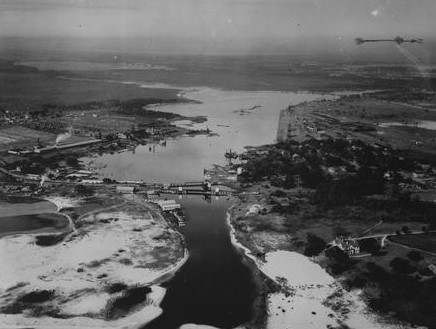
Bayou Chico, Escambia County, Florida – 1923
Susie McLane was mentally unbalanced, according to most of the officers and deputies who knew her. More than a few lawmen had been acquainted with McLane. She has a lengthy arrest record, including the time she cut a man with a knife. The 50-year-old woman didn’t live at 2009 West Petterson Street (later named Cypress Street) inside the City of Pensacola. She was staying there illegally – again. Sheriff Ellis had had to forcibly evict her before. Hurley Cobb, the owner of the house, never gave her permission to stay there, but she did anyway.
On September 25, 1923, Mr. Cobb complained to the sheriff that Ms. McLane was still at his house, and he wanted her out! During the morning, several police officers drove by and saw her at the house, so they let the sheriff know. She had to go – now was the time. The sheriff didn’t want to do it, but Mr. Cobb had obtained a court order to put her out. The sheriff said that he wanted to put her out “without hurting the poor old soul.”
Because eviction is the duty of the sheriff even though this one was located inside the city limits, Sheriff Ellis went by and recruited his two friends, Captains Ernest Harper and William O’Connell, to go with him. All three were veterans, and it was hoped that they would be able to reason with the woman.
2009 Petterson St., Pensacola
Ellis, O’Connell, and Harper arrived at the Petterson Street address at about 4:30 PM and yelled a greeting to the woman, who had closed the doors and pulled the shades. Ellis tried to talk her into leaving. With no option, he tried to force the door. McLane shot twice at the door with a .32 revolver, missing the sheriff. As he forced the door open, McLane fired a third time, striking him in the chin and breaking his neck. He died within moments. The deputies who were with Ellis opened fire on the woman. She was dead before she hit the floor.
Suddenly…the chief law officer, the community leader, the rock that everyone leaned on, was dead. No one was ready for it. No! it couldn’t be…not Sheriff Ellis, he was a good man!
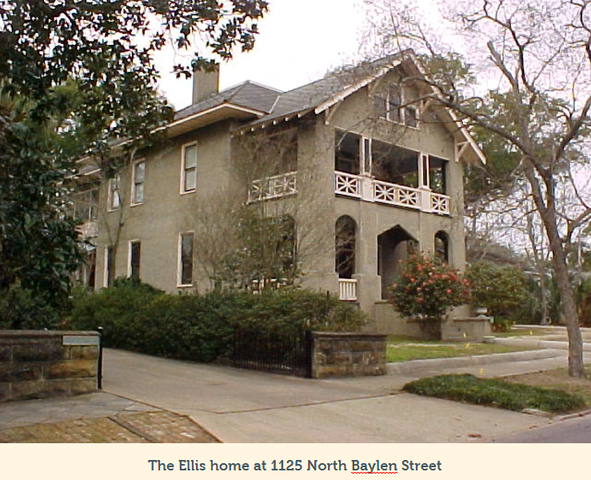
The funeral took place at 4:30 PM on September 26 at the sheriff’s home, 1123 N. Baylen Street[3]. After it concluded, a procession of 2000 people proceeded to St. John’s Cemetery for the burial service. Sheriff Ellis was survived by his wife and three daughters.
Following his burial, Deputy Thomas Cusach was sworn in as temporary successor by Judge Jones.
An era had passed. Sleep easy, Sheriff.
[1] Pensacola News Journal https://www.newspapers.com/image/465083049/?terms=Ellis&match=1
[2] Pensacola News Journal. https://www.newspapers.com/image/352895578/?terms=Ellis&match=1
[3] Pensacola News Journal. https://www.newspapers.com/image/352589747/?terms=Ellis&match=1
** Special thanks to the Pensacola News Journal, whose stories and photos helped tell the stories of these heroes.
Discover more from Sweet Tea Murders
Subscribe to get the latest posts sent to your email.
Great read. Thanks for sharing Mike! I fondly remember working for Captain Raymond Harper as a wet behind the ears rookie in 1973.