
Perry, Florida — October 15, 1949
On warm Saturday nights in rural North Florida, there was a rhythm to life.
Men worked hard all week in the woods, on the water, or in small businesses that kept their communities alive. Saturday evenings were for letting go. Folks put on their best clothes, gathered with friends, listened to music, danced, laughed, and forgot their troubles for a few hours.
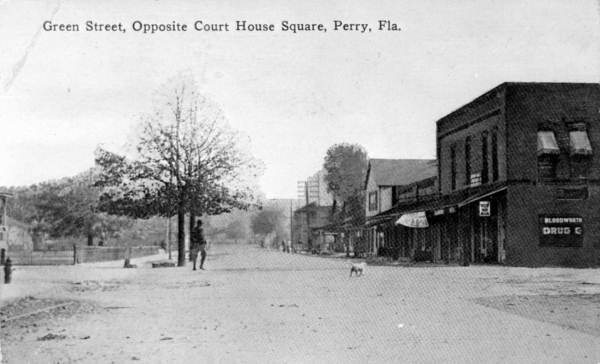
In Perry, Florida, one of those places was the local VFW hall. On October 15, 1949, it was filled with music, conversation, and the familiar sounds of a small-town dance. No one walking through the doors that evening could have imagined they would soon witness a killing. Yet before the night was over, a young fisherman would lie dying, and another man’s life would be effectively over.
Twenty-one-year-old Walton McCall came from the Spring Warrior community south of Perry. He was a commercial fisherman, one of countless Gulf Coast men who earned a living from the unpredictable waters of Florida’s Big Bend.
Fishing was hard work. The hours were long, the weather could turn without warning, and success often depended on luck as much as skill. But for generations, families along the coast had made their living that way.
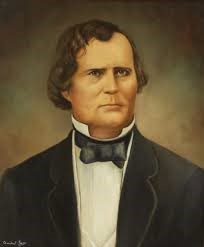
Walton was young and, by all accounts, had his life ahead of him. Stanley McCaskill came from a different world. A well-known oil distributor in Taylor County, he supplied fuel to farms, homes, and businesses throughout the region. He was established, respected, and considerably older than the young fisherman. Their paths might never have crossed under ordinary circumstances. But that night, both men found themselves under the same roof.
As the evening wore on, so did the drinking. Witnesses later recalled that the crowd became increasingly rowdy. Tempers flared. Arguments broke out. Before long, fists were flying.
There was nothing unusual about a fight at a Saturday-night dance in those days. It wasn’t right, but it wasn’t uncommon either. Most ended with bruised faces, hurt pride, and stories told over coffee the next morning. This one was different. Somewhere in the confusion and shouting, Stanley McCaskill drew a handgun. The music suddenly became background noise. People turned. Then came the sound that would echo through Perry for years.
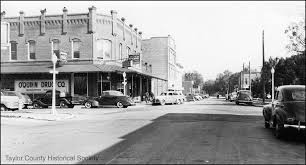
A single gunshot. When the crowd realized what had happened, Walton McCall was on the floor. The bullet had struck him in the head. Moments earlier, the VFW hall had been alive with music and laughter. Now panic filled the room. Someone called for help. Others rushed to the wounded fisherman. The dance was over.
Medical care in rural North Florida was limited in 1949, and Walton was rushed nearly forty miles north to a hospital in Thomasville, Georgia. Doctors did what they could.
Family members waited. Friends prayed. But the wound was too severe. On Sunday, October 16, Walton McCall died.
A young man’s future disappeared in less than a second.
Taylor County Sheriff W. A. Towles wasted no time. McCaskill was arrested and jailed.
The following day, State Attorney A. K. Black began gathering statements and evidence. Witnesses described the fight, the gun, and the shot that ended Walton’s life.
Meanwhile, back in Spring Warrior, a funeral was being prepared. On Monday, while investigators worked to build a case, Walton McCall’s family gathered to bury their son.
One side of the county was focused on justice. The other was focused on grief.
The legal proceedings moved quickly. At a preliminary hearing, McCaskill attempted to plead guilty to second-degree murder. Perhaps he hoped to avoid the possibility of a harsher sentence. Perhaps he believed the shooting had occurred in the heat of the moment. But the court was not convinced. Judge Rowe rejected the plea. The facts suggested something more serious. A man had arrived at a public dance carrying a loaded firearm. During a fistfight, he had drawn that weapon and fired a fatal shot.
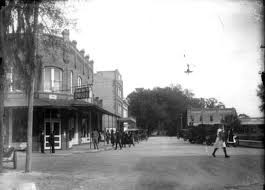
The case would proceed as first-degree murder.
The trial began in early 1950. For days, jurors listened to testimony from witnesses who had been inside the VFW hall that night. They heard about the drinking, the fighting, the confusion, and ultimately, the decision to pull a trigger.
On January 21, 1950, the jury returned its verdict. Guilty. First-degree murder. Florida law allowed for the death penalty in such cases. Yet the jury chose a different path.
Instead of sending Stanley McCaskill to the electric chair, they sentenced him to life in prison.
Exactly why remains unclear. Perhaps they saw mitigating circumstances. Perhaps they believed alcohol and chaos had clouded judgment. Perhaps they simply could not bring themselves to condemn a local businessman to death.
Whatever the reason, the verdict spared his life but took away his freedom.
The prison gates would close behind him, likely never to reopen.
The story never became national news. It wasn’t the kind of crime that drew reporters from New York or Chicago. Instead, it remained what many Southern murder cases became—a local tragedy discussed in barber shops, fishing camps, church gatherings, and family kitchens.
For years afterward, people remembered. Some remembered Walton McCall, the young fisherman whose life ended before it had truly begun. Others remembered Stanley McCaskill, the successful businessman who lost everything in a moment of anger.
And many remembered the lesson. A fistfight can end. A harsh word can be forgiven.
A wounded pride eventually heals. But a gunshot lasts forever.
Today, the old VFW hall may be gone, changed, or forgotten by most who pass by.
Yet history has a way of lingering. It hangs in the humid Florida air. It survives in courthouse records and yellowed newspaper clippings. And it reminds us that sometimes the distance between an ordinary Saturday night and a murder trial is only the pull of a trigger.
Here in the South, we often think of small towns as peaceful places, and most of the time, they are. But stories like this remind us that darkness does not belong only to big cities. It can appear anywhere…even on a dance floor. Even among neighbors.
Even on a warm October night in Perry, Florida.
If you like these stories, consider attending the monthly “Sweet Tea Murders LIVE” events. Get your tickets Sweetteamurders.com.

Discover more from Sweet Tea Murders
Subscribe to get the latest posts sent to your email.