
By Michael Earl Simmons, Southern Crime Historian
Like a wet blanket, the humid summer heat settled heavily over Pensacola in June of 1916.
The city was growing. Two years ago, the first naval flight school was established on the navy base, and the Newport Company, a naval stores company, was established. The future looked good. Ships moved through the harbor. Streetcars rattled through town. Families worked hard to make a living in a community that was still finding its place in the modern South.
But behind the doors of a modest Pensacola home, a tragedy was unfolding that would leave citizens stunned and investigators searching for answers for years to come. More than a century later, the deaths of Ethel and Tennie Fudge remain one of the most troubling mysteries in Pensacola’s history.
A Family in Hard Times
Elijah Fudge grew up in Nashville. As a young man, he met and married another Nashvillian, Lillie. In 1903, Elijah deserted Lillie at their home and headed for Paducah, Kentucky. After a few days, a man named John Vasuer arrived in Nashville in search of his daughter, who had left Paducah the day before with Elijah Fudge. When Vasuer and the police located the couple, Fudge ran our the back way and escaped, while the father and daughter returned to Paducah. Fudge went to St. Louis to get away. After Lillie followed him there, he returned to Nashville. A few days later, a law enforcement officer accompanied Lillie to Fudge’s work and confronted him. He apologized, and the two reunited, until she left him a year later. The two divorced.
In 1904, he married again. Josie seemed stable – a good wife. Soon, the family began Tennie was the oldest. She was born in 1905. Then came a son, Bascom, who was born in 1907. Finally, little Ethel was born in 1909. However, hard times came, and a lot was put on Jodie’s shoulders.
In January of 1916, Elijah summoned an ambulance to take Jodie to the hospital. Within minutes, she died of strychnine poisoning. Elijah explained that she took the poison in front of the kids because she couldn’t handle the financial and physical problems. Elijah collected the $400 insurance payout, took the kids and left for Pensacola.
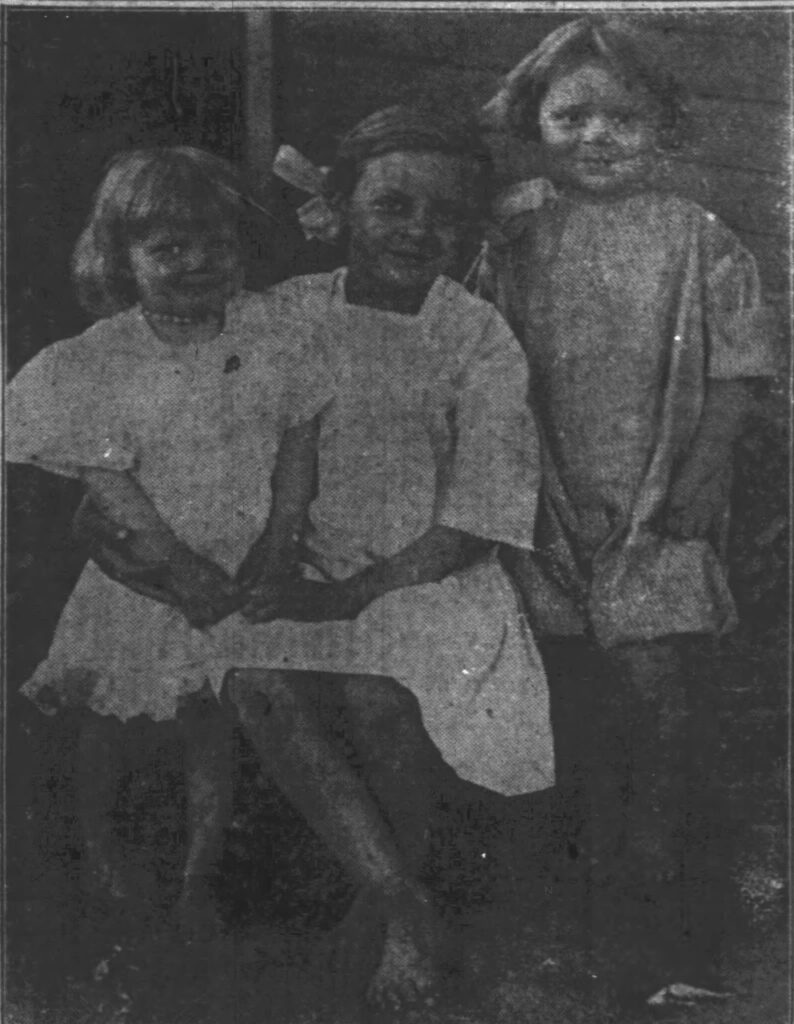
Like many families of the era, they lived close to the edge financially. Work was difficult to find, and every dollar mattered. The widowed father struggled to provide for his children while attempting to build a new life in a city far from home. His kids, then ages ten, eight and seven, were by all accounts ordinary children living through extraordinary hardship. No one could have imagined what would happen on June 27, 1916.
A Horrifying Discovery
On that summer afternoon, E.J. Fudge and his young son, Bascom, left home for a period of time – in search of work, according to Elijah. When they returned, they found Tennie and Ethel lying dead inside the house. Both girls had been shot. Nearby was a .22-caliber rifle.

The scene was shocking enough, but investigators soon discovered something even stranger. Several handwritten notes, allegedly written by Tennie, had been left near the bodies.
According to the letters, the girls had decided to end their lives because they feared becoming a burden to their unemployed father. The notes reportedly expressed concern about being sent to an orphanage and specifically asked that no blame be placed upon their father. The explanation seemed almost impossible. Many who read the notes immediately questioned whether a ten-year-old child could have had the wherewithal to have written such words.
The Questions Begin
Pensacola police and county authorities faced a difficult task. At first glance, the scene appeared to suggest a murder-suicide. Yet the details raised troubling questions. Why would children so young take such drastic action? Why were the notes written in language that seemed beyond their years? And why did the letters go to such lengths to protect their father from suspicion?
There were other factors that made me, as a former investigator, question. For instance, Both girls seemed to have been shot with the .22 rifle, which was fine if one shot the other. But neither could reach the trigger while the gun was aimed at her chest, so suicide was impossible. Also, there was no powder burns or stipling, so the weapon was fired from at least a foot or two away.
As investigators dug deeper, their attention gradually shifted toward E.J. Fudge.
The family was struggling financially. They found out that Elijah had taken out insurance policies on the girls as well (the son also). And much of his time that was spent searching for work was actually spent time with a new girlfriend who lived in the red light district. Detectives began examining whether the scene had been staged to conceal a double homicide. Soon, what had begun as a tragic death investigation became a murder case.
The Trial
The arrest of E.J. Fudge gripped Pensacola. Newspaper readers followed every development. Citizens debated the evidence. Was this a desperate father driven by poverty and despair, Or was he the victim of circumstances that merely appeared suspicious?
The prosecution relied heavily upon circumstantial evidence. No witness had seen the killings occur. No confession existed. Much of the state’s case rested upon the strange notes, the family’s financial condition, and the investigators’ belief that the scene had been arranged to mislead authorities.
A jury ultimately convicted Fudge of murdering his daughters. For many, the verdict appeared to bring closure. But the story was not over.
The Conviction Falls Apart
In 1918, the Florida Supreme Court reviewed the case. The justices concluded that while the circumstances surrounding the deaths were highly suspicious, suspicion alone was not enough to sustain a murder conviction. The court found the evidence insufficient and overturned the conviction. The ruling did not declare Fudge innocent. Nor did it establish his guilt.
Instead, it left the case suspended in uncertainty. A father had been accused. A jury had convicted him. The state’s highest court had reversed that conviction. And the deaths of Tennie and Ethel Fudge remained unanswered.
A Mystery More Than a Century Old
Today, more than one hundred years later, the questions remain. Did a desperate father murder his daughters and attempt to disguise the crime? Did investigators misunderstand a tragic scene? Was there some other explanation that has been lost to history? We may never know.
What we do know is that two young girls lost their lives on a hot June day in Pensacola. Their names faded from newspaper headlines. Their home disappeared. The people who investigated the case are long gone. Yet their story survives. It survives because mysteries have a way of lingering. And sometimes the most haunting crimes are not the ones that end with certainty. They are the ones that leave us staring into the shadows, wondering what really happened. The deaths of Tennie and Ethel Fudge remain one of those mysteries. More than a century later, Pensacola still has no answers.
Only questions.
If you enjoy stories of Southern crime and mystery, consider joining us for the next Sweet Tea Murders LIVE event, Sweet Tea and Arsenic, on June 25 at the Voices of Pensacola Multicultural Center in downtown Pensacola. The evening will explore the chilling case of Judy Buenoano, the so-called “Black Widow of the Panhandle,” whose trail of deception, greed, and murder eventually led her to Florida’s electric chair. The first Sweet Tea Murders LIVE event was a sellout, and tickets for this next presentation are already selling quickly, so early reservations are strongly recommended. Come enjoy a glass of sweet tea and an unforgettable evening of true crime storytelling where the tea is sweet…but the stories aren’t. Tickets and information are available at SweetTeaMurders.com.

Discover more from Sweet Tea Murders
Subscribe to get the latest posts sent to your email.