
In the mid-1970s, women working the night shift at convenience stores and gas stations in Mobile County, Alabama, lived in quiet fear. Three clerks vanished or were found murdered in brutal fashion within 11 months. The killer didn’t strike randomly. He targeted vulnerable women alone at night, often beating, shooting, and, in two cases, returning to mutilate their bodies in eerie silence. When police finally caught 29-year-old Thomas Warren Whisenhant in October 1976, he confessed not only to the latest crime but to a string of others spanning over a decade. What emerged was a portrait of a deeply disturbed man shaped by a toxic childhood, failed interventions, and a justice system that grappled with mental illness, parole, and capital punishment.
Whisenhant, executed by lethal injection on May 27, 2010, at Holman Correctional Facility, spent longer on Alabama’s death row than any inmate before him – 32 years, 8 months, and 20 days. His case raises uncomfortable questions: How does a “mama’s boy” from a dysfunctional home become a serial killer? Why did the system release him after a prior violent crime? And in an era of lengthy appeals, does prolonged death row serve justice or merely prolong suffering for victims’ families? This post examines the full story, drawing from court records, psychological evaluations, and contemporary reporting.
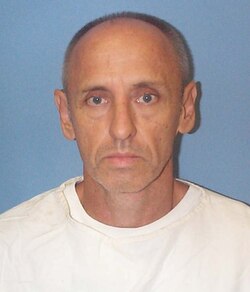
Early Life: A Domineering Mother, Weak Father, and Spoiled Son in Prichard
Thomas Warren Whisenhant was born January 29, 1947, in Prichard, Alabama, which was a low-income Mobile suburb. The youngest of four children to Willie (a physically weak, alcoholic laborer) and Emma Whisenhant, he weighed under five pounds at birth. Their white-framed house on Clark Street was ruled by Emma, a “tyrant” who physically attacked her husband, encouraged the children to join in, and ended sexual relations after Thomas’s birth. Willie would get drunk on moonshine, attempt seduction, and face rejection and beatings…often with shoes or household items thrown by the kids at Emma’s urging. Sober, he did chores; drunk, he was a “non-entity.”
Thomas was the exception: spoiled, overprotected, and never held accountable. He shared his mother’s bed until age 7 and her bedroom until 16. Emma never let him out of her sight, even accompanying him as a teen to buy gas. His sister, Evelyn Stevens, later testified that the home was “hell every day.” By his early teens, Thomas shifted from carefree to moody and violent, sometimes turning on his mother. A psychologist noted he resented her overprotection and control.
This dynamic wasn’t just dysfunctional. It became the lens for experts to study, often with expressions of disbelief. Psychiatrist Claude Brown testified that victims were “mother substitutes” annihilated to preserve Whisenhant’s existence. The weak father provided no male model; the domineering mother squelched normal maturation. Whisenhant identified with his father’s degradation. No evidence of direct sexual or physical abuse toward him existed, yet the environment fostered resentment, fear, and detachment. Many children endure similar homes without violence, which prosecutors emphasized, but combined with possible underlying mental issues, it proved combustible.
At 16, Whisenhant was already trouble. Charged (but later cleared on a technicality) with robbing a blind woman, he was suspected in the May 6, 1963, shooting of 72-year-old widow Lexie Haynes. The gun was found next to his home; a witness recalled him playing with a stolen revolver and saying a bullet would “soon kill somebody.” Haynes had confronted him. Family alibis protected him; he was never tried. Police called him “exceedingly indifferent,” which is common in sociopaths. A minister deemed him “a very sick young man,” but psychiatric help was dismissed.
Military Service, Assault, and a Flawed Parole
Seeking escape, Whisenhant joined the U.S. Air Force. Stationed at Ent Air Force Base near Colorado Springs, he attacked 22-year-old WAF Rose Covington on October 25, 1965, in the finance office, beating her unconscious with a metal ashtray. She suffered severe head/facial injuries and was hospitalized two months. Shoe prints matched; an FBI expert testified. Convicted of assault with intent to murder in 1966, he received 20 years (later reduced), was dishonorably discharged, and served time at Fort Carson and federal prison. Federal doctors diagnosed psychotic paranoid schizophrenia. He was paroled November 28, 1973, after about eight years.
Back in Mobile, he married, had children, and held jobs (possibly at Ingalls shipyard). Neighbors described a seemingly normal family. Yet the pattern resumed.
The Convenience Store Killing Spree: Targeted Vulnerability
Whisenhant preyed on isolated female clerks—easy targets in the pre-surveillance era. No robbery motive dominated; little was taken. He acted in silence, returning to mutilate two bodies the next day.
- On November 21, 1975, at 9:30 PM, a customer at the Compac store at the intersection of Schillinger Road and Cottage Hill Road found the body of Patricia Hitt, a 28-year-old mother of two. She was found beaten and shot in the head, lying in a pool of blood.
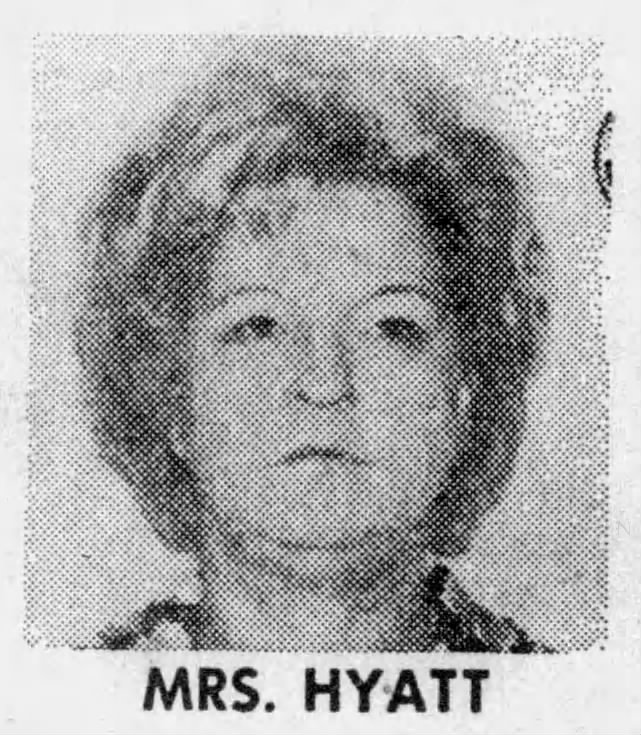
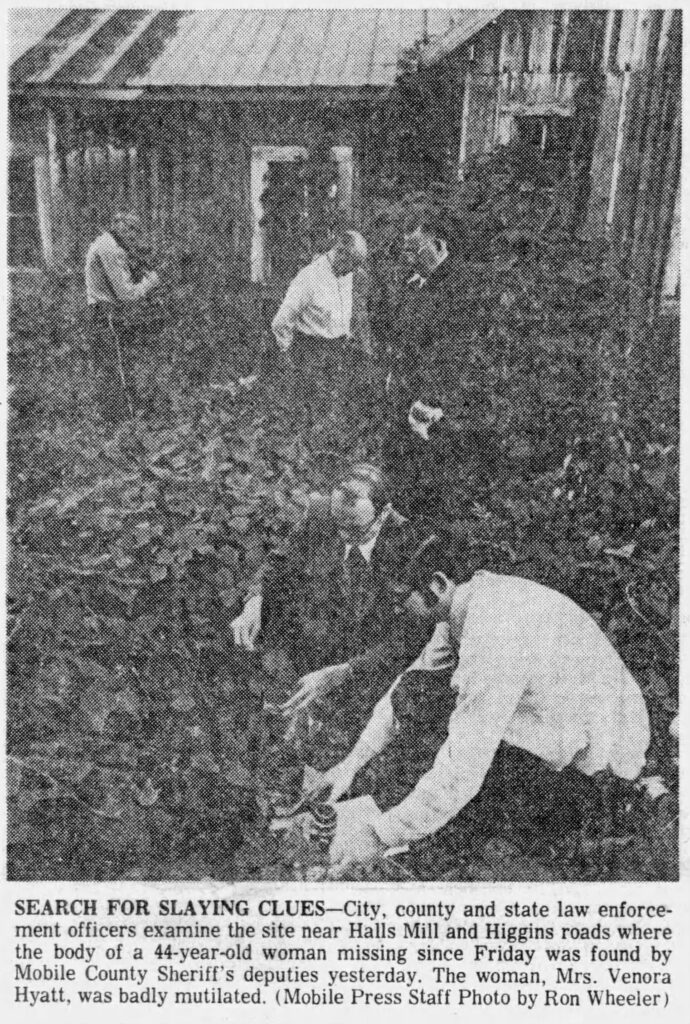
- Mrs. Venora Hyatt, a 44-year-old clerk at the 7-Eleven store at Three Notch Road and Bush Lane, was last seen at 2:15 AM on Friday, April 16, 1976. Her body was found Monday, April 19, on the grounds of a dilapidated vacant house near the intersection of Halls Mill Road and Higgins Road. Her head had been bashed in and her body mutilated with a sharp instrument.
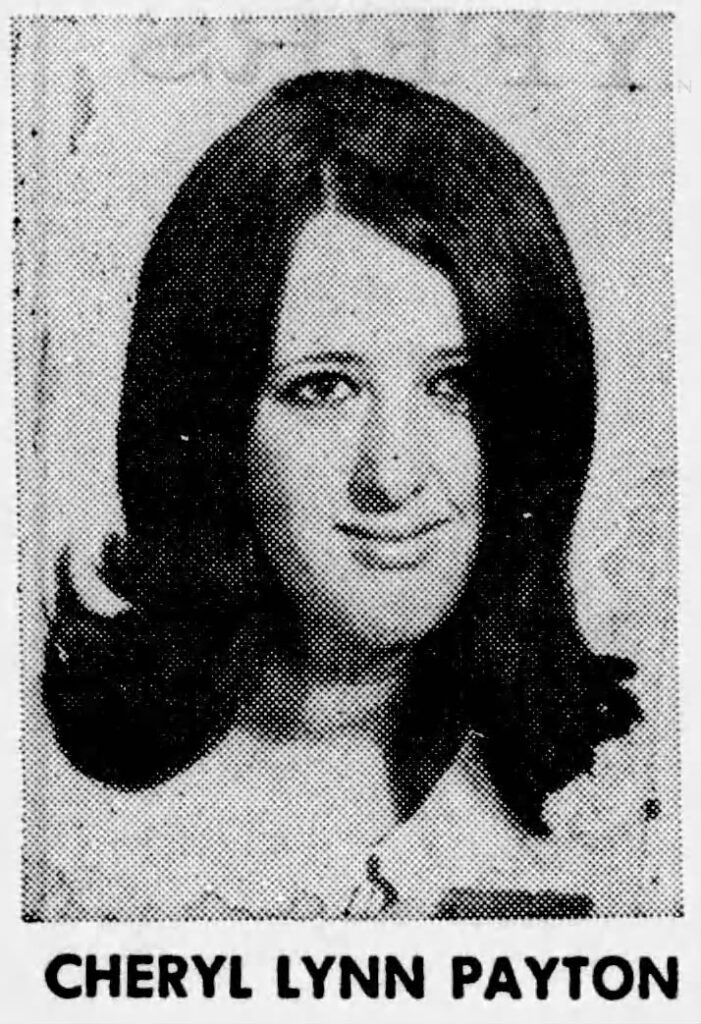
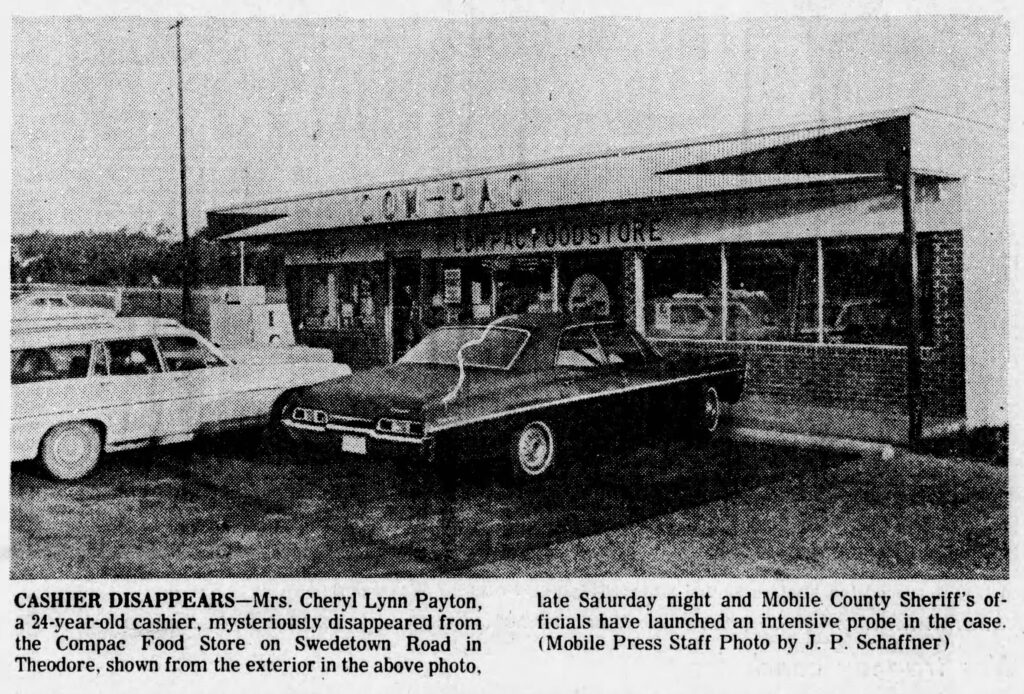
- On October 18, 1976, the body of Cheryl Payton was discovered in a dirt pit in the Theodore-Irvington area. Mrs. Payton had not been heard from since she was discovered missing two days prior. She was also a convenience store clerk. Evidence showed that Mrs. Payton had been sexually assaulted, shot in the head, part of her breast cut off, and slashed in the abdomen and genital area.
Mutilations showed necro-sadism: silent, infantile acts of control over “mother figures.” He smoked menthol cigarettes and drank beer while cutting. Only Payton was raped. He later confessed to attacking two other women, including his wife, and the 1963 Haynes murder.
After the first murder, there was concern (understandably) in the community, especially those close to the murder scene. After the second one, everyone in the city became wary. After the third murder, however, the community was gripped by fear; stores installed extra lights or paired staff. Prior murders heightened victims’ awareness—Payton knew of the others.
Capture, Confession, and the Insanity Defense
Arrested October 17, 1976, after a chase, Whisenhant yelled, “I’ve done everything they said I did,” which included the first offense, shooting Lexie Haynes. He gave a detailed, 40+ page confession, waiving his rights under the Miranda ruling. Trial venue moved to Birmingham due to the extensive publicity in Mobile. Whisenant pleaded “Not guilty by reason of insanity” in 1977. Psych experts testified to schizoid/paranoid traits and temporary insanity during acts, but the jury rejected it. Convicted of capital murder; he was sentenced on September 7, 1977, to be executed.
Trials, Appeals, and Decades on Death Row
Appeals dragged on due to prosecutorial errors. Whisenant’s attorneys accused the prosecutors of making improper closing remarks referencing unproven crimes and insanity consequences. He was retried in 1981 (guilty again; death overturned, resentenced 1987). He pled guilty to the Hitt and Hyatt murders (life without parole). Habeas petitions raised ineffective counsel and Brady issues but failed.
On death row, he was baptized and reportedly expressed concern for his family. That was good. However, he never showed any remorse to the families of the victims. After all, they were the ones who had continued to suffer at his hand.
Alabama’s death penalty process was long and complicated. In his appeals, the aggravating factors, such as prior violence, rape and heinousness outweighed the mitigating factor of a mental disturbance. His death sentence held firm. Critics note the lengthy appeals highlighted systemic delays; supporters saw justice delayed but not denied.
Execution and Victim Perspectives
Scheduled for May 27, 2010, Whisenhant ate chicken leg quarters, fries, cheese, orange drink, coffee, and chocolate pudding. He declined a final statement. With the victim’s families watching (which is common), Whisenant was put to death at 6:20 p.m. Mrs. Payton’s husband said that his death was easier than his wife’s. Her mother held a photo of her daughter, remarking that there was no remorse in witnessing his execution.
Just weeks after Whisenant was sentenced to die, Venora Hyatt’s son, Kenneth Curry, robbed a taxi driver in Mobile at knifepoint. He specifically said he wanted to be convicted and placed in the same prison as Whisenant so he could exact his revenge. Must later, Curry made the heartbreaking statement, “There comes a time when everybody says it’s over, but it’s never over.”
Psychological and Societal Analysis: Multiple Angles
Nurture vs. Nature: Experts linked crimes to childhood: overprotection bred resentment; victims symbolized the controlling mother. That link brought a lot of pushback. People correctly stated, “Many people with similar backgrounds do not kill.” Then the experts added Pre-existing issues, such as his 1960s schizophrenia diagnosis, as a contributing factor.
Power and Control: Profile described a “weak, timid nobody” empowered by domination. Returns to scenes and mutilations were compulsive, not opportunistic.
Justice System Failures: Parole after a near-murder; ignored teen red flags and psychiatric recommendations. Convenience stores’ isolation enabled targeting—modern implications for worker safety.
Death Penalty Debates: Longest Alabama death row stint fueled arguments on cruelty of delays vs. finality for families. Insanity defense highlights ongoing tensions in evaluating mental illness in capital cases.
Community and Prevention: Terrorized Mobile; exposed gaps in 1970s policing/profiling. Today, DNA, cameras, and awareness might prevent escalation.
Legacy: Remembering the Victims
Lexie Haynes, Rose Covington (survived), Patricia Hitt, Venora Hyatt, and Cheryl Lynn Payton deserved better. Their families endured decades of grief. Whisenhant remains a footnote in Alabama true crime.
Michael Earl Simmons
About the Author
Michael Earl Simmons is a retired Pensacola Police Sergeant, former homicide detective, and recognized historian of crime in Northwest Florida. He is the creator of Sweet Tea Murders, where Southern history meets the darker side of human nature.

Like the articles? Join us monthly in downtown Pensacola for the Sweet Tea Murders LIVE event, a storytelling experience in a venue in historic downtown Pensacola. Each month, Michael Earl Simmons presents one or two fantastic old murders – some forgotten – that have been stored away in the dusty files. You won’t be disappointed. See you there!
Your Attractive Heading
Discover more from Sweet Tea Murders
Subscribe to get the latest posts sent to your email.